Introduction to Artificial Intelligence
Introduction to Artificial Intelligence
What Is Artificial Intelligence?
Artificial intelligence, or AI, is about creating computer systems that can perform tasks that usually require human intelligence. Think about recognizing a friend's face, understanding a spoken sentence, or making a plan. These are things humans do naturally. The goal of AI is to enable machines to do them too.
At its heart, AI is a field of computer science focused on building smart machines capable of learning, reasoning, and problem-solving. It's not about creating a robot with human emotions, like in the movies. Instead, it's about building tools that can analyze information, identify patterns, and make predictions or decisions based on data.
Artificial intelligence (AI) is a broad field of computer science and engineering that focuses on developing computers capable of performing activities that normally require human intelligence, such as learning, problem-solving, decision-making, and natural language processing.
A Quick Trip Through Time
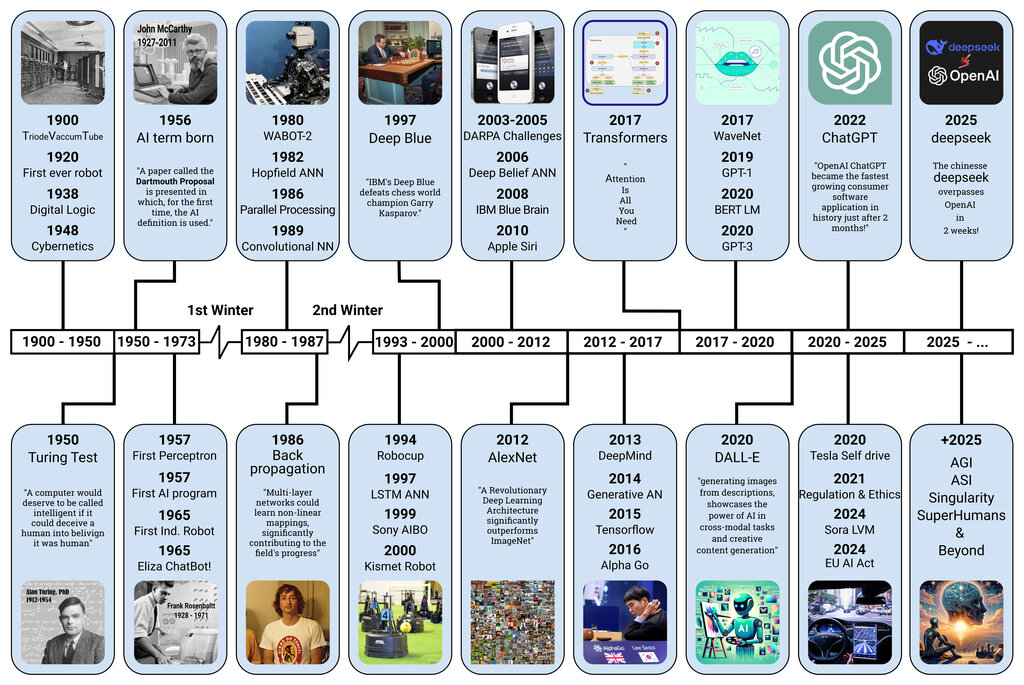
The dream of intelligent machines is ancient, but the scientific field of AI is relatively new. It officially began in the summer of 1956 at a conference at Dartmouth College. Early researchers were optimistic, believing that a machine as intelligent as a human being would exist in a few decades.
Progress was slower than expected. The field went through periods of high funding and excitement, followed by "AI winters" where progress stalled and interest waned. However, two major breakthroughs in recent times have fueled an explosion in AI development: the availability of massive amounts of data and the development of powerful computers that can process it all.
The Branches of AI
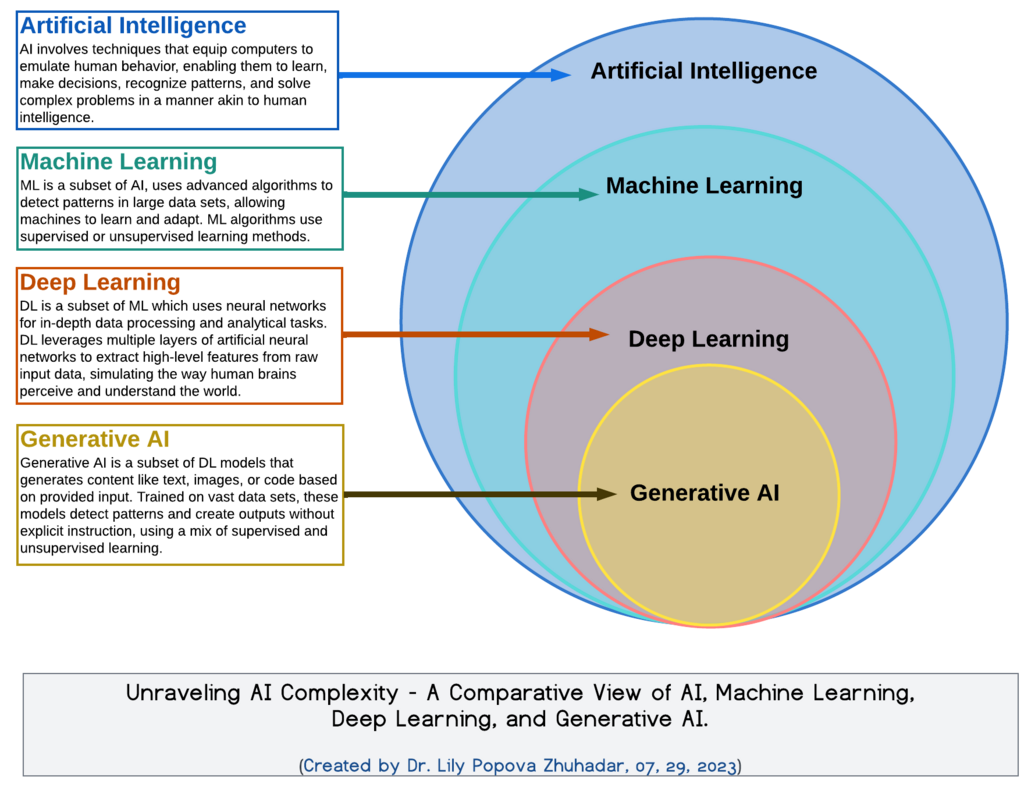
AI isn't a single technology. It's a broad field with many specialized branches, much like how "medicine" includes everything from surgery to pediatrics. Each subfield focuses on a different aspect of intelligence.
Let's explore some of the most important branches. Understanding these will give you a clearer picture of what AI can and can't do today.
Machine Learning
noun
The subfield of AI focused on building systems that can learn from data, identify patterns, and make decisions with minimal human intervention.
Machine Learning, or ML, is the engine behind most modern AI. Instead of being explicitly programmed with rules for a task, an ML system is trained on a large dataset. It learns to recognize patterns within that data and then uses those patterns to make predictions about new, unseen data.
Think of it like teaching a child to recognize a cat. You don't list out rules like "has pointy ears, whiskers, and a long tail." You just show them lots of pictures of cats. Eventually, they learn to identify a cat on their own. ML works in a similar way.
Natural Language Processing
noun
The branch of AI that helps computers understand, interpret, and generate human language.
Natural Language Processing (NLP) bridges the gap between human communication and computer understanding. Its goal is to enable computers to read, decipher, understand, and make sense of human languages in a valuable way.
NLP powers many features we use daily, from translation apps that let you read a menu in another country to chatbots that answer customer service questions. Whenever you interact with technology using your voice or text, you're likely using NLP.
Computer Vision
noun
A field of AI that trains computers to interpret and understand the visual world from digital images or videos.
If NLP gives computers "ears" and a "mouth," then Computer Vision gives them "eyes." This field is all about teaching machines to see and interpret the world around them. It involves extracting, analyzing, and understanding useful information from a single image or a sequence of images.
This technology is behind facial recognition on your phone, automated checkout systems at stores, and even medical systems that can help doctors detect diseases from scans.
Robotics
noun
An interdisciplinary branch of engineering and computer science that deals with the design, construction, operation, and use of robots.
Robotics is where AI gets physical. It involves building machines that can move and perform actions in the real world. While not all robots use AI, advanced robots use AI subfields like computer vision and machine learning to sense their environment and make intelligent decisions.
From robotic arms in factories to autonomous drones that deliver packages, robotics brings AI out of the digital realm and into our physical world. These different branches of AI often work together to create powerful and complex systems.
What is the fundamental goal of Artificial Intelligence?
What is the key difference between a Machine Learning system and a traditionally programmed system?