Introduction to Artificial Intelligence
Introduction to Artificial Intelligence
What Is Artificial Intelligence?
At its core, artificial intelligence is about creating machines that can think, learn, and solve problems like humans do. It’s a broad field in computer science focused on simulating intelligent behavior in computers. This doesn't necessarily mean creating a walking, talking robot from a sci-fi movie. It's often more subtle.
Think of it this way: AI is a system's ability to correctly interpret data, learn from it, and use those learnings to achieve specific goals through flexible adaptation.
The ultimate goal is to build systems that can perform tasks that normally require human intelligence. This includes things like reasoning through a puzzle, understanding a spoken sentence, or recognizing a face in a photo.
A Quick Trip Through Time
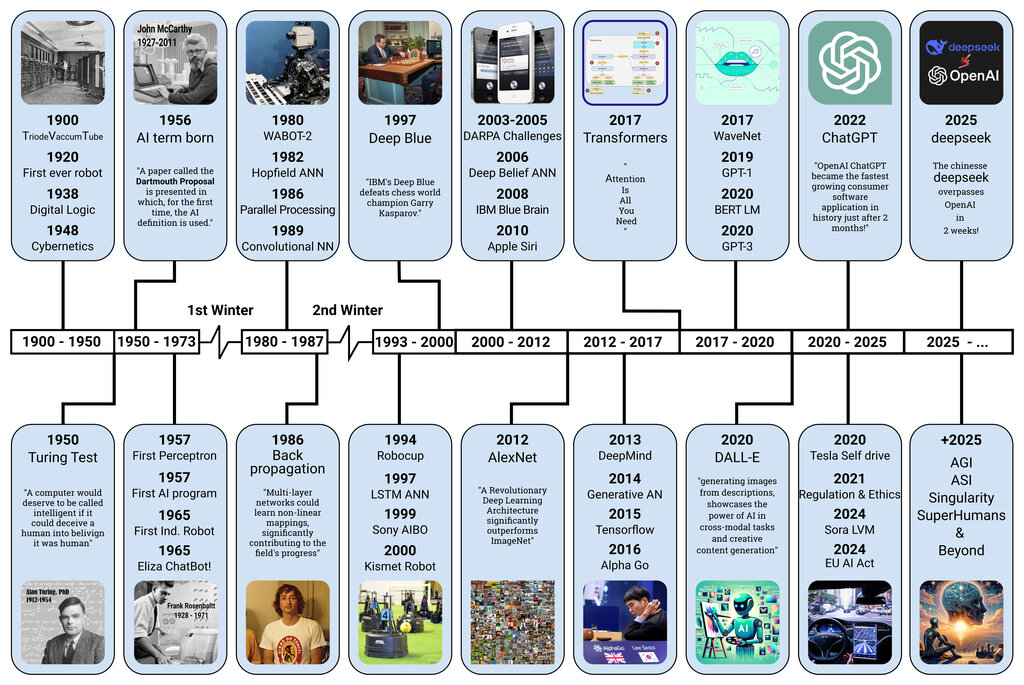
The idea of intelligent machines has been around for centuries, but the formal field of AI research is relatively young. It officially began in the summer of 1956 at a workshop at Dartmouth College. It was here that the term "artificial intelligence" was first coined.
This was the first time the term "artificial intelligence" was used as the group spent almost two months discussing how machines might simulate learning and intelligence.
The early years were filled with excitement and bold predictions. Researchers developed programs that could solve algebra problems and prove theorems in logic. However, the initial hype soon ran into the limits of computer power and the sheer complexity of creating true intelligence. This led to periods known as "AI winters," when funding dried up and progress seemed to stall.
But the field always rebounded. In the 1980s, "expert systems" became popular. These were AI programs designed to mimic the decision-making abilities of a human expert in a specific domain, like diagnosing diseases. The rise of powerful computers and the availability of vast amounts of data in the 21st century have since fueled the explosive growth we see today.
The Branches of AI
AI isn't a single entity. It's a collection of different subfields, each focused on a specific aspect of intelligence. Understanding these branches helps clarify what AI can do.
| Subfield | Focus |
|---|---|
| Computer Vision | Enabling machines to see and interpret the visual world. |
| Natural Language Processing (NLP) | Helping computers understand, interpret, and generate human language. |
| Robotics | Designing and building robots that can perform tasks in the physical world. |
| Knowledge Representation | Figuring out how to store information so a computer system can use it to solve problems. |
| Reasoning & Problem Solving | Developing algorithms that can make logical deductions or find solutions to complex problems. |
Each of these areas is a deep and complex field of study on its own. Together, they form the foundation of artificial intelligence, driving the development of systems that are becoming more capable every day.
What is the ultimate goal of artificial intelligence?
The term "artificial intelligence" was first coined at a workshop in 1956.