Introduction to Artificial Intelligence
Introduction to AI
What Is AI?
Artificial intelligence, or AI, is a broad field of computer science focused on creating machines that can perform tasks that typically require human intelligence. Think of it as the science of making computers smart. This doesn't just mean calculating numbers quickly. It means enabling machines to reason, learn from experience, understand language, recognize objects, and solve complex problems.
The main goal of AI is to create systems that can operate autonomously, improving themselves over time. Some AI is designed for specific tasks, like playing chess or recommending movies. This is called Narrow AI. The broader, more ambitious goal is to create Artificial General Intelligence (AGI), a type of AI that could understand and perform any intellectual task a human can.
A Brief History
The idea of intelligent machines has been around for centuries, but the scientific field of AI is relatively young. It all started in the summer of 1956.
A group of pioneering scientists gathered at Dartmouth College for a workshop. It was here that computer scientist John McCarthy coined the term "Artificial Intelligence," officially giving the new field its name.
This event, known as the Dartmouth Conference, marked the birth of AI as an academic discipline. The attendees were optimistic, believing that a machine as intelligent as a human being could be built within a generation. The journey turned out to be much more complex.
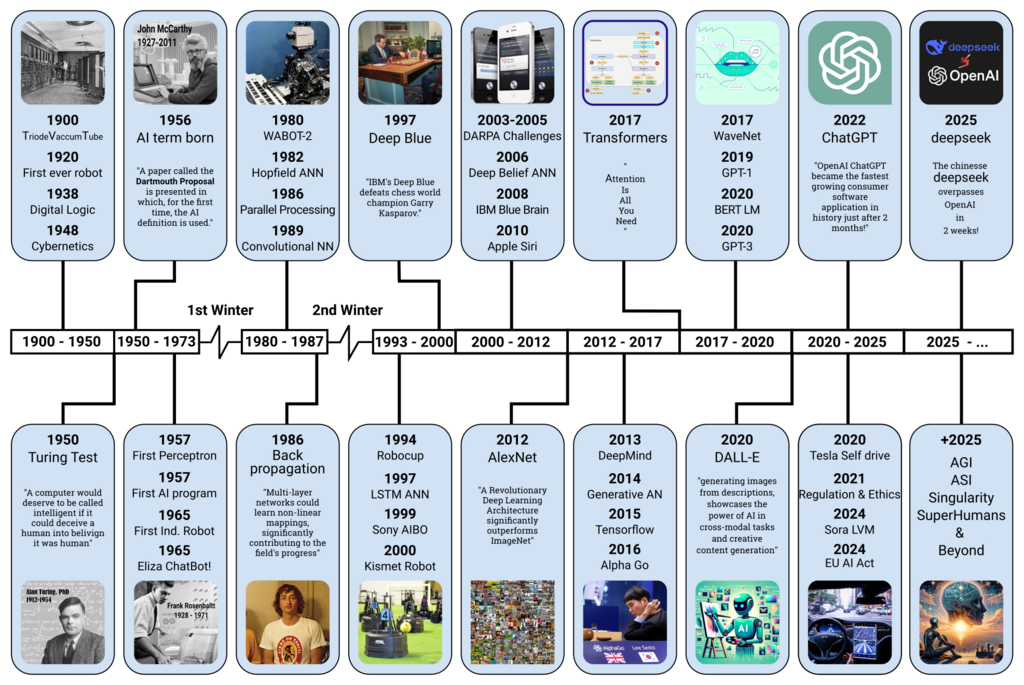
Early AI research focused on what's known as symbolic AI or "Good Old-Fashioned AI." This approach involved programming computers with a set of rules and logical statements to represent knowledge. For example, a symbolic AI designed to understand animals would be fed rules like "If it has feathers and can fly, it is a bird." This worked well for clearly defined problems, like playing board games, but struggled with the messiness of the real world.
By the 1980s, a new approach gained momentum: machine learning. Instead of being explicitly programmed with rules, a machine learning model is trained on vast amounts of data. It learns to recognize patterns and make predictions on its own. A key subfield of machine learning is deep learning, which uses complex structures called neural networks to learn from even larger datasets. Recent breakthroughs in deep learning are behind today's most advanced AI, from self-driving cars to AI assistants.
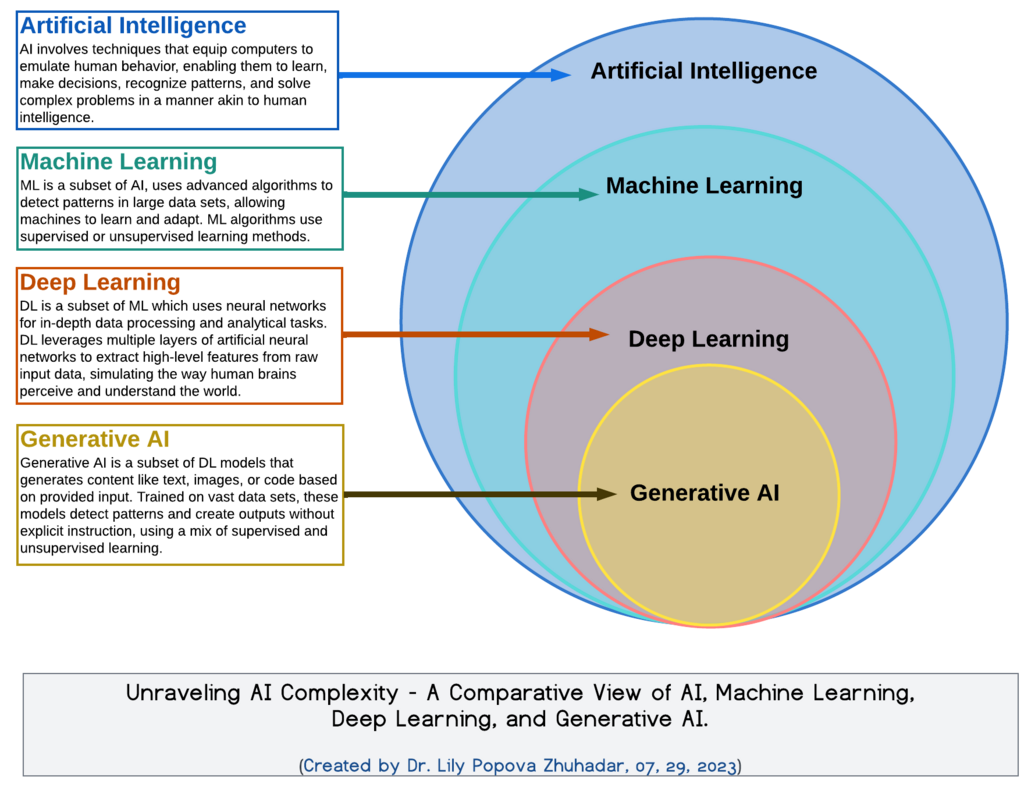
AI's Impact on Society
As AI becomes more powerful and widespread, it's crucial to consider its effects on our world. AI has the potential to solve some of humanity's biggest challenges in medicine, climate change, and education. It can automate dangerous or tedious jobs, create new forms of entertainment, and make our daily lives more convenient.
However, it also raises important ethical questions. For example, AI systems are trained on data, and if that data reflects human biases, the AI can perpetuate or even amplify those biases. We also face challenges related to privacy, as AI systems often require large amounts of personal data to function. Other concerns include the potential for job displacement due to automation and the need to ensure AI is used responsibly and safely.
As artificial intelligence becomes more capable and pervasive, the study of cs.AI is increasingly important for understanding and guiding the trajectory of technological progress, ensuring that new systems are both effective and aligned with human values.
Navigating the future of AI requires careful thought and planning. By understanding its foundations and considering its societal impact, we can work toward building AI that benefits everyone.