Introduction to Artificial Intelligence
Introduction to Artificial Intelligence
What is AI Anyway?
Artificial intelligence is about making machines smart. The goal is to create computer systems that can perform tasks that typically require human intelligence. This includes things like learning from experience, solving problems, understanding language, and recognizing objects in the world around them.
Think of it this way: AI gives a computer the ability to think and learn, rather than just follow a rigid set of pre-programmed instructions.
Artificial Intelligence
noun
A field of computer science dedicated to creating systems that can perform tasks that normally require human intelligence.
At its core, AI isn't one single technology. It's a broad field that covers many different approaches and techniques, all aimed at creating more capable and intelligent machines.
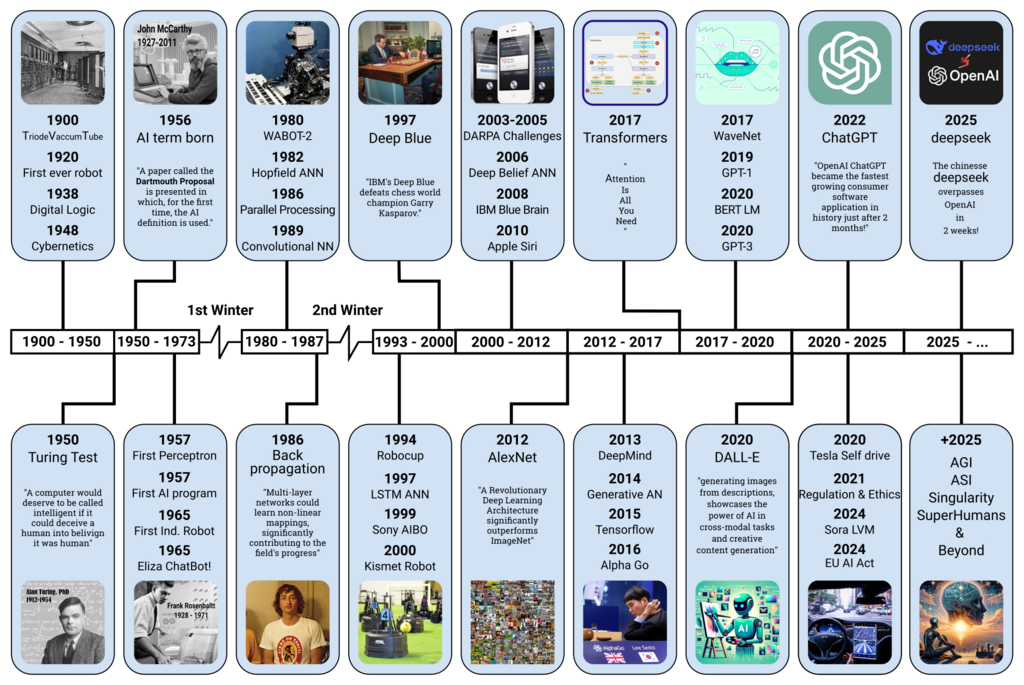
A Quick Trip Through Time
The idea of intelligent machines has been around for centuries, but the actual scientific field of AI is relatively new. It officially began in the summer of 1956 at a workshop at Dartmouth College, where the term "artificial intelligence" was first used.
Early researchers were incredibly optimistic, predicting that machines with human-level intelligence were just a few decades away. But the challenge turned out to be much harder than expected. The field went through several cycles of excitement followed by disappointment and funding cuts, often called "AI winters."
In recent decades, things have changed dramatically. The explosion of available data and massive increases in computing power have fueled a resurgence. Breakthroughs that once seemed like science fiction are now becoming part of our daily lives.
The Branches of AI
Artificial intelligence isn't a single topic but a collection of specialized subfields. Each one focuses on a different aspect of intelligence. Let's look at a few of the most important branches.
Machine Learning (ML) This is the most common type of AI today. Instead of being programmed with specific rules, a machine learning system is trained on a large amount of data. It learns to recognize patterns and make predictions on its own. It's the engine behind things like recommendation systems and spam filters.
Natural Language Processing (NLP) NLP focuses on the interaction between computers and human language. It's the technology that allows you to talk to a voice assistant, translate text from one language to another, or have a chatbot understand your questions. The goal is for machines to understand, interpret, and generate human language in a valuable way.
Computer Vision This field trains computers to interpret and understand the visual world. Using digital images from cameras and videos, computer vision models can identify and classify objects. This is the technology that enables facial recognition, self-driving cars to "see" the road, and medical systems to analyze scans.
Robotics Robotics is a field that involves the design, construction, operation, and use of robots. While not all robots use AI, advanced robotics integrates AI to give machines the ability to perceive their environment and make intelligent decisions to perform physical tasks.
Now that you have a grasp of the basics, let's test your knowledge.
What is the primary goal of Artificial Intelligence?
The term "artificial intelligence" was first used at a workshop in 1956 at which institution?
Understanding these core concepts is the first step into the expansive and rapidly evolving world of artificial intelligence.