Introduction to Artificial Intelligence
Introduction to Artificial Intelligence
What Is Artificial Intelligence?
At its core, artificial intelligence is about building machines that can think, learn, and solve problems like humans. It's not just about robots from movies; AI is a broad field of computer science focused on creating systems that can perform tasks that typically require human intelligence. This could be anything from understanding a spoken sentence to diagnosing a disease.
This introduction to this special issue discusses artificial intelligence (AI), commonly defined as “a system’s ability to interpret external data correctly, to learn from such data, and to use those learnings to achieve specific goals and tasks through flexible adaptation.”
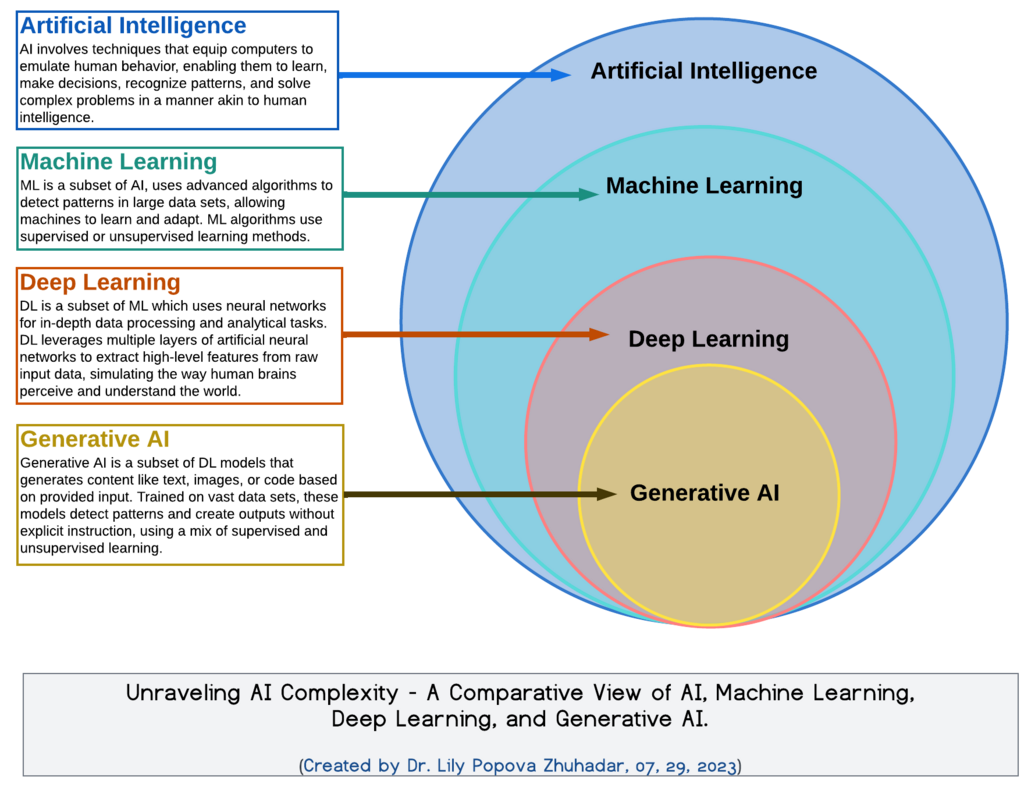
Think of AI not as a single technology, but as an umbrella term for a collection of different methods and tools. Just as “biology” covers everything from tiny cells to entire ecosystems, “AI” covers a wide range of approaches to creating intelligence.
The Flavors of AI
Artificial intelligence isn't one-size-fits-all. It's made up of several specialized subfields, each tackling a different aspect of intelligence. Let's look at three of the biggest ones.
Machine Learning
noun
A subfield of AI where systems learn from data to find patterns and make decisions without being explicitly programmed for the task.
Instead of writing step-by-step instructions, developers feed a machine learning model vast amounts of data. The model learns to recognize patterns on its own. It's like teaching a child to identify a dog. You don't list all the rules for what makes a dog; you just show them lots of pictures of dogs. Eventually, they learn to spot one on their own. This is the magic behind Netflix recommendations and spam filters.
Another key area is Natural Language Processing, or NLP. This is all about teaching computers to understand, interpret, and generate human language. Every time you talk to a voice assistant like Siri or use a translation app, you're using NLP. It's the bridge that allows us to communicate with machines in our own words.
Finally, there's robotics. This field gives AI a physical body. While machine learning and NLP are about processing information, robotics is about acting on it in the real world. A robot in a car factory uses computer vision (another AI subfield) to see parts and its robotic arms to assemble them. Self-driving cars are another prime example, combining perception, decision-making, and physical action.
Sharp Tools vs. Grand Goals
It's also helpful to think about AI in terms of its goals. Right now, every AI system you've ever interacted with falls into one category: Artificial Narrow Intelligence.
Artificial Narrow Intelligence (ANI), also known as Weak AI, is designed to perform a single, specific task. It might be incredibly good at that task—even better than a human—but it can't do anything else.
A chess-playing AI can beat a grandmaster, but it can't tell you the weather or recommend a good book. A spam filter is great at spotting junk mail, but it can't write an email for you. These are highly specialized tools, like a screwdriver or a wrench. They are extremely useful for their intended purpose, but that's where their ability ends.
The long-term dream of many AI researchers is to create Artificial General Intelligence (AGI), or Strong AI. This is a hypothetical type of AI that possesses the ability to understand, learn, and apply its intelligence to solve any problem, much like a human being. An AGI wouldn't need to be reprogrammed to learn a new skill; it could learn on its own through experience.
For now, AGI remains firmly in the realm of science fiction. Building systems that can perform one task well is already a huge challenge. Creating a machine with the flexible, adaptable intelligence of a human is a goal that is still far on the horizon.
Which statement best describes the primary goal of artificial intelligence?
The text compares teaching a machine learning model to teaching a child to recognize a dog. What does this analogy illustrate?
Understanding these basic concepts is the first step in seeing how AI works and what it's capable of.