Introduction to Artificial Intelligence
Introduction to Artificial Intelligence
What is Artificial Intelligence?
Artificial Intelligence, or AI, is about making machines smart. It's a field of computer science focused on creating systems that can perform tasks that normally require human intelligence. This includes things like learning from experience, solving problems, understanding language, and making decisions.
At its core, AI is the simulation of human intelligence in machines, programmed to think and learn.
Think of it like teaching a computer. Instead of giving it a rigid set of instructions for every single possibility, you design it to recognize patterns, make predictions, and adapt. Just as a person learns to identify a cat after seeing a few examples, an AI can be trained to do the same with data.
A Brief History
The idea of intelligent machines has been around for centuries, but the modern field of AI officially began in the summer of 1956. A group of scientists gathered for a workshop at Dartmouth College to explore the possibility of creating machines that could think. It was here that the term "Artificial Intelligence" was first used.
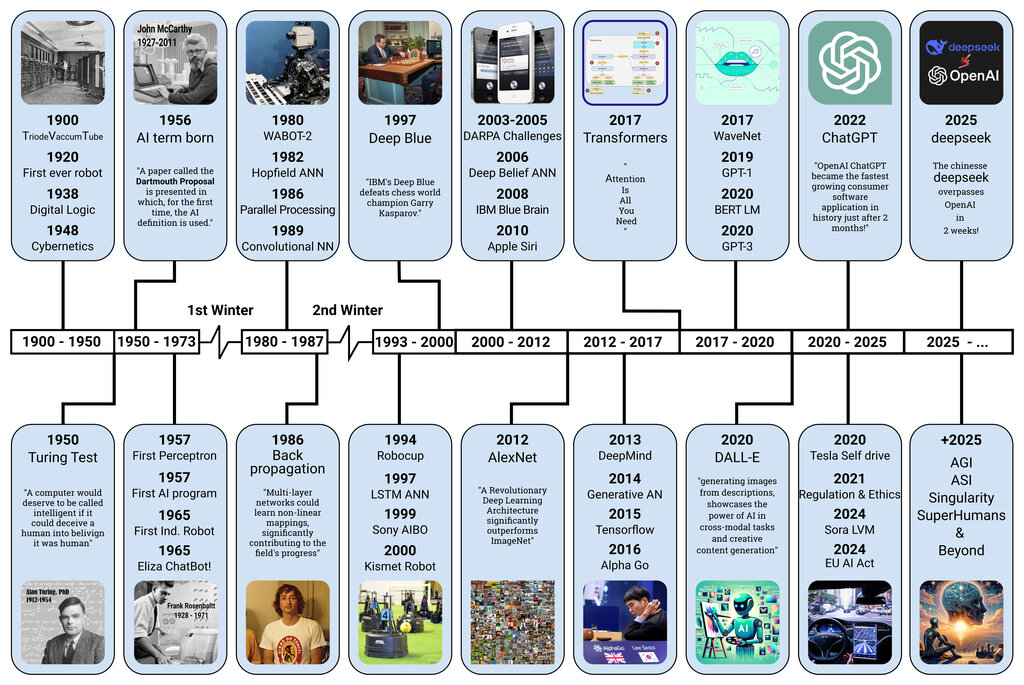
The journey wasn't a straight line. The initial excitement was followed by periods of disillusionment, known as "AI winters," when progress stalled and funding dried up. However, breakthroughs in computing power and the availability of massive amounts of data eventually led to the AI boom we see today.
The Branches of AI
AI isn't just one single thing; it's a broad field with several specialized subfields. Think of AI as the main tree trunk, with major branches splitting off from it.
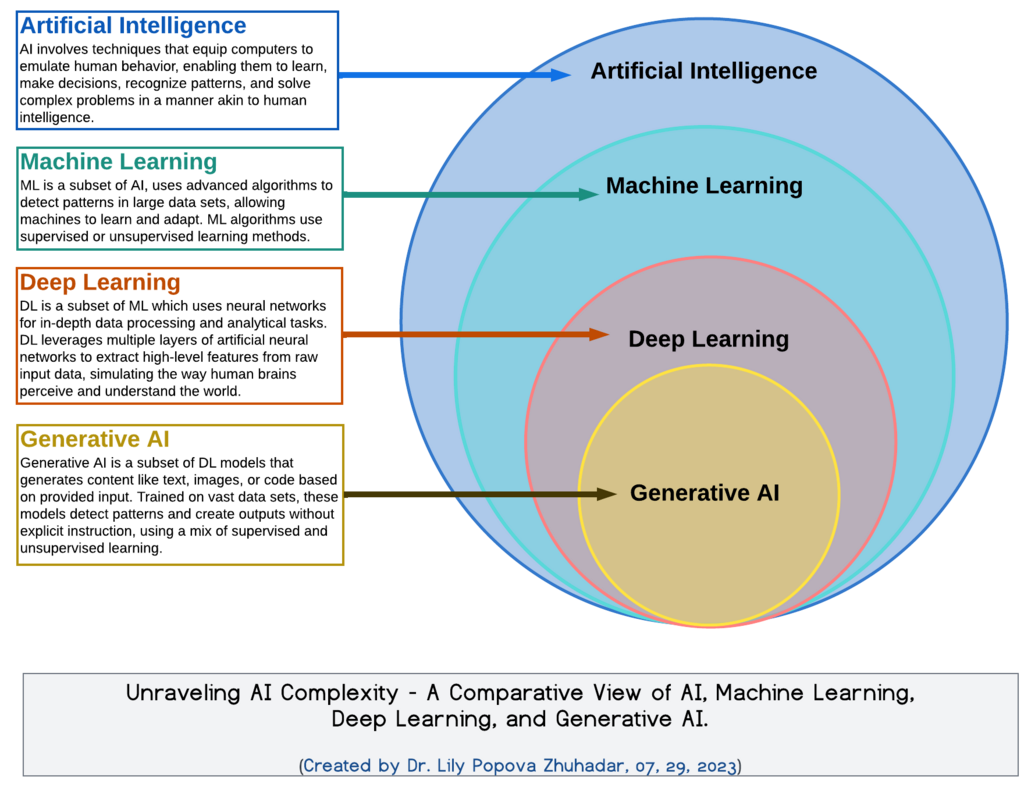
Here are a few of the most important branches:
Machine Learning
noun
A subset of AI where systems learn and improve from data without being explicitly programmed. The more data they process, the better they get at a task.
Machine Learning (ML) is the engine behind many of the AI applications you use daily.
Natural Language Processing
noun
Often called NLP, this branch of AI focuses on enabling computers to understand, interpret, and generate human language, both text and speech.
NLP bridges the communication gap between humans and machines.
Computer Vision
noun
This field trains computers to see and interpret the visual world. Using images and videos, machines can identify objects, people, and places.
These subfields often work together to create powerful and complex AI systems. The rapid advancements in these areas are what make AI so significant in modern technology.