Introduction to Artificial Intelligence
Introduction to Artificial Intelligence
What Is Artificial Intelligence?
Artificial intelligence, or AI, is the science and engineering of making intelligent machines. The goal is to create computer systems that can perform tasks that normally require human intelligence. This includes things like learning from experience, solving problems, understanding language, and recognizing objects and sounds.
At its core, AI isn't about creating a machine that is human. Instead, it's about simulating human intelligence. Some AI systems are designed to think like humans, processing information and making connections in a similar way. Others are built to act like humans, meaning they can perform tasks the way a person would, regardless of the internal process.
Think of it this way: a calculator is good at math, but it doesn't understand math. An AI, on the other hand, is designed to learn and adapt, much like we do.
A Brief History of AI
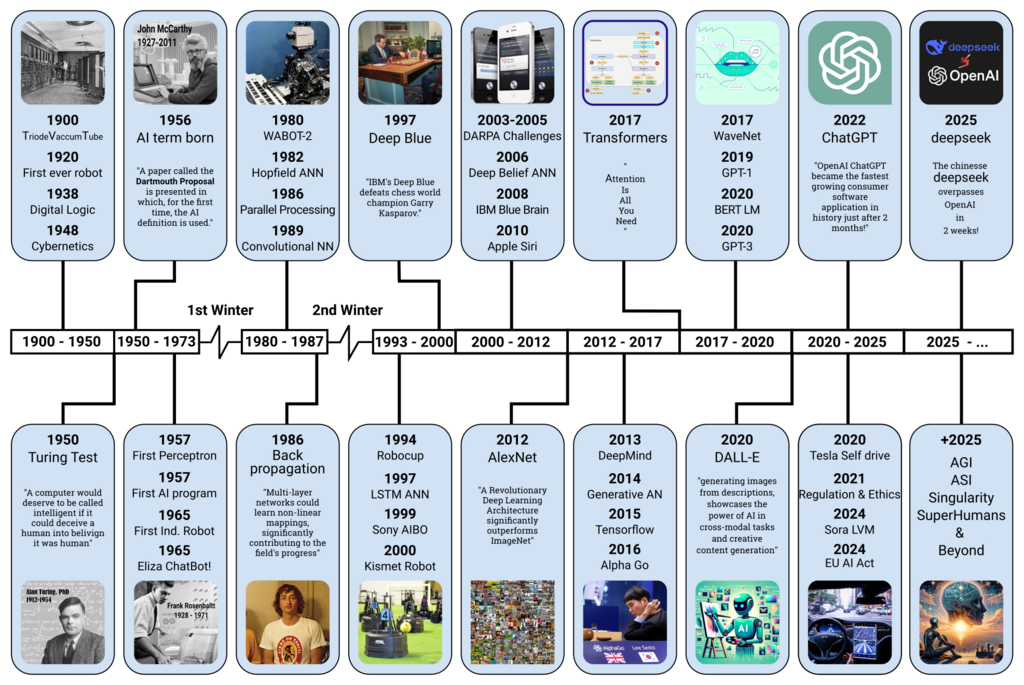
The dream of intelligent machines is ancient, but the scientific pursuit of AI began in the mid-20th century. The field was officially born at a 1956 workshop at Dartmouth College, where the term "Artificial Intelligence" was first used. Early researchers were incredibly optimistic, believing a machine as intelligent as a human was only a generation away.
This initial excitement led to a period of discovery. Early AI programs could solve algebra problems, prove theorems in geometry, and speak basic English. But the challenges were far greater than anticipated. Computers lacked the processing power and data needed for more complex tasks, leading to a period of reduced funding and interest known as the "AI winter."
A major shift happened in the 1980s and 90s. Instead of trying to program intelligence with complex, rigid rules, researchers focused on creating systems that could learn from data. This was the rise of machine learning, which powers much of the AI we use today. Combined with the explosion of the internet and massive increases in computing power, AI began to flourish again.
The Branches of AI
AI is not a single technology but a broad field with many specialized branches. Each focuses on a different aspect of intelligence.
| Subfield | Focus |
|---|---|
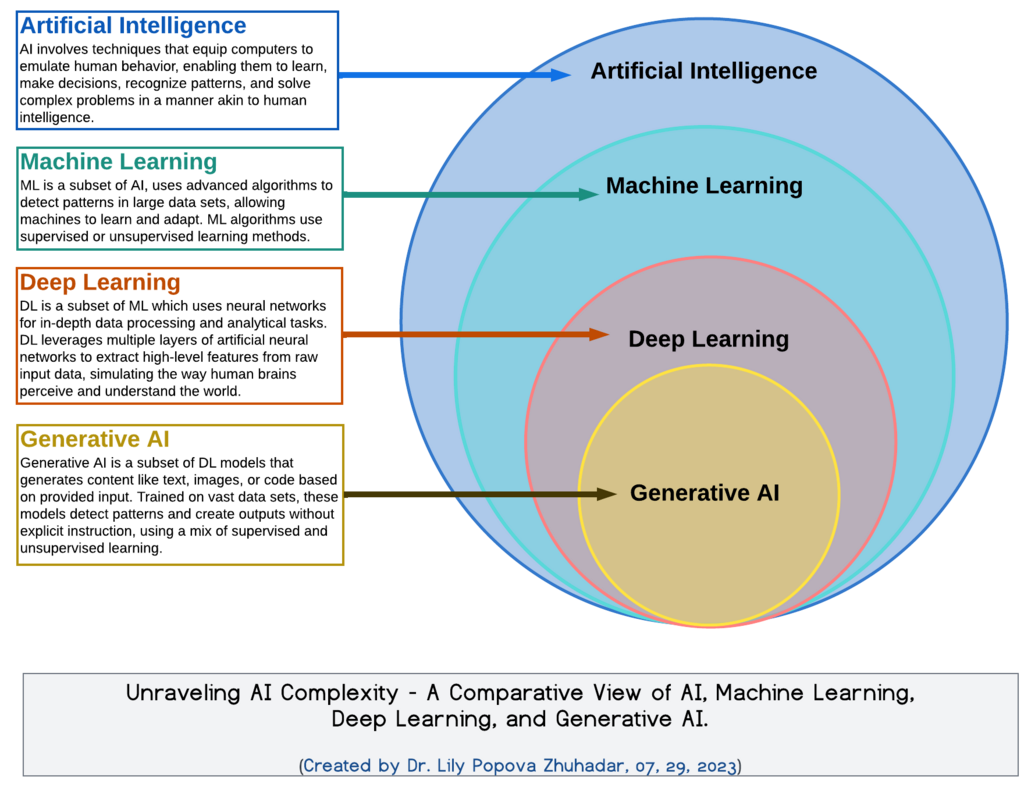
| Machine Learning (ML) | Algorithms that allow computers to learn from data without being explicitly programmed. It's the engine behind most modern AI. |
| Natural Language Processing (NLP) | Enabling computers to understand, interpret, and generate human language. Think of translation apps and chatbots. |
| Computer Vision | Giving machines the ability to 'see' and interpret the visual world. This is used in everything from facial recognition to self-driving cars. |
| Robotics | Designing and building robots. This branch combines AI with physical engineering to create machines that can move and interact with the world. |
| Expert Systems | AI systems that emulate the decision-making ability of a human expert in a specific domain, using a database of knowledge and rules. |
These subfields often overlap. For example, a sophisticated robot might use computer vision to navigate its environment, machine learning to adapt to new objects, and natural language processing to understand voice commands.
Why AI Matters Today
AI has moved from science fiction to a part of everyday life. It recommends movies, helps doctors diagnose diseases, powers search engines, and makes online shopping more personalized. Its importance lies in its ability to process vast amounts of data and identify patterns that are far beyond human capability.
By automating complex tasks and providing powerful insights, AI helps us solve some of the world's most challenging problems in science, medicine, and environmental sustainability. It is a tool that extends our own intelligence, opening up new possibilities and changing how we work, live, and interact with the world around us.
Now, let's test your understanding of these foundational concepts.
What is the primary goal of Artificial Intelligence as a scientific field?
The term "Artificial Intelligence" was first formally used during a workshop at Dartmouth College in which decade?