Introduction to Artificial Intelligence
Introduction to Artificial Intelligence
What Is Artificial Intelligence?
Artificial intelligence is about making machines that can think or act like humans. It's a broad field in computer science focused on creating systems that can perform tasks that typically require human intelligence, like learning, reasoning, problem-solving, and understanding language.
Artificial Intelligence
noun
The theory and development of computer systems able to perform tasks that normally require human intelligence, such as visual perception, speech recognition, decision-making, and translation between languages.
At its core, AI isn't one single technology. It's a collection of methods and tools that allow a machine to sense its environment, think, learn, and take action. The goal is to create machines that can operate with some degree of autonomy, making decisions and adapting to new information.
A Brief History
The idea of intelligent machines has been around for centuries, but the modern field of AI traces its roots to the 1950s. The term itself was coined in 1956 at the Dartmouth Conference, a summer workshop where researchers gathered to explore the possibility of creating machines that could think.
Early AI research was full of optimism, with pioneers predicting that machines with human-level intelligence were just a few decades away. However, the complexity of the task proved far greater than anticipated. Progress slowed, leading to periods known as "AI winters," when funding and interest dwindled due to unfulfilled promises.
Everything changed with the rise of powerful computers and the availability of vast amounts of data. These advancements fueled a resurgence in AI research, leading to the breakthroughs we see today.

The Three Types of AI
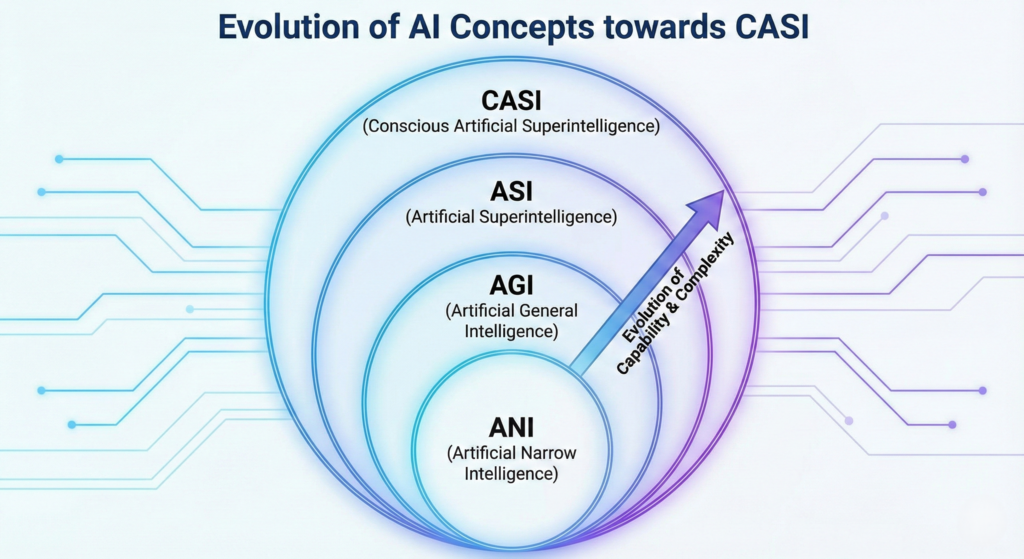
AI is often categorized into three types based on its capabilities. These categories help us understand where the technology is today and where it might be headed.
1. Artificial Narrow Intelligence (ANI) Also known as Weak AI, this is the only type of AI we have successfully created so far. ANI is designed and trained to perform a specific task, like facial recognition, playing chess, or driving a car. While it can be incredibly powerful at its designated job, it can't operate outside of it. The AI that beat the world champion at chess can't also suggest a recipe for dinner.
2. Artificial General Intelligence (AGI) Often called Strong AI, AGI is the kind of intelligence we see in science fiction movies. It refers to a machine with the ability to understand, learn, and apply its intelligence to solve any problem, just like a human being. AGI would be able to think abstractly, reason through unfamiliar situations, and draw from a wide range of experiences. This type of AI does not yet exist.
3. Artificial Superintelligence (ASI) This is a hypothetical form of AI that would surpass human intelligence in virtually every field, including scientific creativity, general wisdom, and social skills. ASI would not just replicate human intelligence; it would dramatically exceed it. The concept raises profound questions about the future of humanity and technology.
Core Components of AI
Modern AI systems are built on several key concepts. Understanding these building blocks is essential to grasping how AI works.
Machine Learning is the foundation of most modern AI. It's a subfield of AI where systems learn patterns from data instead of being explicitly programmed with rules.
Think of it like teaching a child to recognize a cat. You don't list out rules like "has pointy ears, whiskers, and a long tail." Instead, you show them many pictures of cats, and eventually, they learn to identify one on their own. Machine learning works similarly, using large datasets to train an algorithm to make predictions or decisions.
Neural Networks are a key part of machine learning, inspired by the structure of the human brain. They are made up of layers of interconnected nodes, or "neurons," that process information. Each connection has a weight that gets adjusted during training. When a neural network has many layers, it's often called a "deep learning" model, capable of learning very complex patterns.
Finally, Natural Language Processing (NLP) is a branch of AI that gives computers the ability to understand, interpret, and generate human language. It's the technology behind virtual assistants, translation apps, and chatbots. NLP combines machine learning and linguistics to bridge the gap between human communication and computer understanding.
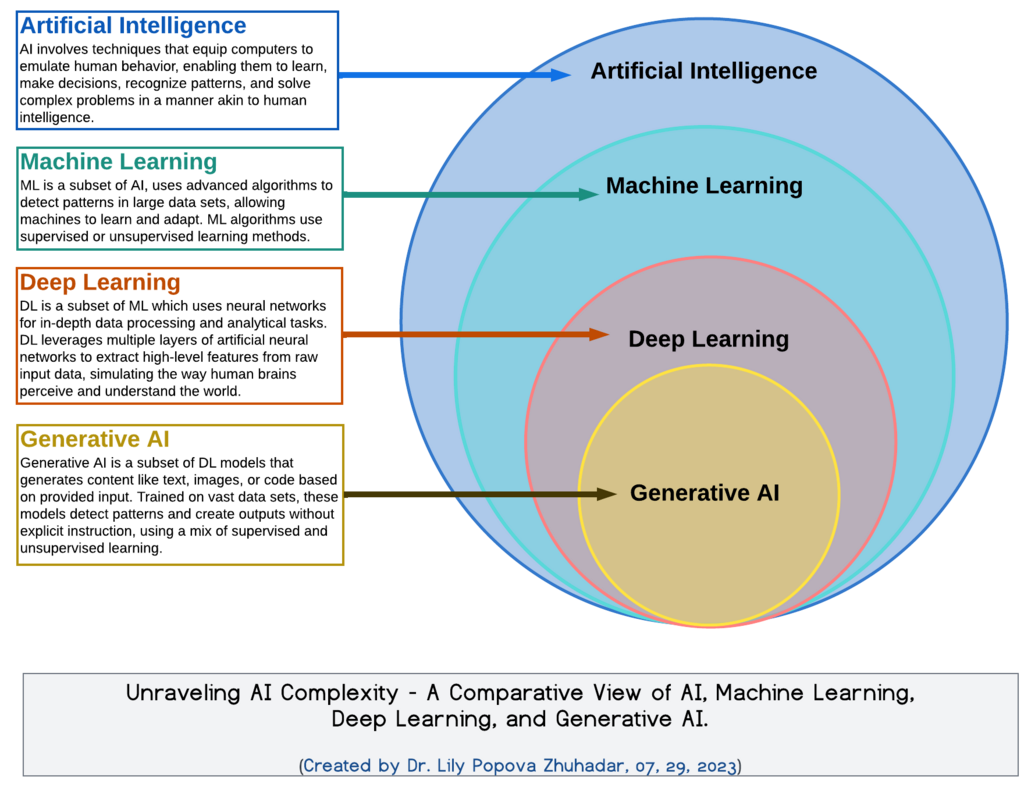
These components—machine learning, neural networks, and NLP—work together to create the intelligent systems that are becoming an integral part of our daily lives.
Why AI Matters
Artificial intelligence represents a fundamental shift in how we solve problems and interact with technology. Its ability to process massive amounts of data and uncover hidden patterns allows us to tackle challenges that were previously insurmountable.
From automating routine tasks to accelerating scientific discovery, AI is transforming industries and creating new possibilities. It's not just about building smarter machines; it's about augmenting human capabilities and expanding our potential. As AI continues to evolve, its impact on society will only grow, making it one of the most significant technological developments of our time.
What is the primary goal of Artificial Intelligence as a field?
Which of the following best describes the only type of AI that has been successfully created and is in use today?
This introduction covers the basic ideas behind AI. By understanding its history, types, and core components, you have a solid foundation for exploring this exciting field further.