Introduction to Artificial Intelligence
Introduction to Artificial Intelligence
What Is AI?
Artificial Intelligence, or AI, is the science of making machines that can think and learn like humans. It’s about creating systems that can perform tasks that normally require human intelligence. This isn't just about robots in movies; it’s about software that can recognize your voice, recommend your next favorite song, or even help doctors diagnose diseases.
Artificial intelligence (AI) is a wide-ranging tool that enables people to rethink how we integrate information, analyze data, and use the resulting insights to improve decision making—and already it is transforming every walk of life.
At its core, AI is about building smart systems. But what does "smart" mean for a machine? It means the ability to take in information, understand it, and make decisions or predictions based on that information. The goal is to build machines that are not just programmed to follow a rigid set of rules, but can adapt and perform tasks flexibly.
Artificial Intelligence
noun
The theory and development of computer systems able to perform tasks that normally require human intelligence, such as visual perception, speech recognition, decision-making, and translation between languages.
The Goals of AI
The main objective of AI is to create systems that can perform tasks intelligently. This broad goal can be broken down into a few key areas.
Learning: Acquiring knowledge and rules for using that knowledge. Reasoning: Using the rules to reach approximate or definite conclusions. Problem-solving: Applying knowledge and reasoning to find solutions to new problems.
Imagine teaching a child to identify a cat. You don't list every single rule. You show them pictures and say, "This is a cat." After seeing enough examples, the child learns the general pattern—fur, whiskers, pointy ears. AI systems learn in a similar way, by processing huge amounts of data to recognize patterns. This allows them to reason and solve problems, like identifying a cat in a photo it has never seen before.
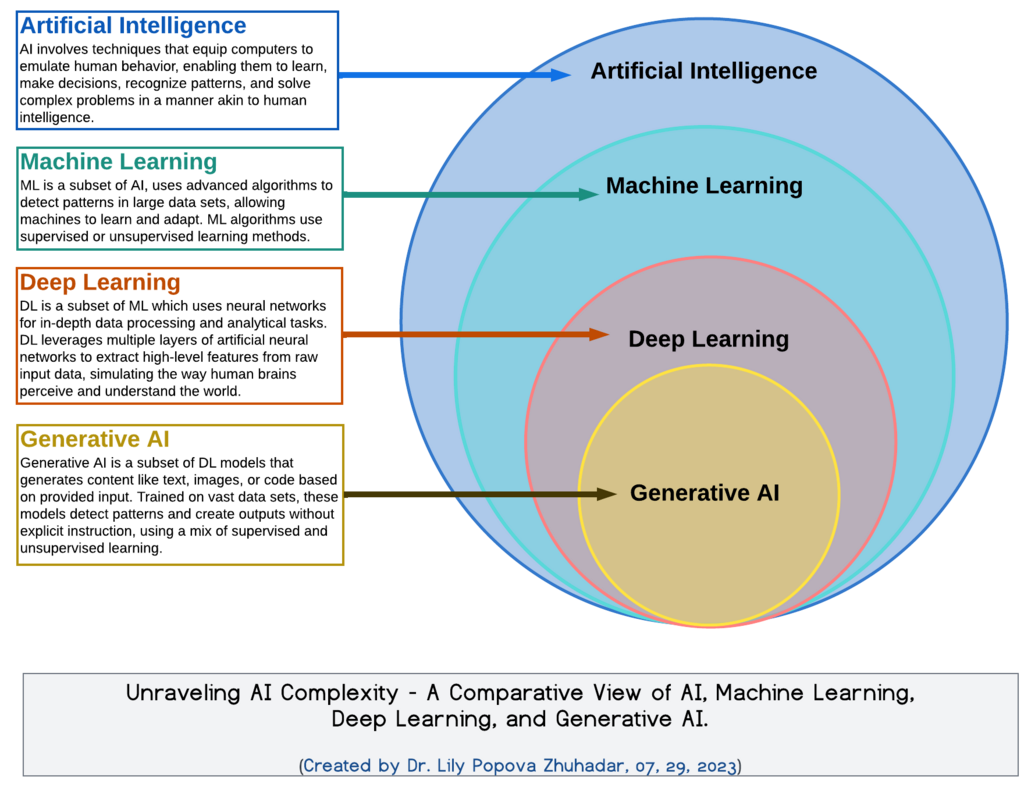
The significance of this is huge. When machines can learn and reason, they can help us tackle complex challenges. They can analyze vast datasets that would be impossible for a human to sift through, finding patterns in everything from stock market trends to the human genome. This ability to augment human intelligence is why AI is becoming so important in modern technology.
A Blend of Disciplines
AI isn't just one field of study. It's a meeting point for many different areas of expertise, each contributing a crucial piece of the puzzle. To build a machine that thinks, you need more than just good programming.
Here's how these fields connect:
- Computer Science provides the tools to build AI, like programming languages and algorithms.
- Mathematics offers the foundation for those algorithms, including logic, probability, and statistics.
- Psychology, especially cognitive psychology, gives us models of how the human mind works, which can inspire AI architectures.
- Neuroscience studies the physical structure of the brain, influencing the design of systems like artificial neural networks.
This interdisciplinary nature is what makes AI so powerful and versatile. By drawing on insights about logic, learning, and the brain itself, researchers can create more capable and sophisticated intelligent systems.
Ready to check your understanding?
What is the primary goal of Artificial Intelligence?
According to the provided text, how do AI systems typically learn to recognize patterns, such as identifying a cat in a photo?
This foundation gives us a starting point. We've defined what AI is, what it aims to do, and the diverse fields that fuel its progress.