Introduction to Artificial Intelligence
Introduction to Artificial Intelligence
What is Artificial Intelligence?
At its core, artificial intelligence is about creating computer systems that can perform tasks that normally require human intelligence. This includes things like learning from experience, understanding language, recognizing patterns, and solving problems.
Artificial Intelligence
noun
The theory and development of computer systems able to perform tasks that normally require human intelligence, such as visual perception, speech recognition, decision-making, and translation between languages.
Think about how you learn. You observe, you try things, you make mistakes, and you adjust. AI systems are designed to do something similar, but on a massive scale with data. They analyze vast amounts of information to find patterns and make predictions or decisions without being explicitly programmed for every single step.
AI isn't about creating a machine that thinks exactly like a human. It's about building tools that can reason and learn to help solve complex problems.
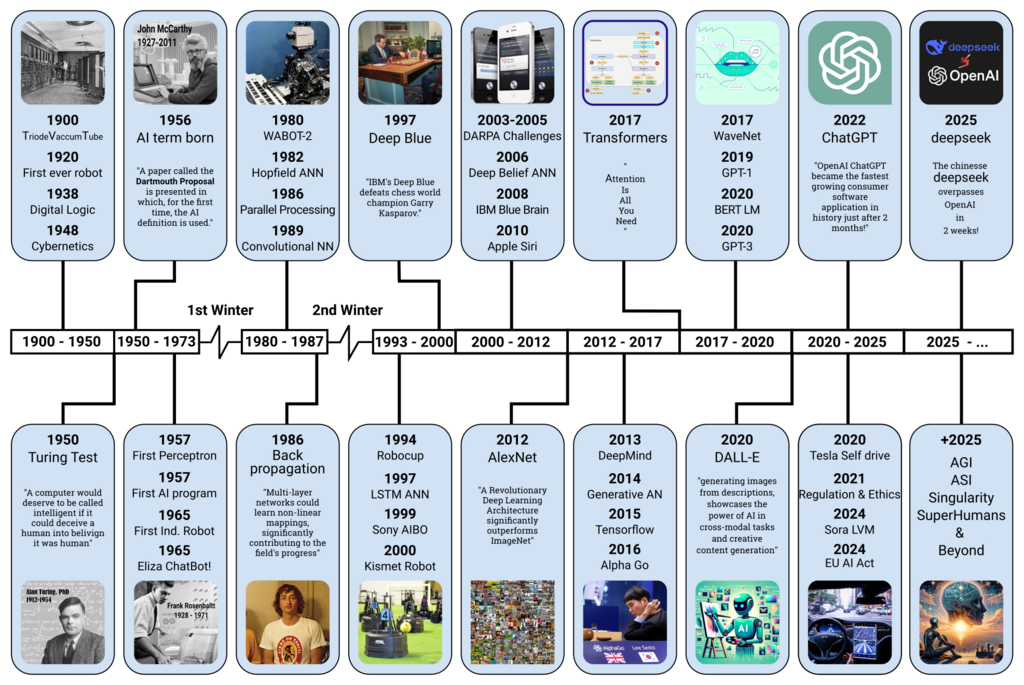
A Brief History of AI
The dream of intelligent machines is ancient, but the actual field of AI began in the 1950s. Early researchers were optimistic, believing that a machine with human-like intelligence was just a few decades away. They developed programs that could solve algebra problems and play checkers.
Progress wasn't always a straight line. The field went through periods of high excitement and funding, followed by “AI winters” where progress stalled and interest waned. The complexity of creating true intelligence was far greater than first imagined.
A major shift happened with the rise of machine learning and, more recently, deep learning. Instead of trying to write rules for every possible situation, developers created systems that could learn the rules themselves from data. This approach, combined with massive increases in computing power and data availability, has fueled the AI boom we see today.
Why AI Matters
AI is no longer a futuristic concept. It's a fundamental technology that is reshaping industries and our daily lives. From the recommendation engines that suggest what to watch next, to the navigation apps that find the fastest route, AI is working behind the scenes.
In medicine, AI helps doctors diagnose diseases earlier and more accurately. In finance, it detects fraudulent transactions. In transportation, it's the driving force behind self-driving cars. The technology's ability to process and find insights in data at a speed and scale impossible for humans is its greatest strength.
Understanding the basics of AI is becoming essential. It’s a powerful tool with the potential to solve some of the world's biggest challenges, from climate change to disease, making it one of the most important fields of study and innovation in our time.
Ready to check your understanding? Let's see what you've learned about the fundamentals of AI.
What is the core purpose of artificial intelligence?
The history of AI has been one of steady, continuous progress since it began in the 1950s.
This introduction just scratches the surface of a vast and fascinating field. Now you have the foundation to explore its more complex aspects.