Introduction to Artificial Intelligence
Introduction to Artificial Intelligence
What Is Artificial Intelligence?
Artificial Intelligence, or AI, is a field of computer science focused on creating systems that can perform tasks that typically require human intelligence. This includes abilities like learning from experience, understanding language, recognizing objects and sounds, solving problems, and making decisions.
The core objective of AI is to build machines that can sense, reason, learn, and adapt, much like we do.
It's helpful to think of AI not as a single technology, but as a broad umbrella covering many different specialized areas. These subfields work together to create the intelligent systems we see today, from virtual assistants to self-driving cars.
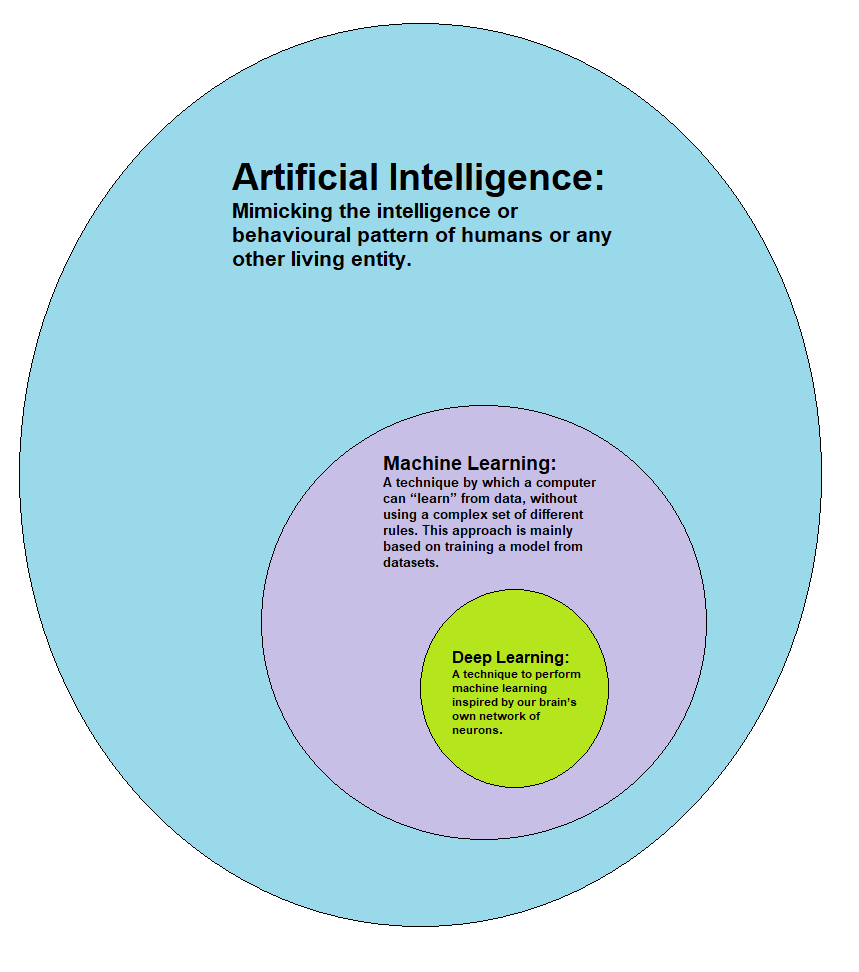
Three of the most important subfields are:
-
Machine Learning (ML): This is the engine of modern AI. Instead of being programmed with explicit rules, ML algorithms learn patterns directly from data. The more data they process, the better they get at a task.
-
Natural Language Processing (NLP): NLP gives machines the ability to understand, interpret, and generate human language. It’s what allows you to talk to your phone or get a summary of a long article.
-
Computer Vision: This area focuses on enabling computers to see and interpret the visual world. Computer vision powers everything from facial recognition on your phone to quality control on a factory assembly line.
A Brief History of AI
The dream of creating artificial beings is ancient, appearing in myths and stories for centuries. However, the scientific pursuit of AI is much more recent. It began in the mid-20th century with the invention of the digital computer.
The journey of AI has been one of both excitement and disappointment. Early enthusiasm led to bold predictions, but the complexity of creating true intelligence proved much harder than anticipated. This led to periods of reduced funding and interest, often called "AI winters."
Despite these setbacks, progress continued. The development of more powerful computers, the availability of massive datasets, and breakthroughs in algorithms—especially in machine learning—sparked a new era of rapid advancement in the 21st century.
| Year | Milestone | Significance |
|---|---|---|
| 1950 | The Turing Test | Alan Turing proposed a test for a machine's ability to exhibit intelligent behavior equivalent to a human. |
| 1966 | ELIZA | One of the first chatbots, demonstrating early natural language processing. |
| 1997 | Deep Blue | IBM's chess computer defeated world champion Garry Kasparov, a major symbolic victory for AI. |
| 2011 | Watson on Jeopardy! | IBM's Watson competed on the quiz show Jeopardy!, showcasing advanced question-answering abilities. |
| 2012 | ImageNet Breakthrough | Deep learning models drastically improved image recognition accuracy, kickstarting the modern AI boom. |
Today, AI is no longer a futuristic concept. It's a foundational technology that is actively shaping our world.
Ready to test your knowledge?
What is the primary goal of Artificial Intelligence?
A self-driving car needs to identify a stop sign in its path. Which subfield of AI is most essential for this task?
Understanding these core ideas provides the foundation for exploring the more specific and powerful applications of AI that we'll cover next.