Introduction to Artificial Intelligence
Introduction to Artificial Intelligence
What Is Artificial Intelligence?
At its heart, artificial intelligence is about making computers smart. The goal is to create machines that can perform tasks that typically require human intelligence, like learning, reasoning, problem-solving, and understanding language.
Artificial Intelligence
noun
A field of computer science dedicated to creating systems that can perform tasks that normally require human intelligence.
Think of it like teaching a computer. Instead of giving it a rigid set of instructions for every single possibility, you give it the ability to learn from experience. It's the difference between telling someone the exact route to the store and giving them a map so they can figure out the best way themselves, even if there's a roadblock.
A Quick Trip Through Time
The idea of intelligent machines has been around for centuries, but the actual field of AI officially began in the summer of 1956 at a workshop at Dartmouth College. There, a group of scientists coined the term "artificial intelligence" and kicked off the quest to build thinking machines.
The journey wasn't a straight line. There were periods of great excitement and funding, followed by "AI winters" when progress stalled and interest faded. Early AI focused on rules. If you could just write enough rules, the thinking went, you could create intelligence. This worked for simple problems, but not for the messy, unpredictable real world.
A major shift happened with the rise of machine learning and the availability of massive amounts of data. Instead of being programmed with rules, systems could now learn patterns directly from data. This led to breakthroughs like IBM's Deep Blue defeating chess champion Garry Kasparov in 1997, a major milestone.
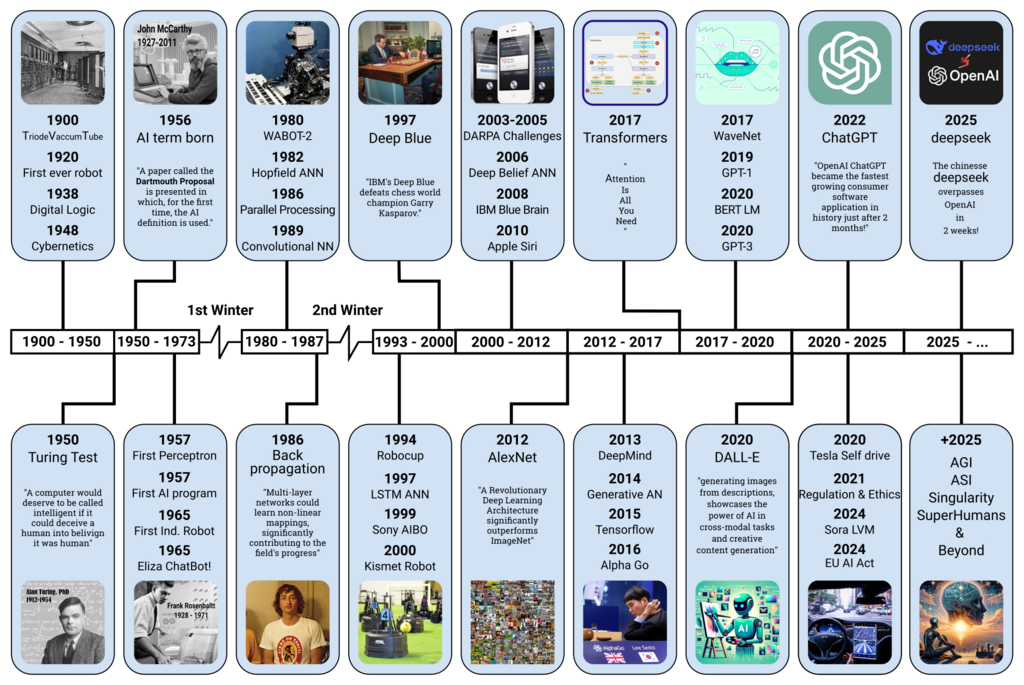
Today, we're in an era of rapid progress, largely driven by an approach called deep learning, which uses structures modeled on the human brain.
The Branches of AI
Artificial intelligence isn't just one thing. It’s a vast field with many specialized branches, each tackling a different aspect of intelligence. Here are a few of the most important ones.
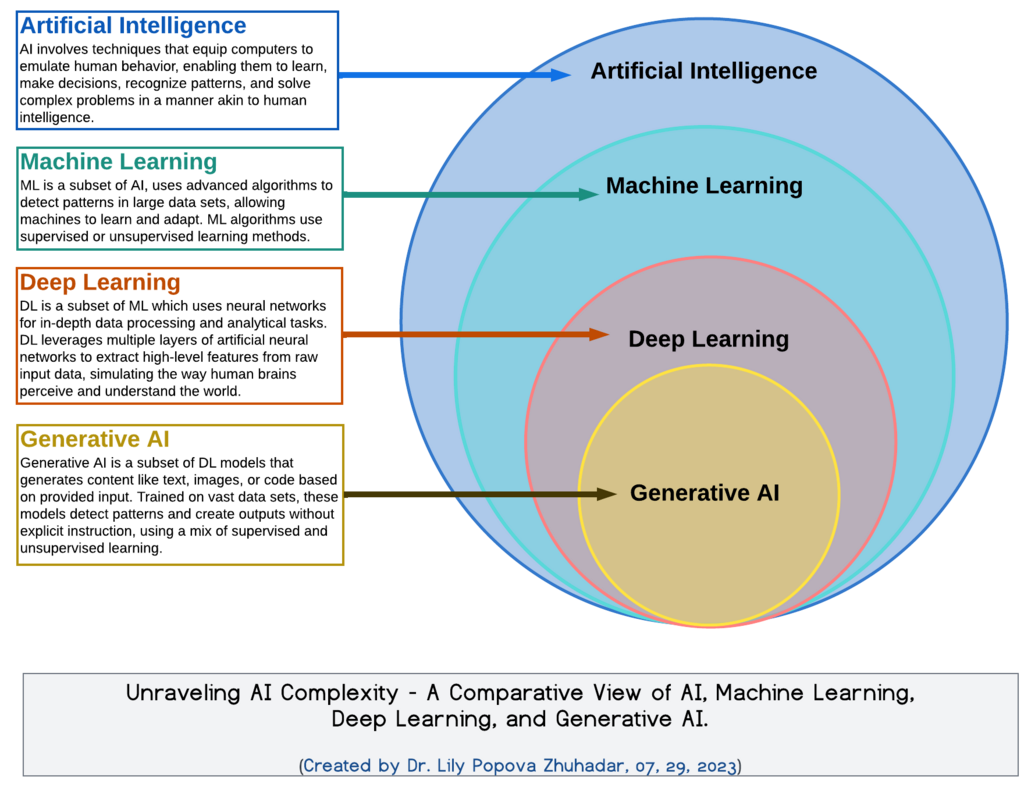
Machine Learning (ML) is the science of getting computers to learn and act like humans do, and improve their learning over time in an autonomous fashion, by feeding them data and information in the form of observations and real-world interactions.
This is the most common type of AI today. Instead of explicit programming, ML algorithms use data to find patterns and make predictions. Your email's spam filter is a classic example. It learns what spam looks like based on thousands of examples, rather than being told a specific rule like "block emails with the word 'prince' in them."
Natural Language Processing (NLP) helps computers understand, interpret, and generate human language.
NLP is all about communication. It's the technology behind voice assistants like Siri and Alexa, language translation apps, and chatbots that answer customer service questions. It bridges the gap between human language and computer understanding.
Computer Vision aims to give machines the ability to see and interpret the visual world.
This subfield allows computers to process information from images and videos in the same way humans do. It powers everything from facial recognition on your phone to the systems that allow self-driving cars to identify pedestrians, traffic lights, and other vehicles.
These subfields often work together. A self-driving car, for example, uses computer vision to see, machine learning to make decisions, and NLP to understand voice commands.
What is the fundamental goal of artificial intelligence?
The technology that enables voice assistants like Siri and Alexa to understand and respond to human language is a branch of AI called: