Introduction to Artificial Intelligence
Introduction to Artificial Intelligence
What Is AI?
Artificial Intelligence is about creating machines that can think, learn, and solve problems like humans. At its core, AI aims to replicate or simulate human intelligence in machines. This could mean anything from understanding language and recognizing images to making decisions and creating art.
Artificial Intelligence
noun
A field of computer science dedicated to creating systems capable of performing tasks that typically require human intelligence.
Think of AI in two main categories. The first is Artificial Narrow Intelligence (ANI), which is what we have today. This AI is designed for specific tasks, like playing chess, recommending movies, or navigating a route. It's incredibly powerful within its limited context but can't operate outside of it.
The second category is Artificial General Intelligence (AGI). This is the stuff of science fiction—for now. AGI refers to a machine with the ability to understand, learn, and apply its intelligence to solve any problem, just like a human being. It's the long-term goal for many researchers in the field.
AI's Inner Circles
The terms AI, Machine Learning, and Deep Learning are often used interchangeably, but they aren't the same. The relationship is like a set of nesting dolls: AI is the largest doll, containing Machine Learning, which in turn contains Deep Learning.
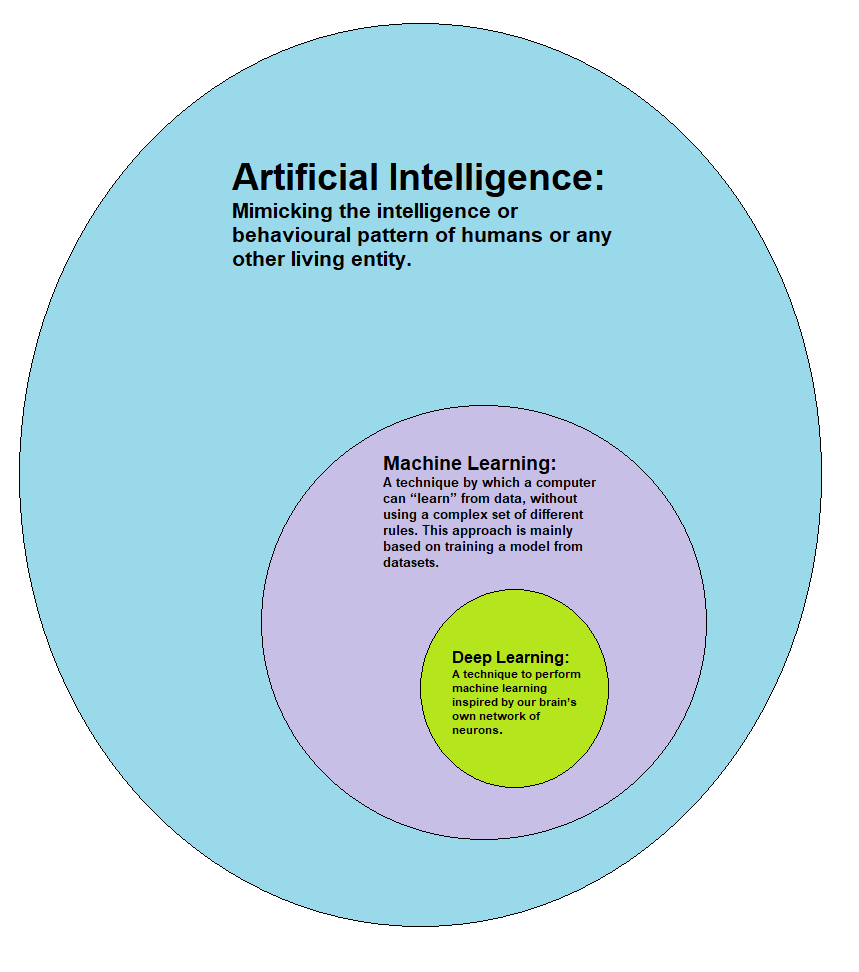
Artificial Intelligence (AI) is the overall concept of machines being able to carry out tasks in a way that we would consider “smart.”
Machine Learning (ML) is a subset of AI. Instead of being explicitly programmed with rules, ML systems learn directly from data. They analyze vast amounts of information, identify patterns, and make predictions or decisions based on what they've learned. The more data they process, the better they get.
Deep Learning (DL) is a specialized subfield of Machine Learning. It uses complex structures called neural networks, which are inspired by the human brain. These networks have many layers, allowing them to learn from data in a very sophisticated, hierarchical way. Deep learning is the engine behind many of today's most advanced AI applications, like natural language processing and image recognition.
A Quick Trip Through Time
The idea of intelligent machines isn't new; it's been a part of myths and speculation for centuries. But the formal field of AI research began in the mid-20th century.
A key moment was the Dartmouth Workshop in 1956, where the term “artificial intelligence” was coined. Early enthusiasm led to significant funding and research, but progress was slow. The complexity of creating true intelligence was far greater than anticipated, leading to periods of reduced funding and interest known as “AI winters.”
Things began to change with two major developments: the explosion of big data and a massive increase in computing power. Suddenly, machine learning models had enough information and processing capability to become incredibly effective. Milestones like IBM's Deep Blue defeating a world chess champion in 1997 showed the world what was possible.
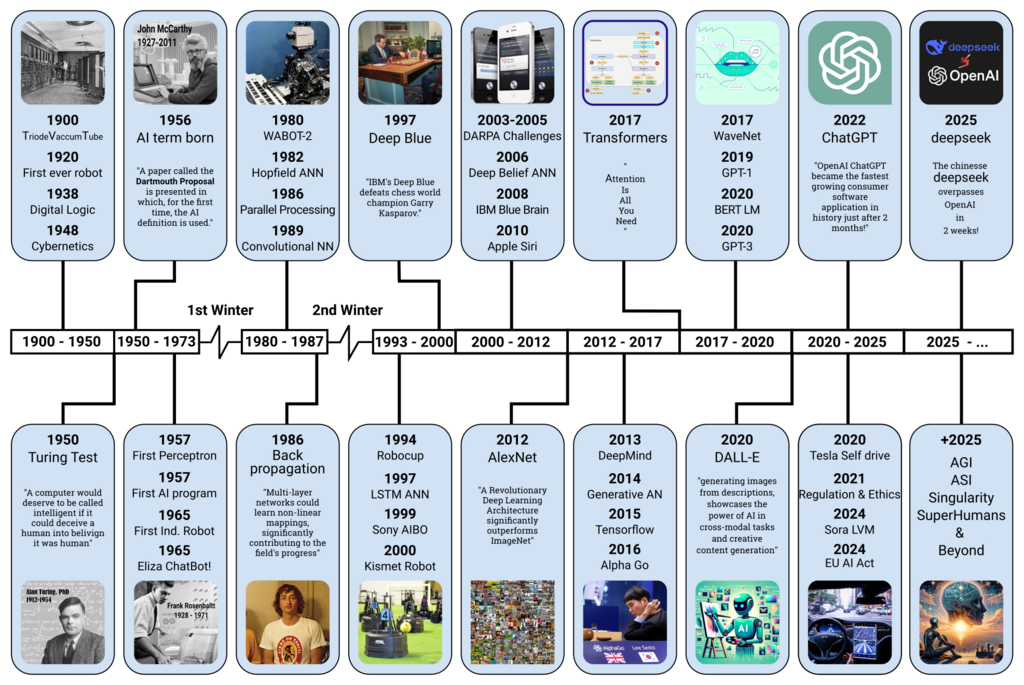
In recent years, breakthroughs in deep learning have fueled an AI revolution, leading to the advanced chatbots, image generators, and other tools that are becoming part of our daily lives.
The Human Side of AI
As AI becomes more powerful and widespread, it's crucial to consider its impact on society. The development of AI isn't just a technical challenge; it's also a deeply human one, filled with ethical questions and societal implications.
One major concern is bias. If an AI system is trained on biased data, it will produce biased results. This can have serious consequences, reinforcing unfair stereotypes in areas like hiring, loan applications, and even criminal justice.
Other challenges include privacy, as AI systems often require massive amounts of personal data to function, and the potential for job displacement as automation becomes more capable. Who is responsible when an AI makes a mistake? How do we ensure these powerful tools are used for good?
Building trustworthy AI is not just about writing better code. It's about ensuring fairness, accountability, and transparency in the systems we create.
Because of these risks, there's a growing global conversation around AI safety and ethics. Governments, companies, and researchers are working to establish guidelines and regulations to steer AI development in a responsible direction, ensuring that the benefits of this technology can be shared by everyone.

Let's review the key concepts we've covered.
Ready to check your understanding?
What is the primary goal of Artificial Intelligence (AI)?
The relationship between AI, Machine Learning (ML), and Deep Learning (DL) is often compared to nesting dolls. Which statement accurately describes this hierarchy?
Understanding these core ideas provides a solid foundation for exploring the incredible world of artificial intelligence.