Introduction to Artificial Intelligence
Introduction to AI
What Is Artificial Intelligence?
Artificial intelligence is the science of making machines that can think or act intelligently. The core idea is to build systems that can perform tasks that typically require human intelligence. Think of it less like creating a movie robot and more like teaching a computer how to learn, reason, and adapt on its own.
This introduction to this special issue discusses artificial intelligence (AI), commonly defined as “a system’s ability to interpret external data correctly, to learn from such data, and to use those learnings to achieve specific goals and tasks through flexible adaptation.”
This definition points to three key abilities an AI tries to replicate:
- Learning: Acquiring information and rules for using it.
- Reasoning: Using those rules to reach conclusions.
- Self-correction: Adjusting its approach based on new data or mistakes.
The Goals of AI
The ultimate goal of AI is to create technology that can solve problems and execute tasks in a way that mimics human cognitive functions. This doesn't always mean creating a machine that can hold a conversation. More often, it means designing a system to handle a specific, complex task, like identifying patterns in medical data or navigating a self-driving car through traffic.
At a high level, an AI system takes in information from the world, processes it, and then makes a decision or takes an action.
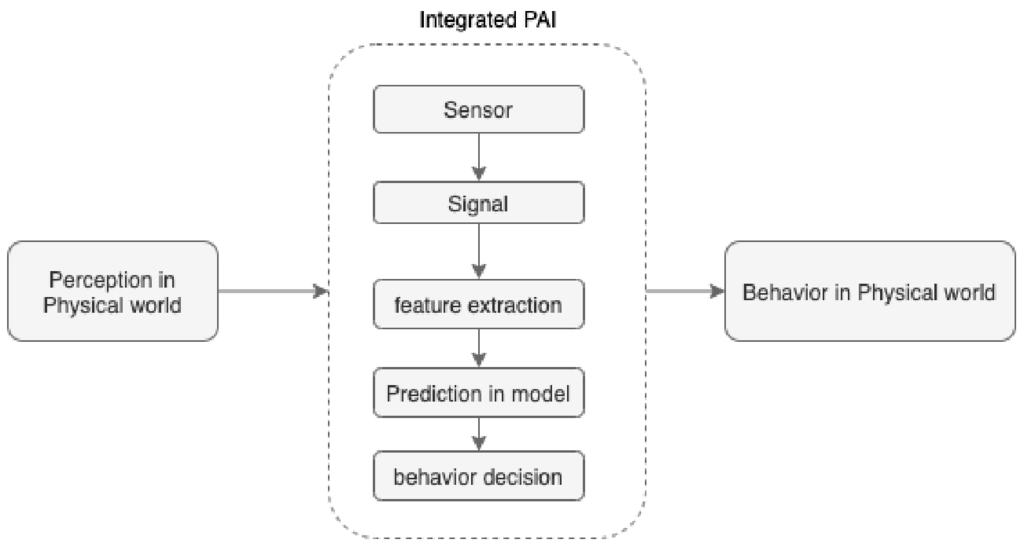
This process involves several key components working together:
- Sensors/Input: The system gathers data. This could be anything from images and sound to text and numerical data.
- Processing Engine: This is the "brain" of the operation. It uses algorithms and models to analyze the input data, recognize patterns, and make predictions or decisions.
- Actuators/Output: The system produces a result. This could be displaying a recommendation on a screen, moving a robotic arm, or generating text.
More Than Just Code
Building intelligent systems isn't just a job for programmers. AI is a deeply interdisciplinary field that pulls from many areas of human knowledge.
Here’s how some of these fields contribute:
- Computer Science provides the programming, algorithms, and computing power to build AI systems.
- Mathematics, especially statistics and probability, offers the tools to model uncertainty and learn from data.
- Psychology lends insights into how humans think, learn, and make decisions, providing models for AI to emulate.
- Neuroscience studies the brain's structure and function, inspiring the design of artificial neural networks.
By drawing on these different disciplines, researchers and engineers can create more robust and capable AI systems.
Let's check your understanding of these foundational ideas.
What is the primary goal of artificial intelligence?
Which of the following is considered one of the three key abilities an AI system tries to replicate?
Now that you have a grasp of what AI is and what it aims to do, you're ready to explore the different types of AI that exist today.