Introduction to Artificial Intelligence
Introduction to Artificial Intelligence
What Is Artificial Intelligence?
Artificial Intelligence, or AI, is about creating computer systems that can perform tasks that usually require human intelligence. Think about how you learn from experience, understand language, recognize faces in a crowd, or make a decision. AI aims to build machines that can do similar things.
The broad term “artificial intelligence” refers to the simulation of human-level intelligence and thinking through the use of machines.
At its core, AI is a broad field of computer science with many sub-fields. Two of the most talked-about are Machine Learning and Deep Learning. You can think of them as nested dolls: AI is the largest doll, Machine Learning is the next one inside, and Deep Learning is an even smaller one inside Machine Learning. Each represents a more specialized way of creating intelligence.
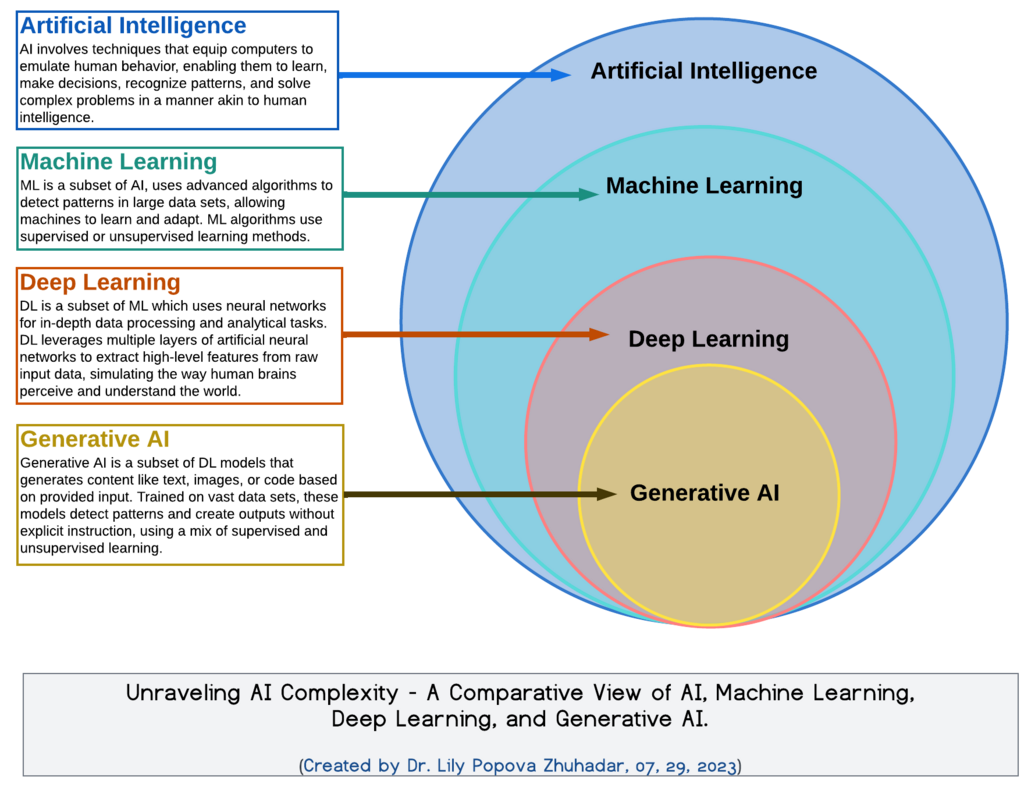
Early AI systems often relied on a set of hand-written rules. A programmer would explicitly tell the computer, "If you see X, do Y." This worked for simple, well-defined problems, but it was brittle. The real world is messy and full of exceptions, and it's impossible to write a rule for every possible situation.
A Quick Trip Through Time
The idea of artificial minds has been around for centuries, but the scientific field of AI officially kicked off in the mid-1950s. The journey since then has been a series of exciting breakthroughs and periods of slower progress, often called "AI winters."
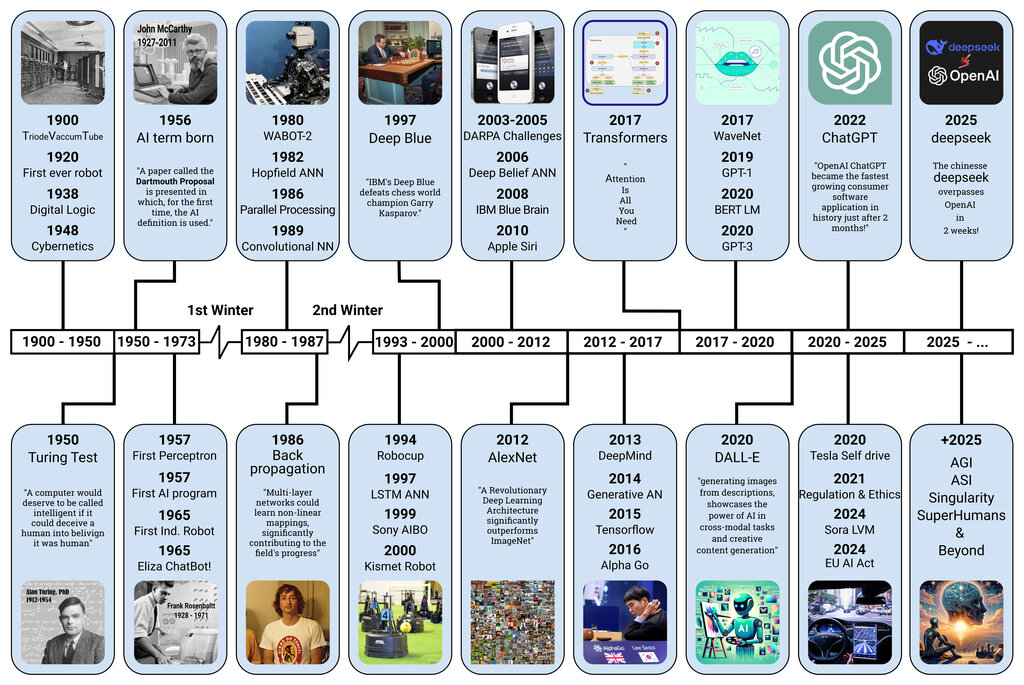
In the early days, pioneers were optimistic. Programs like ELIZA, created in the 1960s, could simulate a conversation by recognizing keywords and responding with programmed phrases. It was a clever trick, but it didn't truly understand the conversation. It was a classic rule-based system.
A major shift came with the rise of machine learning. Instead of being explicitly programmed, systems could now learn patterns directly from data. This led to breakthroughs like IBM's Deep Blue defeating chess grandmaster Garry Kasparov in 1997. Deep Blue didn't just follow rules; it evaluated millions of possible moves to find the best one, learning from vast databases of past games.
The biggest change in AI's history was the move from programming rules to letting machines learn the rules themselves.
AI in the Real World
Today, AI is no longer just a subject of academic research; it's a part of our daily lives and a transformative force across industries. From the way we shop to the way we travel, AI is working behind the scenes.
| Sector | AI Application |
|---|---|
| Healthcare | Analyzing medical images to detect diseases earlier. |
| Finance | Detecting fraudulent transactions in real-time. |
| Transportation | Powering navigation apps and developing self-driving cars. |
| Entertainment | Recommending movies, music, and shows you might like. |
In healthcare, for example, AI algorithms can scan an X-ray or MRI and spot signs of cancer that a human radiologist might miss. This doesn't replace the doctor but acts as a powerful assistant, helping them make more accurate diagnoses.
In the financial world, banks use AI to analyze thousands of transactions per second. The system learns what your normal spending habits look like, so it can flag a purchase that seems out of character and potentially fraudulent, protecting your account.
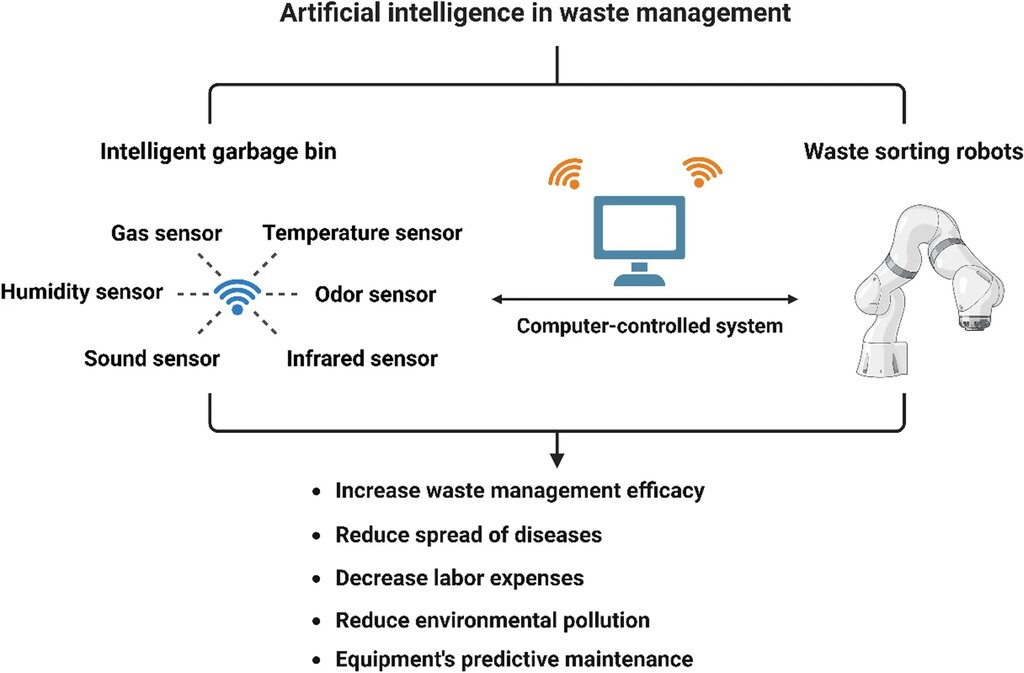
This ability to find patterns in huge amounts of data is what makes modern AI so powerful. It's driving innovation in nearly every field imaginable.
What is the primary goal of Artificial Intelligence?
Which statement best describes the relationship between AI, Machine Learning (ML), and Deep Learning (DL)?
That's a brief look at what AI is, where it came from, and how it's changing the world. The field is constantly evolving, building on these foundational ideas to create even more capable systems.