Introduction to Artificial Intelligence and Its Applications
Introduction to Artificial Intelligence
What Is Artificial Intelligence?
Artificial Intelligence, or AI, is the science of making machines that can think or act intelligently. The goal is to create systems that can perform tasks that normally require human intelligence, like understanding language, recognizing images, and making decisions.
Think of it this way: We're trying to teach computers how to learn and solve problems on their own, much like a person does.
AI isn't a single technology. It's a broad field of computer science that covers many different methods and approaches. It ranges from simple rule-based systems to complex models that can learn and adapt over time.
A Quick Trip Through Time
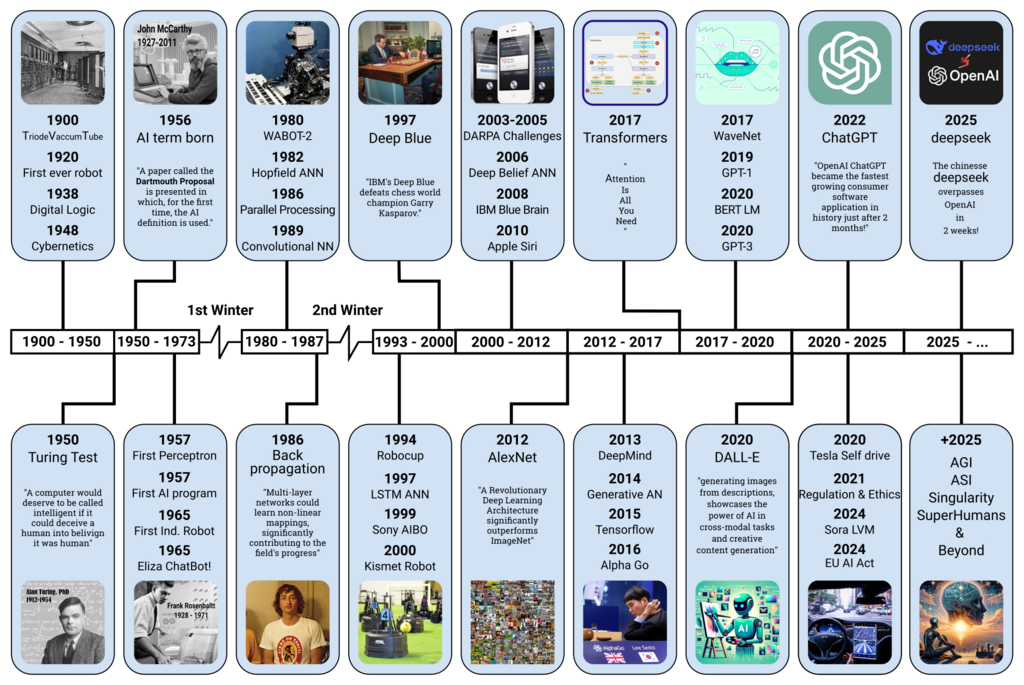
The idea of intelligent machines has been around for centuries in myths and stories, but the actual scientific field is much younger. The term "artificial intelligence" was first used in 1956 at a conference at Dartmouth College. This event brought together the first generation of AI researchers and set the agenda for the field for decades to come.
The journey wasn't always smooth. The early excitement was followed by periods known as "AI winters," when progress slowed and funding dried up. Researchers discovered that creating true intelligence was far more difficult than they initially thought.
But in recent decades, two key ingredients have changed everything: massive amounts of data and powerful computers. These have fueled a resurgence in AI, leading to the breakthroughs we see today.
AI, Machine Learning, and Deep Learning
You'll often hear the terms AI, machine learning, and deep learning used together, sometimes interchangeably. While they're related, they aren't the same thing. It's best to think of them as nested concepts, like Russian dolls.
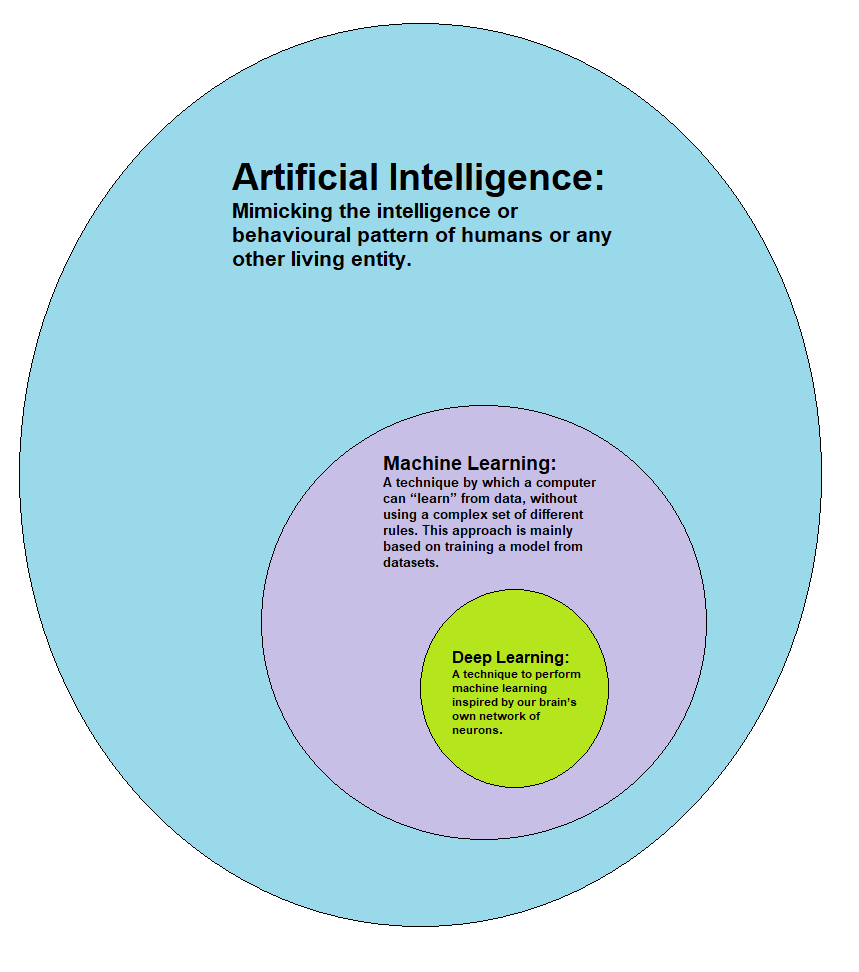
Artificial Intelligence (AI) is the largest doll, the overall concept of creating intelligent machines.
Machine Learning (ML) is the next doll inside. It's a specific approach to AI where systems learn directly from data. Instead of being programmed with rules, a machine learning model is trained on examples. For instance, by showing it thousands of cat photos, it learns to recognize a cat.
Deep Learning (DL) is the smallest doll, a specialized type of machine learning. It uses complex structures called neural networks, which are loosely inspired by the human brain. Deep learning is behind many of the most impressive recent AI achievements, like advanced image recognition and natural language processing.
Why AI Matters Now
AI is no longer a futuristic fantasy; it's a technology that is actively shaping our world. Its impact is growing because it allows us to solve problems and perform tasks at a scale and speed that was previously impossible.
From the simple to the complex, AI is already integrated into many of the tools we use every day. When your navigation app reroutes you to avoid traffic, that's AI. When a streaming service recommends a movie you might like, that's AI. When your email client filters out spam, that's also AI at work.
Beyond personal convenience, AI is driving significant advancements in fields like medicine, where it helps in diagnosing diseases, and in scientific research, where it can analyze vast datasets to uncover new discoveries. It’s changing how businesses operate, how we create art, and how we communicate.
Ready to check your understanding? Let's see what you've learned.
Which statement best describes the relationship between Artificial Intelligence (AI), Machine Learning (ML), and Deep Learning (DL)?
The term "artificial intelligence" was first coined at a conference in which decade?
Understanding these core concepts is the first step in seeing how AI works and why it's becoming such an important part of our modern world.