Introduction to Artificial Intelligence
Introduction to Artificial Intelligence
What Is Artificial Intelligence?
Artificial Intelligence is about creating machines that can think, learn, and solve problems like humans do. It's a broad field in computer science focused on building systems that can perform tasks that would normally require human intelligence. This includes everything from understanding language to recognizing objects in a photo.
Artificial intelligence (AI), commonly defined as “a system’s ability to interpret external data correctly, to learn from such data, and to use those learnings to achieve specific goals and tasks through flexible adaptation.”
Think of it this way: instead of writing a specific set of instructions for every possible situation, AI aims to give a system the ability to figure things out on its own. It’s the difference between a simple calculator that only follows programmed rules and a system that can learn to play chess by analyzing thousands of games.
Why AI Matters
AI isn't just science fiction anymore; it's a part of our daily lives and a powerful tool for businesses and industries. It helps us tackle complex problems and automate tasks, leading to more efficiency and new possibilities.
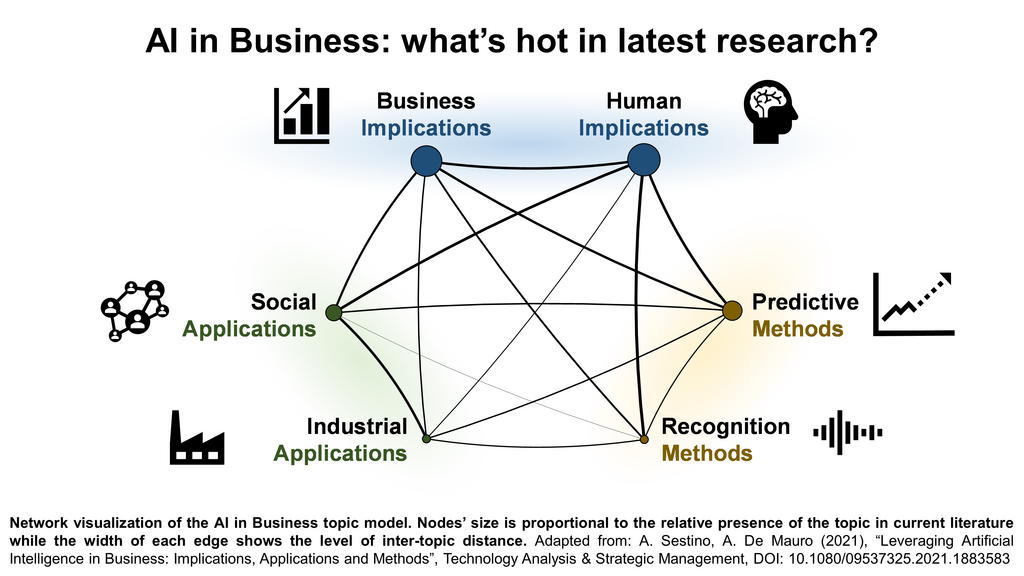
Here are just a few examples of where AI is making an impact:
- Healthcare: AI algorithms can analyze medical images like X-rays and MRIs to help doctors detect diseases like cancer earlier and more accurately.
- Entertainment: When Netflix or Spotify suggests a movie or song you might like, that's AI at work. It learns your preferences based on what you've watched or listened to before.
- Transportation: The development of self-driving cars relies heavily on AI to perceive the environment, make decisions, and navigate safely.
- Finance: Banks use AI to detect fraudulent transactions in real-time, protecting customers from theft.
From sorting our recycling more effectively to powering the virtual assistants on our phones, AI is quietly working behind the scenes to make many modern technologies possible.
AI, Machine Learning, and Deep Learning
You'll often hear the terms Artificial Intelligence, Machine Learning, and Deep Learning used together, and it's easy to get them confused. The simplest way to think about them is as a set of Russian nesting dolls, where each one is a part of the one before it.
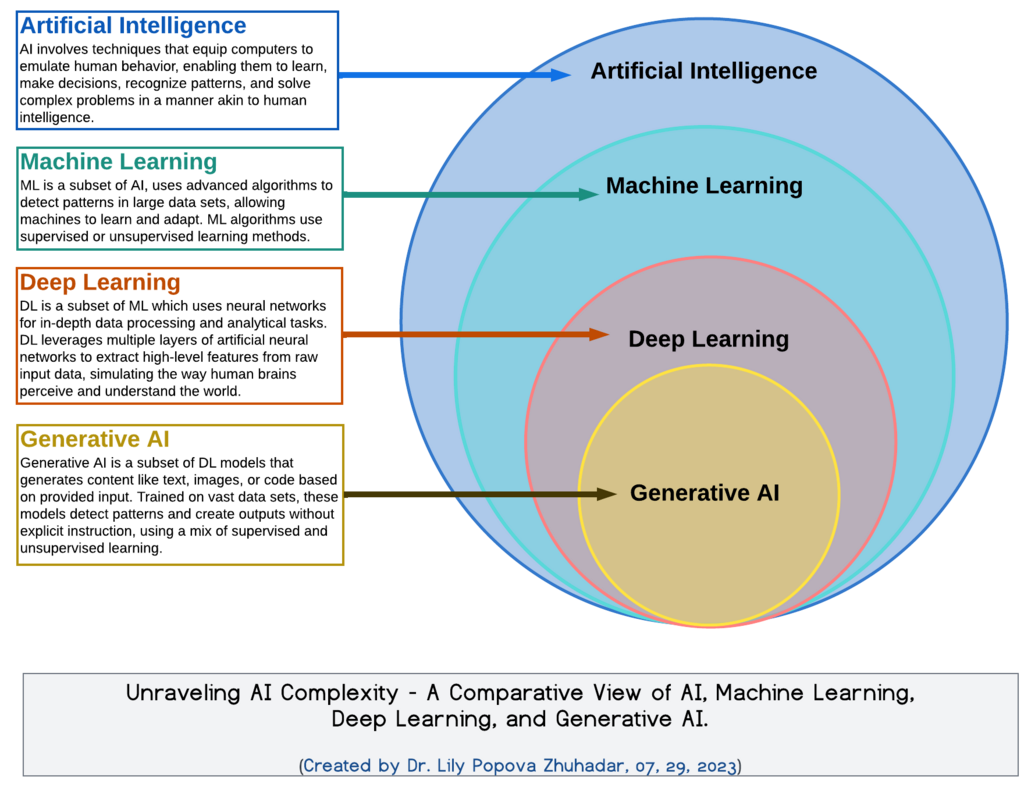
Artificial Intelligence (AI) is the all-encompassing concept of creating intelligent machines. It's the big, overarching field that has been around for decades.
Machine Learning (ML) is a subset of AI. It’s one of the most common ways to achieve AI today. Instead of programming a computer with explicit rules, machine learning involves “training” a system by feeding it large amounts of data. The system learns to recognize patterns from the data and make predictions or decisions.
Deep Learning (DL) is a subset of machine learning. It's a specific and very powerful technique that uses complex, multi-layered structures called neural networks, which are loosely inspired by the human brain. Deep learning is the technology behind many of the most impressive AI advancements, like realistic image generation and advanced language translation.
So, all deep learning is machine learning, and all machine learning is AI. But not all AI uses machine learning, and not all machine learning uses deep learning.
Understanding these distinctions helps clarify what people mean when they talk about AI. While the broader goal is creating intelligent systems, the specific methods, like machine learning and deep learning, are how we're making that goal a reality.
What is the primary goal of Artificial Intelligence (AI)?
The relationship between AI, Machine Learning (ML), and Deep Learning (DL) can be compared to nesting dolls. Which of the following correctly describes this relationship?