Introduction to Artificial Intelligence
Introduction to Artificial Intelligence
What Is Artificial Intelligence?
Artificial intelligence is the science of making machines that can think, reason, and learn like humans. The goal is to create systems that can perform tasks that typically require human intelligence, such as understanding language, recognizing images, and making decisions.
Artificial Intelligence
noun
A branch of computer science focused on creating machines capable of performing tasks that typically require human intelligence.
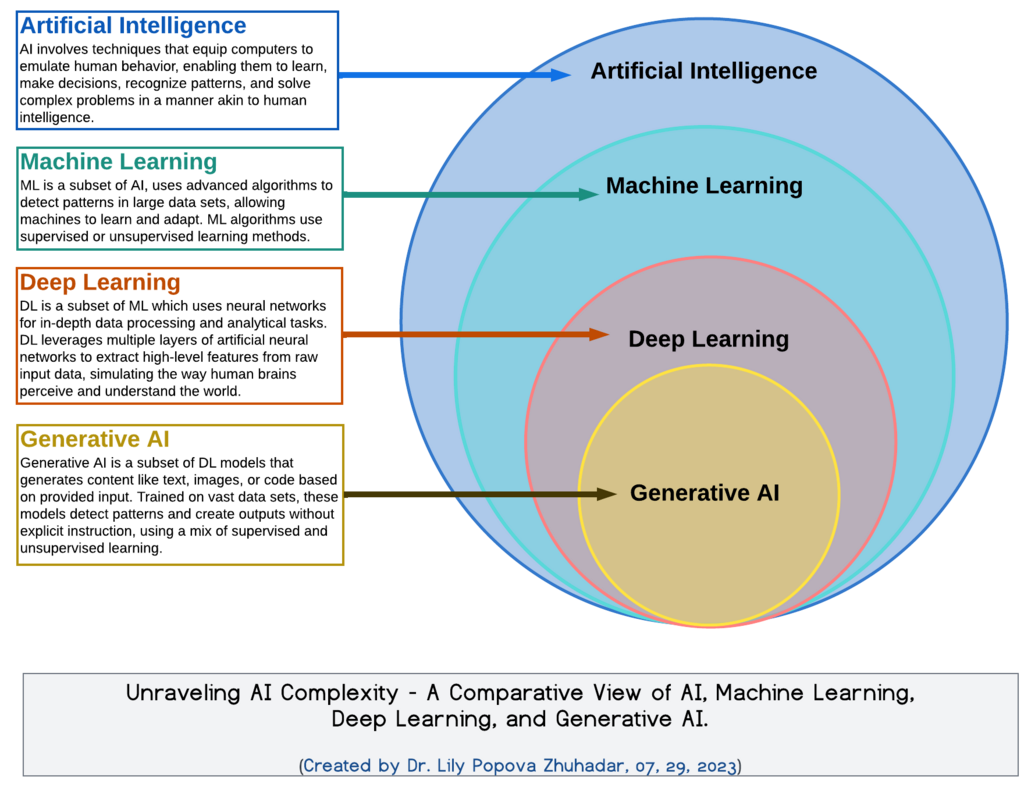
At the heart of modern AI are a few key concepts. Think of them like Russian nesting dolls, with each one fitting inside the other.
Artificial Intelligence (AI) is the broadest category. It's the entire field of making smart machines.
Machine Learning (ML) is a subset of AI. Instead of being explicitly programmed with rules, ML systems learn patterns directly from data. They get better at a task by analyzing examples, much like you learn to ride a bike through practice, not by reading an instruction manual.
Deep Learning is a specialized type of machine learning that uses structures called neural networks. These networks are inspired by the human brain, with many layers of interconnected 'neurons'. Deep learning is the engine behind many of today's most advanced AI applications, like self-driving cars and advanced image recognition.
A Brief History
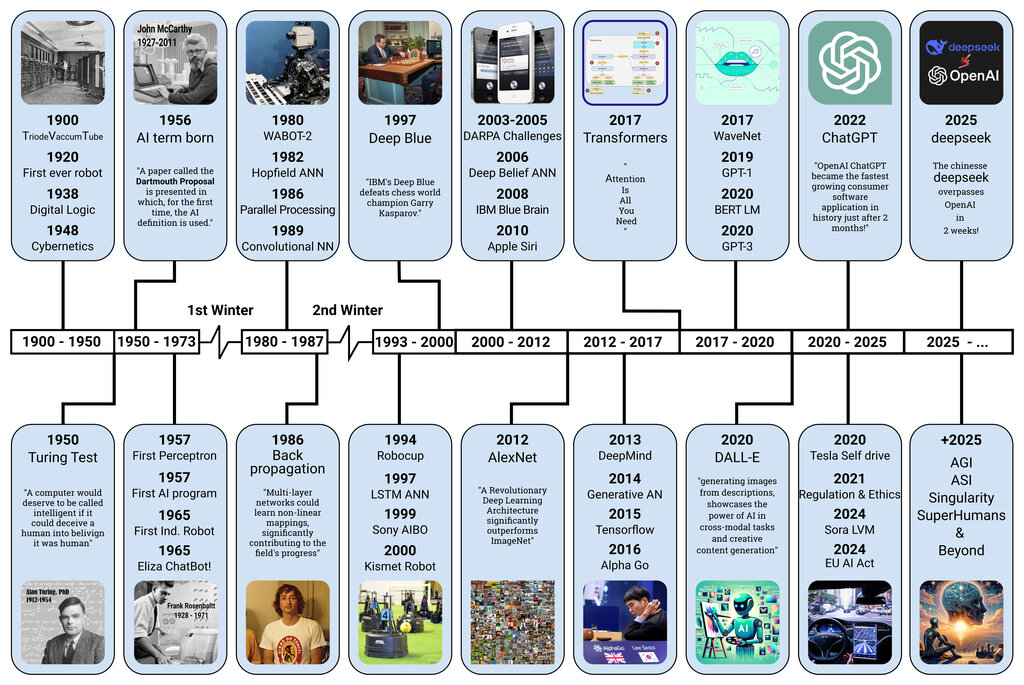
The idea of intelligent machines has been around for centuries, but the formal field of AI research began in the 1950s. A pivotal moment was the Dartmouth Workshop in 1956, where the term "artificial intelligence" was coined and the field's vision was established.
Early AI focused on rule-based systems, where programmers tried to write down all the logical rules a machine would need to reason about a specific problem. This worked for simple games like checkers but failed for more complex, real-world tasks.
The field went through periods of high optimism followed by "AI winters," when funding dried up due to slow progress. A major shift occurred with the rise of machine learning in the 1980s and 90s, fueled by more powerful computers and larger datasets. This led to breakthroughs like IBM's Deep Blue computer defeating chess champion Garry Kasparov in 1997.
In the 2010s, deep learning kicked off the modern AI boom, leading to the powerful systems we see today.
Two Kinds of AI
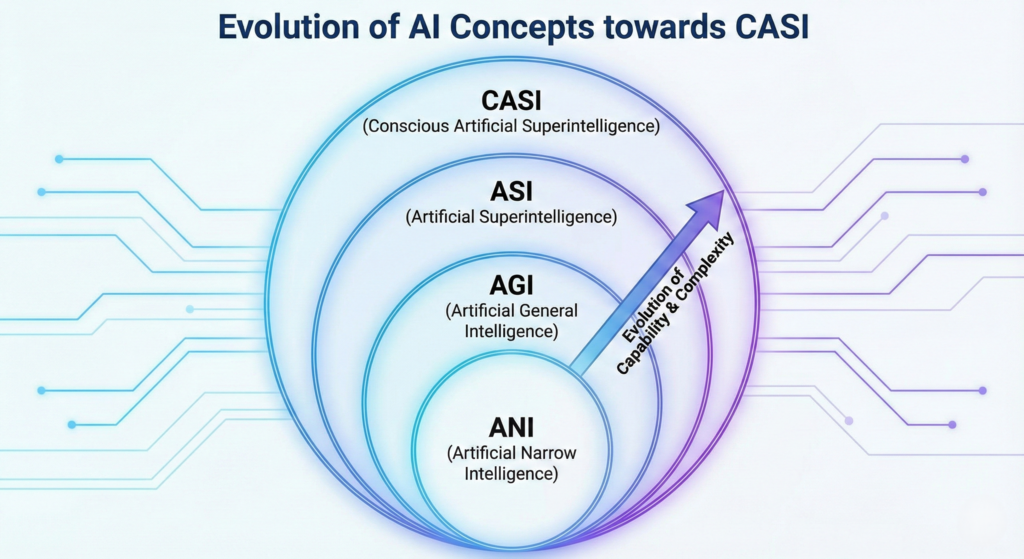
When people talk about AI, they are usually referring to one of two concepts: narrow AI or general AI.
Artificial Narrow Intelligence (ANI), also known as Weak AI, is what we have today. These systems are designed to perform a specific, narrow task very well. Your GPS, a spam filter, or a recommendation engine on a shopping website are all examples of ANI. They are incredibly powerful at their one job but can't operate outside of it. A chess-playing AI can't write an email or recognize a cat in a photo.
Artificial General Intelligence (AGI), or Strong AI, is the type of intelligence we see in science fiction. This is an AI with the ability to understand, learn, and apply its intelligence to solve any problem, just like a human being. AGI does not yet exist, and building it remains one of the most significant challenges in computer science. Beyond AGI is the concept of Artificial Superintelligence (ASI), an intellect that would be much smarter than the best human brains in practically every field.
Ethics and Impact
As AI becomes more integrated into our daily lives, its societal impact grows. AI offers enormous benefits, from helping doctors diagnose diseases earlier to making transportation safer. It can automate tedious tasks, freeing up people to focus on more creative and strategic work.
However, this powerful technology also raises important ethical questions. If an AI system makes a mistake, who is responsible? How do we ensure that AI systems, which learn from data, don't inherit and amplify human biases present in that data? This can lead to unfair outcomes in areas like hiring, loan applications, and criminal justice.
Key ethical considerations in AI include fairness, accountability, and transparency. It's crucial that AI systems are developed and deployed in a way that is safe, trustworthy, and beneficial to everyone.
Concerns about job displacement due to automation and the potential for misuse of AI in surveillance or autonomous weapons are also major topics of discussion. Navigating these challenges requires careful thought from developers, policymakers, and the public to ensure AI is used responsibly.

Time to review what we've covered.
Let's check your understanding.
Which statement accurately describes the relationship between Artificial Intelligence (AI), Machine Learning (ML), and Deep Learning?
The AI systems we use today, such as spam filters and recommendation engines, are examples of Artificial General Intelligence (AGI).
Understanding these foundational ideas is the first step in grasping the power and potential of artificial intelligence.