Introduction to Artificial Intelligence
Introduction to Artificial Intelligence
What Is Artificial Intelligence?
At its core, artificial intelligence is the science of making machines that can think like humans. It's a broad field in computer science focused on building smart machines capable of performing tasks that typically require human intelligence. This can range from recognizing speech to playing complex games like chess or Go.
Think of it this way: we teach a child by showing them examples. We might show them pictures of cats until they learn to recognize a cat on their own. AI, particularly a subfield called machine learning, works in a similar way. Engineers feed a computer vast amounts of data—pictures, text, or sounds—and the machine learns to recognize patterns, make decisions, and even predict outcomes.
Artificial Intelligence
noun
The theory and development of computer systems able to perform tasks that normally require human intelligence, such as visual perception, speech recognition, decision-making, and translation between languages.
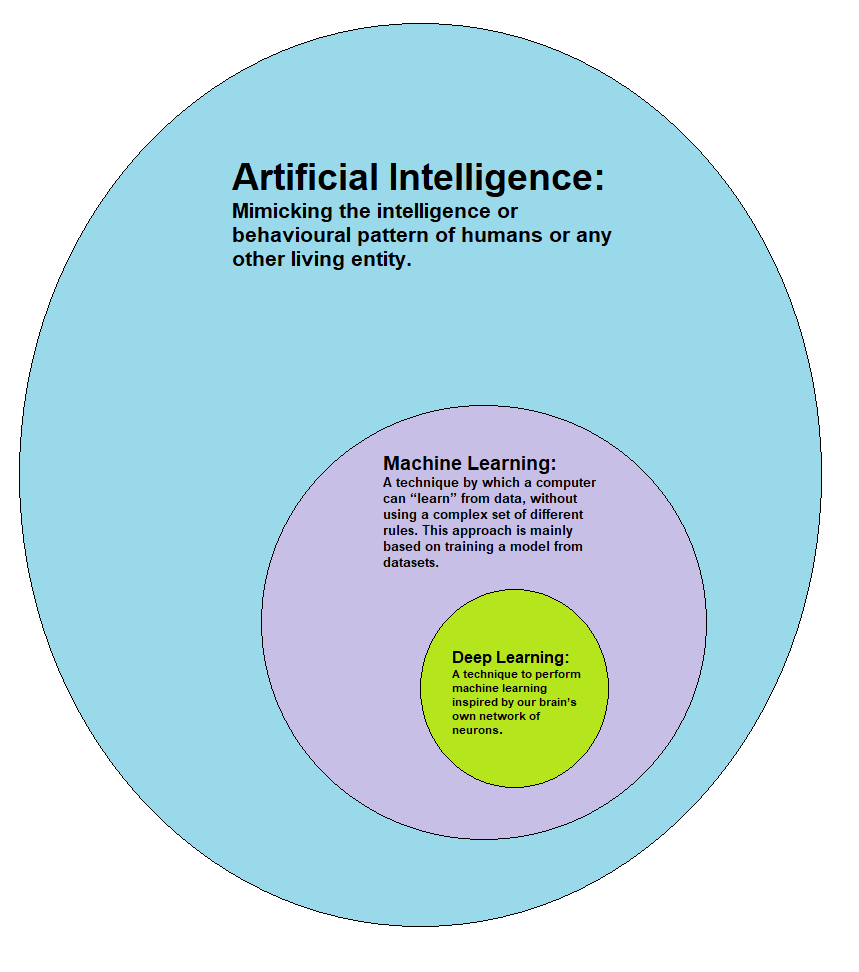
AI isn't just one single technology. It's an umbrella term that covers many different approaches and techniques. You'll often hear terms like machine learning and deep learning, which are subsets of AI. Machine learning allows systems to learn from data, while deep learning is an even more specialized technique that uses complex neural networks to solve intricate problems.
A Brief History of AI
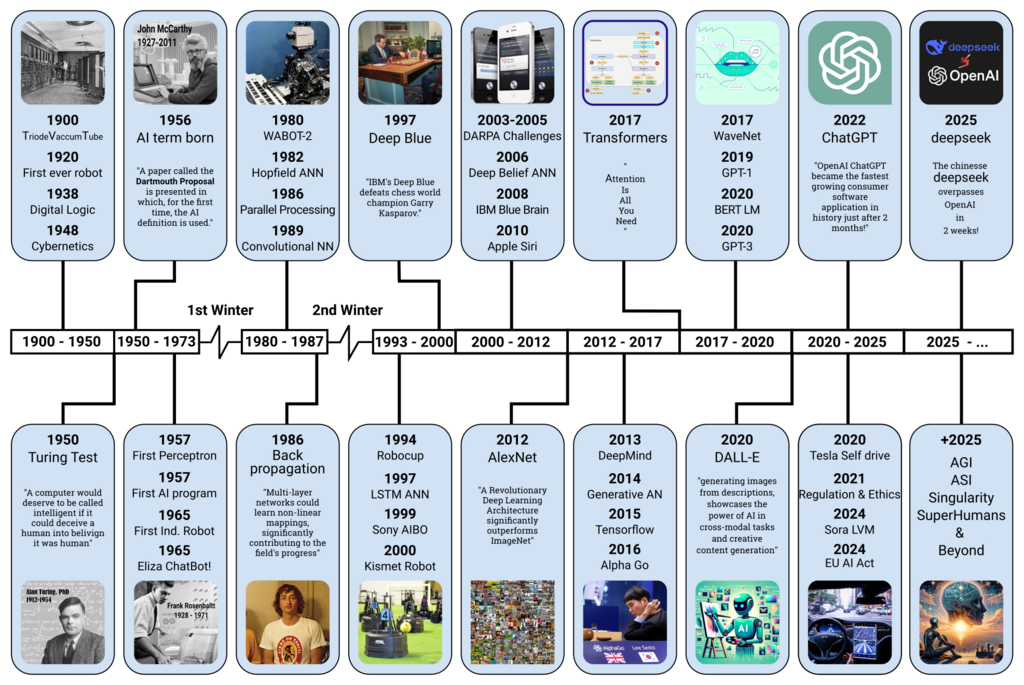
Understanding the history of artificial intelligence is crucial for grasping its current capabilities and future potential.
The idea of intelligent machines has been around for centuries, but the modern field of AI began to take shape in the 1950s. The term "artificial intelligence" was officially coined in 1956 at a conference at Dartmouth College. Early researchers were incredibly optimistic, believing that a machine as intelligent as a human being would exist in just a few decades.
Progress wasn't always a straight line. The field went through several periods of reduced funding and interest, known as "AI winters." These occurred when the technology couldn't live up to the initial hype. Early computers lacked the processing power and data storage to tackle the truly complex problems AI researchers wanted to solve.
Things started to change in the late 1990s and early 2000s. Two key factors fueled a resurgence: the availability of massive amounts of data (thanks to the internet) and the development of much faster computers. These advancements allowed machine learning techniques to flourish, leading to breakthroughs that power many of the AI tools we use today.
Why AI Matters Today
AI has moved from a niche academic field to a powerful force in our daily lives. It's the engine behind countless technologies you likely use every day, from the recommendation algorithms that suggest what to watch next on a streaming service to the navigation apps that find the fastest route home.
AI's significance lies in its ability to process and understand data at a scale and speed far beyond human capability.
This ability is transforming entire industries. AI helps doctors diagnose diseases earlier, scientists accelerate research, and businesses operate more efficiently. It's a tool that can augment human abilities, helping us solve some of the world's most complex challenges, from climate change to disease.
As the technology continues to evolve, its impact will only grow. Understanding the basic principles of AI is no longer just for computer scientists; it's becoming essential for everyone.
Ready to check your understanding of these core concepts?
What is the primary goal of artificial intelligence?
Which statement correctly describes the relationship between AI, machine learning, and deep learning?