Introduction to Artificial Intelligence
Introduction to AI
What Is AI Anyway?
Artificial Intelligence is about creating computer systems that can perform tasks that normally require human intelligence. Think about learning from experience, understanding language, recognizing objects, solving problems, and making decisions. The goal isn't just to make a machine follow a rigid set of instructions, but to enable it to adapt and respond to new situations, much like a person would.
At its core, AI is the science of making machines smart.
Artificial Intelligence
noun
A field of computer science dedicated to creating systems that can perform tasks requiring human intelligence, such as visual perception, speech recognition, decision-making, and translation between languages.
Two Flavors of AI
When people talk about AI, they're usually referring to one of two distinct types. Understanding the difference is key to seeing where the technology is today and where it might go in the future.
The first type is all around us, powering many of the apps we use every day. The second is still the stuff of science fiction.
Artificial Narrow Intelligence (ANI), often called "Weak AI," is trained to perform a single, specific task. It might be incredibly good at that one thing, even better than a human, but it can't operate outside its designated area. A chess-playing AI can't start recommending movies, and a spam filter can't drive a car.
Artificial General Intelligence (AGI), or "Strong AI," is the more futuristic concept. This is a type of AI that would possess the ability to understand, learn, and apply its intelligence to solve any problem, much like a human being. It wouldn't be limited to a single domain. As of now, AGI does not exist.
AI Is Already Here
You might not always notice it, but you likely interact with Narrow AI every single day. It works behind the scenes to make our technology more helpful and personalized.
For example, when you open a streaming service, an AI analyzes your viewing history to suggest movies you might like. When you use a navigation app, AI calculates the fastest route by analyzing live traffic data from thousands of other users. Even your email's spam filter is a form of AI, learning to identify and block junk mail based on patterns it recognizes.
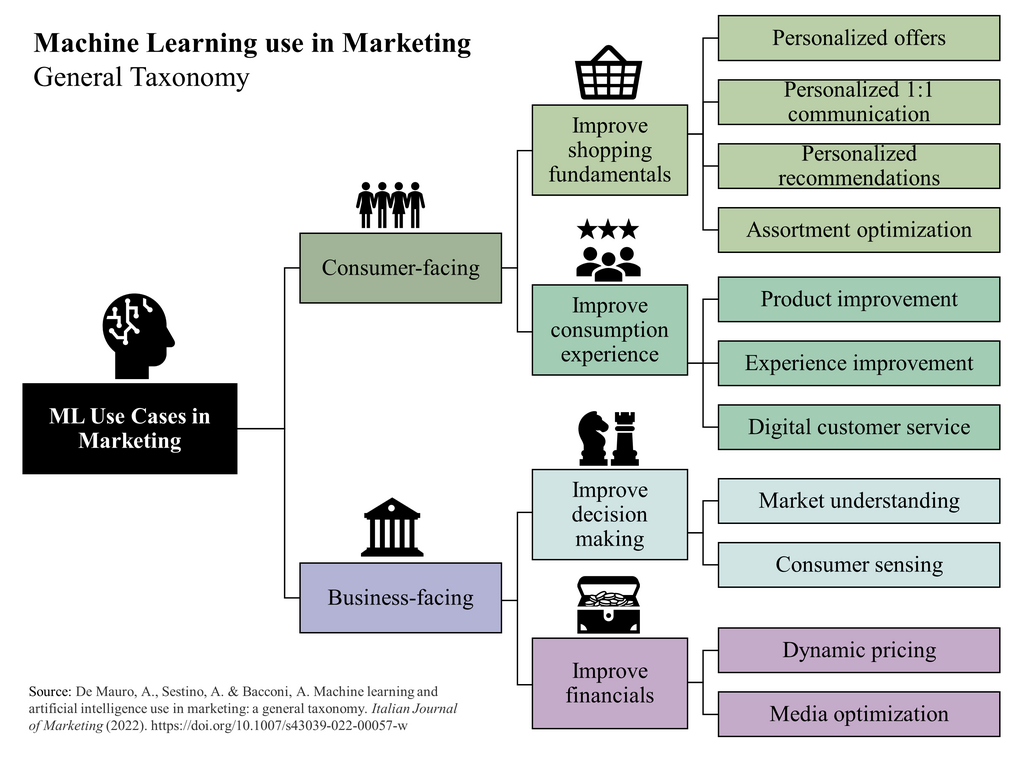
Other common applications include:
- Voice Assistants: Siri, Alexa, and Google Assistant use AI to understand and respond to spoken commands.
- Social Media Feeds: Algorithms decide which posts to show you based on your past interactions.
- Online Shopping: Recommendation engines suggest products based on your browsing and purchase history.
These systems are all examples of Narrow AI. They excel at their specific jobs, making our digital lives smoother and more efficient.
What is the primary goal of Artificial Intelligence?
The AI that powers your social media feed, suggesting content based on your past activity, is an example of which type of AI?
So, while the idea of human-like intelligent robots is still in the realm of fiction, the practical application of task-specific AI is a real and growing part of our world.