Introduction to Artificial Intelligence
Introduction to Artificial Intelligence
What Is Artificial Intelligence?
Artificial intelligence, or AI, is the science of making machines that can think like humans. It's about creating systems that can learn, reason, solve problems, and understand language. The goal is to build tools that can perform tasks that typically require human intelligence.
Think of it this way: a calculator can do math faster than any person, but it can't learn. AI, on the other hand, is designed to learn from experience, just like we do. It adapts.
At its heart, AI is about pattern recognition. Whether it's identifying a cat in a photo, spotting a fraudulent credit card transaction, or translating a sentence from Spanish to English, the AI is finding patterns in data and making a decision based on them. A more formal definition captures this idea of learning and adapting.
…a system’s ability to interpret external data correctly, to learn from such data, and to use those learnings to achieve specific goals and tasks through flexible adaptation.
algorithm
noun
A set of step-by-step instructions or rules that a computer follows to solve a problem or complete a task.
Why AI Matters
AI isn't just a concept from science fiction anymore; it's a technology that is reshaping our world. From the way we shop to the way doctors diagnose diseases, AI is having a profound impact across countless industries. It helps automate repetitive tasks, analyze massive amounts of data, and find solutions to complex problems that would be impossible for humans to solve alone.
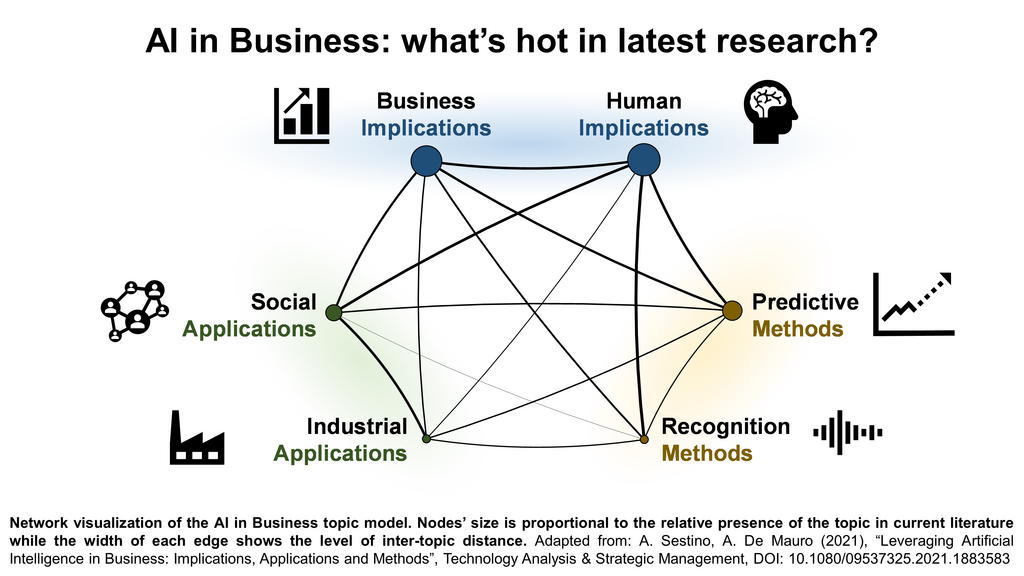
The power of AI lies in its ability to bring efficiency and new capabilities to almost any field. This widespread influence is why understanding its basic principles has become so important.
| Industry | How AI is Used |
|---|---|
| Healthcare | Analyzing medical scans to detect diseases early. |
| Finance | Identifying fraudulent transactions in real-time. |
| Entertainment | Recommending movies, music, and shows. |
| Transportation | Developing navigation systems and self-driving cars. |
| Retail | Personalizing shopping experiences for customers. |
The Basic Principles
So, how does an AI system actually work? While the specifics can be incredibly complex, the basic process is straightforward. It boils down to three main steps: input, processing, and output.
- Input Data: An AI system needs information to learn from. This data can be anything: thousands of pictures of cats, millions of financial transactions, or the entire text of Wikipedia.
- AI Model: This is the 'brain' of the operation. It uses algorithms to process the input data, identify patterns, and learn from them. For example, by analyzing cat photos, it learns what features (whiskers, pointy ears, fur) define a cat.
- Output: After learning, the AI can make a prediction or a decision when given new, unseen data. You show it a new picture, and it outputs whether it's a cat. The output is the result of the task it was trained to perform.
This cycle of data, learning, and prediction is the fundamental principle behind nearly all AI systems.
What is the primary goal of artificial intelligence (AI)?
At its core, the process of most AI systems is about _______.