Introduction to Artificial Intelligence
Introduction to Artificial Intelligence
What Is Artificial Intelligence?
Artificial intelligence, or AI, is the science of making machines that can think and learn like humans. It's about creating systems that can perform tasks that typically require human intelligence, such as understanding language, recognizing patterns, and making decisions.
Think of it like teaching a toddler. You don't give a child a long list of rules for how to recognize a cat. Instead, you show them pictures and point out real cats. Over time, they learn the features—whiskers, pointy ears, a tail—and can identify a cat they've never seen before. AI works in a similar way, learning from vast amounts of data to make intelligent predictions and choices.
AI is a broad field focused on creating smart machines. It's not just one technology, but a collection of methods and tools that allow computers to learn, reason, and act.
From recommending your next movie to helping doctors diagnose diseases, AI is already a part of daily life. Understanding its core components is the first step to seeing how it all works.
The Building Blocks of AI
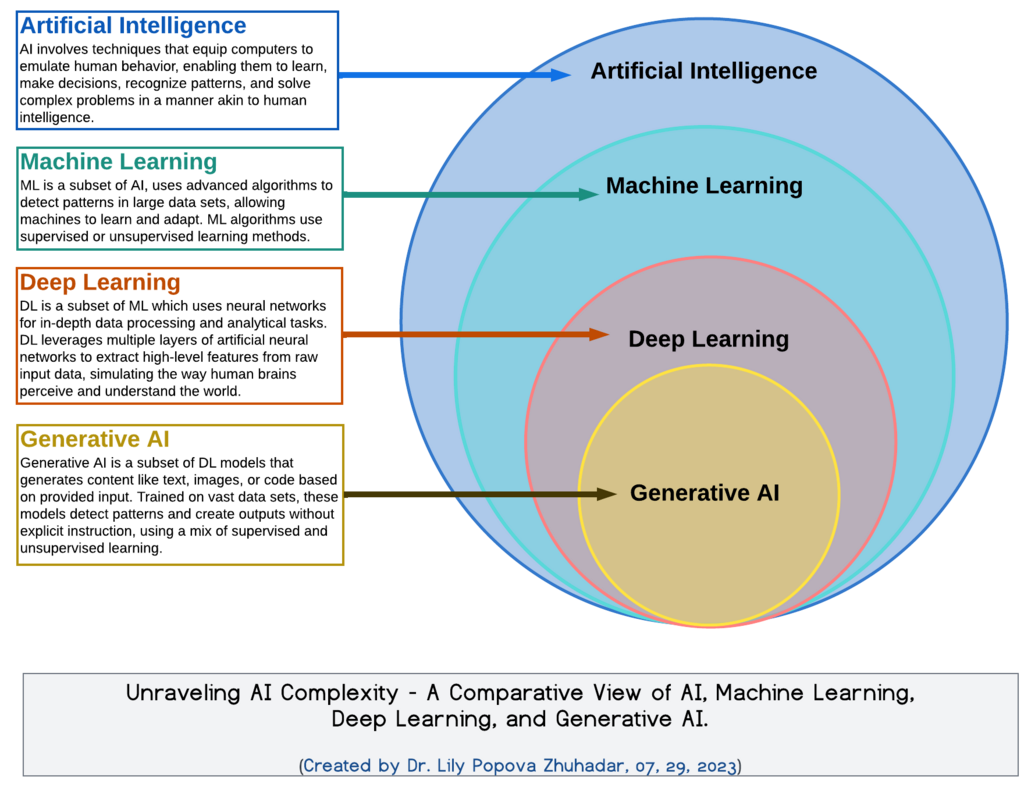
Artificial intelligence isn't a single entity. It's an umbrella term that covers several key areas. The most important of these is Machine Learning (ML).
Machine learning is a type of AI where systems learn directly from data. Instead of being programmed with explicit instructions for every possible scenario, an ML model is trained on a dataset. A spam filter is a classic example. It learns to distinguish junk mail from important messages by analyzing thousands of emails and identifying common features of spam, like certain keywords or sender patterns.
A specialized subset of machine learning is Deep Learning (DL). Deep learning is inspired by the structure of the human brain. It uses complex, multi-layered structures to uncover intricate patterns in data. This is especially useful for tasks like recognizing images or understanding human speech, where the patterns are too subtle for traditional machine learning to handle effectively.
How Machines Learn
So how does deep learning actually work? The engine behind it is something called a neural network. Just as our brains are made of interconnected neurons, an artificial neural network is made of layers of nodes, or artificial neurons.
Imagine you're trying to identify a handwritten number. A neural network would break this task down into tiny pieces. The first layer of nodes might look for simple edges and curves. The next layer would take that information and start to recognize combinations, like circles and straight lines. Subsequent layers combine those features into more complex shapes, until the final layer makes a guess: "That's a 7."
Neural Network
noun
A computing system inspired by the biological neural networks that constitute animal brains. It consists of layers of connected units or nodes called artificial neurons.
Each node in the network processes information and passes it to the next layer. During training, the connections between these nodes are adjusted to improve the accuracy of the final output. This layered approach allows deep learning models to learn incredibly complex patterns from raw data, making them powerful tools for modern AI.
With these fundamental concepts, you're ready to explore the different ways AI is being applied in the world.
Ready to check your understanding?
What is the primary goal of Artificial Intelligence (AI)?
Machine Learning (ML) is best described as a ________ of Artificial Intelligence.
This is just the beginning. By understanding these core ideas, you've built a solid foundation for exploring the exciting and rapidly evolving world of artificial intelligence.