Introduction to Artificial Intelligence
Introduction to Artificial Intelligence
What Is Artificial Intelligence?
At its heart, Artificial Intelligence (AI) is the science of making machines smart. The goal is to create computer systems that can perform tasks that usually require human intelligence. This includes things like learning from experience, understanding language, recognizing objects in a photo, and solving complex problems.
Think of it like teaching a robot to be a chef. You wouldn't just give it a list of rigid instructions for one recipe. Instead, you'd want it to understand flavors, learn cooking techniques, and adapt if an ingredient is missing. A truly intelligent robot chef could even invent new dishes. AI aims for that same kind of flexible, adaptive intelligence in software.
Artificial Intelligence
noun
A field of computer science dedicated to creating systems that can perform tasks that typically require human intelligence.
A Brief History of AI
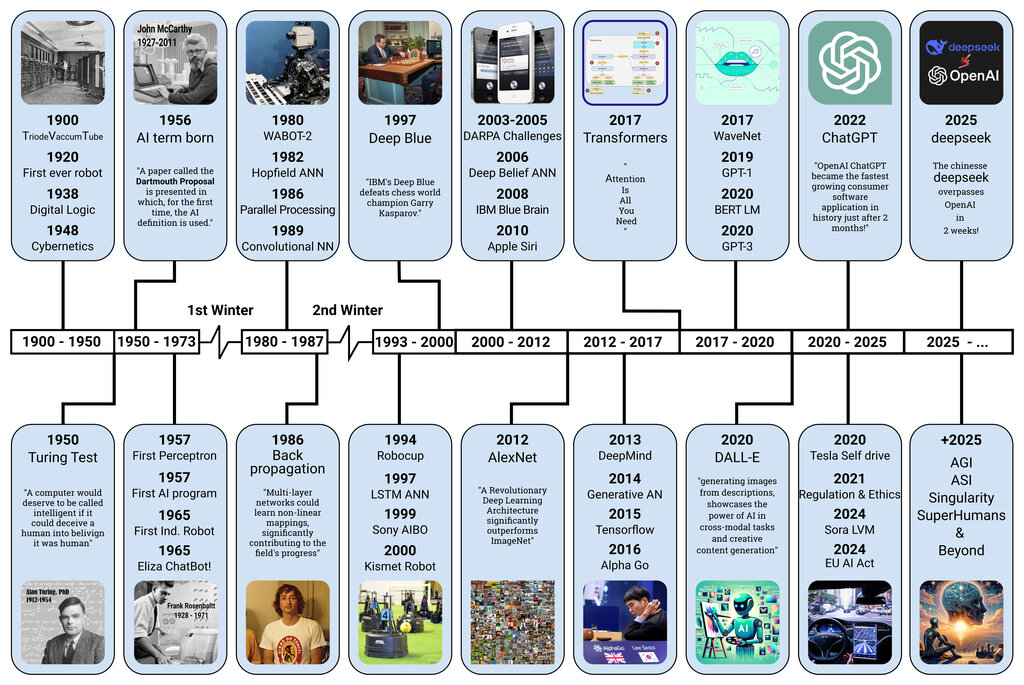
The dream of creating intelligent machines is ancient, but the scientific pursuit of AI is relatively new. It officially began in the summer of 1956 at a conference at Dartmouth College. It was here that a small group of researchers coined the term “Artificial Intelligence” and laid out the field's ambitious vision.
1956: Dartmouth Conference: Official birth of AI as a field of study, coining the term “Artificial Intelligence.”
The path forward wasn't a straight line. The initial excitement led to bold predictions, but the complexity of creating true intelligence was far greater than imagined. Limited computing power and data led to periods of disillusionment and reduced funding, known as “AI winters.”
Things began to change dramatically in the 21st century. Two key ingredients became widely available: massive amounts of data from the internet and powerful, affordable computers. This combination fueled the rise of machine learning, a subfield of AI where systems learn directly from data, leading to the rapid progress we see today.
Why AI Matters Now
AI is no longer just a subject of science fiction. It has become a foundational technology that is reshaping our world. From the way we search for information to how we get medical diagnoses, AI is increasingly working behind the scenes. It's a tool that can amplify human capabilities, helping us find patterns in vast datasets, automate tedious tasks, and tackle some of the world's most pressing challenges.
The significance of AI lies in its potential to solve problems at a scale and speed that humans cannot. It's a new lens through which to understand our world.
Understanding the basics of AI is becoming essential for everyone, not just programmers and scientists. It helps us become more informed users of technology, understand the news, and think critically about how these powerful tools are being used. As AI continues to evolve, its impact on society, the economy, and our daily lives will only grow.
Now, let's test your understanding of these core concepts.
What is the primary goal of Artificial Intelligence?
The term "AI winters" refers to periods when progress in AI research stagnated due to a lack of funding and public interest.
This foundation gives you the context to explore the more specific types and applications of AI.