Introduction to Artificial Intelligence
Introduction to Artificial Intelligence
What is Artificial Intelligence?
At its core, artificial intelligence is the science of making machines smart. It's a broad field in computer science focused on building systems that can perform tasks that typically require human intelligence. This includes things like learning from experience, solving problems, understanding language, and recognizing objects in images.
Artificial Intelligence
noun
A field of computer science dedicated to creating systems capable of performing tasks that normally require human intelligence, such as visual perception, speech recognition, decision-making, and translation between languages.
AI isn't just one single technology. It's an umbrella term that covers several specialized subfields. The most important ones to know are machine learning, deep learning, and natural language processing. They are nested concepts, with each one being a more specific application of the one before it.
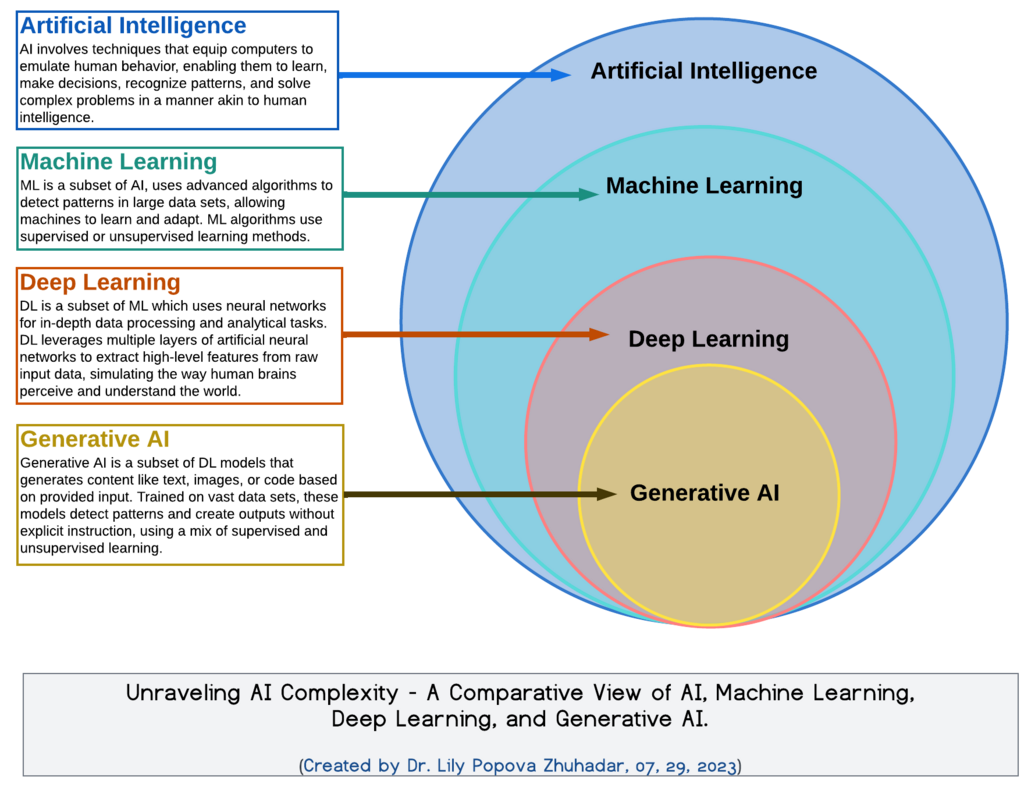
Here’s a quick breakdown:
-
Machine Learning (ML) is a subset of AI where systems learn directly from data. Instead of being programmed with explicit rules, an ML model identifies patterns in data to make predictions. For example, your email service uses ML to learn what spam looks like based on past examples.
-
Deep Learning (DL) is a more advanced type of machine learning. It uses structures called neural networks, which are inspired by the human brain. These networks have many layers, allowing them to learn complex patterns from huge amounts of data. Deep learning powers things like facial recognition and self-driving cars.
-
Natural Language Processing (NLP) is a field of AI that focuses on enabling computers to understand, interpret, and generate human language. Whenever you use a voice assistant like Siri or see text translated automatically, you're interacting with NLP.
A Quick Trip Through Time
The dream of creating intelligent machines is old, but the formal field of AI began in the mid-20th century. Its history has been a rollercoaster of soaring optimism, frustrating setbacks, and incredible breakthroughs.
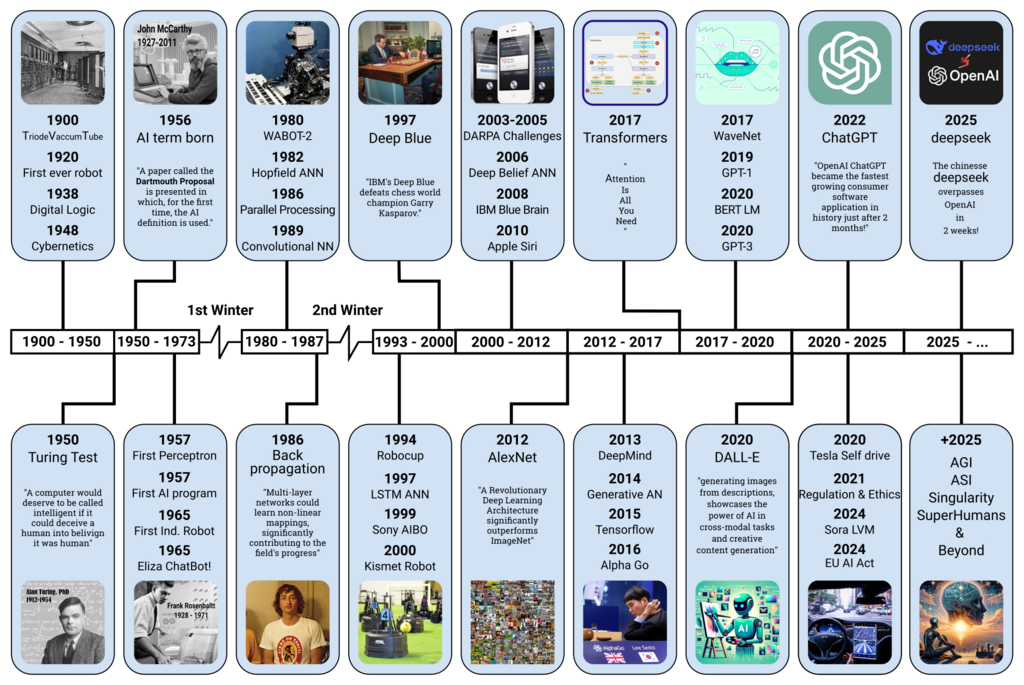
The term "artificial intelligence" was first coined in 1956 at the Dartmouth Workshop. This event brought together pioneers who believed a machine could be made to think. Early excitement was high, but progress was slow. The complexity of creating intelligence was far greater than anticipated, leading to periods known as "AI winters," when funding and interest dried up.
A resurgence began in the 1980s and 90s with the rise of machine learning. Instead of trying to create rules for intelligence, researchers focused on letting computers learn from data. This shift was a game-changer. In 1997, IBM's Deep Blue defeated chess champion Garry Kasparov, a major milestone that brought AI back into the public eye.
The last two decades have seen explosive growth, fueled by massive datasets and powerful computers. Deep learning has solved problems that were once thought to be impossible, leading to the advanced AI tools we see today.
Why AI Matters Today
AI is no longer a futuristic concept; it's a fundamental part of modern technology that works behind the scenes in many of the tools you use every day. It recommends movies on Netflix, powers search engines, helps doctors diagnose diseases, and enables your phone's camera to take better pictures.
The significance of AI lies in its ability to automate complex tasks, analyze vast amounts of data to find insights, and solve problems in new and efficient ways.
From improving crop yields in agriculture to personalizing education and accelerating scientific discovery, AI's impact is growing rapidly across every industry. Understanding its basic principles is becoming essential for navigating our increasingly digital world.
Ready to check your understanding? Let's see what you've learned.
Which statement best describes the relationship between Artificial Intelligence (AI), Machine Learning (ML), and Deep Learning (DL)?
What key event happened in 1956 that was foundational to the field of AI?
By grasping these core ideas, you've built a solid foundation for understanding the more advanced AI topics we'll explore next.