Introduction to Artificial Intelligence
Introduction to Artificial Intelligence
What Is Artificial Intelligence?
At its core, artificial intelligence is about creating machines that can think or act like humans. It's a broad field in computer science focused on building systems that can perform tasks that typically require human intelligence. This includes things like learning from experience, recognizing objects, understanding language, and making decisions.
Think of it this way: We don't program an AI with every possible answer. Instead, we design it to find the answers on its own by processing large amounts of information.
Artificial Intelligence
noun
A branch of computer science focused on building smart machines capable of performing tasks that typically require human intelligence.
AI isn't a single technology. It's an umbrella term that covers many different approaches and techniques. The goal is to create systems that can reason, learn, and adapt.
The Journey of an Idea
The dream of intelligent machines has been around for centuries, but the formal journey of AI began in the mid-20th century. Early pioneers believed that a machine could simulate any aspect of learning or intelligence if described precisely enough.
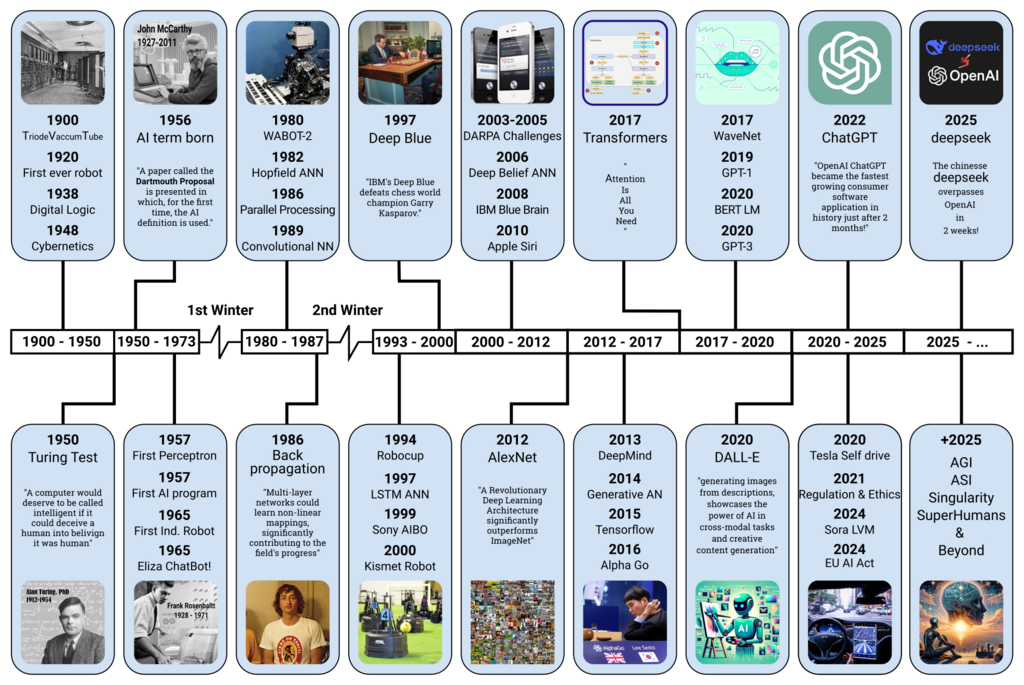
A pivotal moment came in 1956 at the Dartmouth Workshop. It was here that computer scientist John McCarthy first coined the term "artificial intelligence." This event brought together top researchers and officially established AI as a field of study. Early work was filled with optimism, leading to programs that could solve algebra problems and prove theorems in geometry.
The Dartmouth Workshop set the agenda for AI research for decades, focusing on areas like language simulation, neural networks, and creativity.
However, progress wasn't always a straight line. The field experienced periods known as "AI winters," when funding dried up due to overly ambitious promises and limited computing power. But breakthroughs in the 1990s and the explosion of data in the 2000s revived the field, leading to the rapid advancements we see today.
Core Principles
So, how does AI work on a basic level? Most modern AI systems are built on the principle of learning from data. Instead of being explicitly programmed with rules for how to perform a task, the system learns to recognize patterns from a vast number of examples.
This is where concepts like Machine Learning and Deep Learning come in. They are subsets of AI that allow systems to improve their performance over time without human intervention.
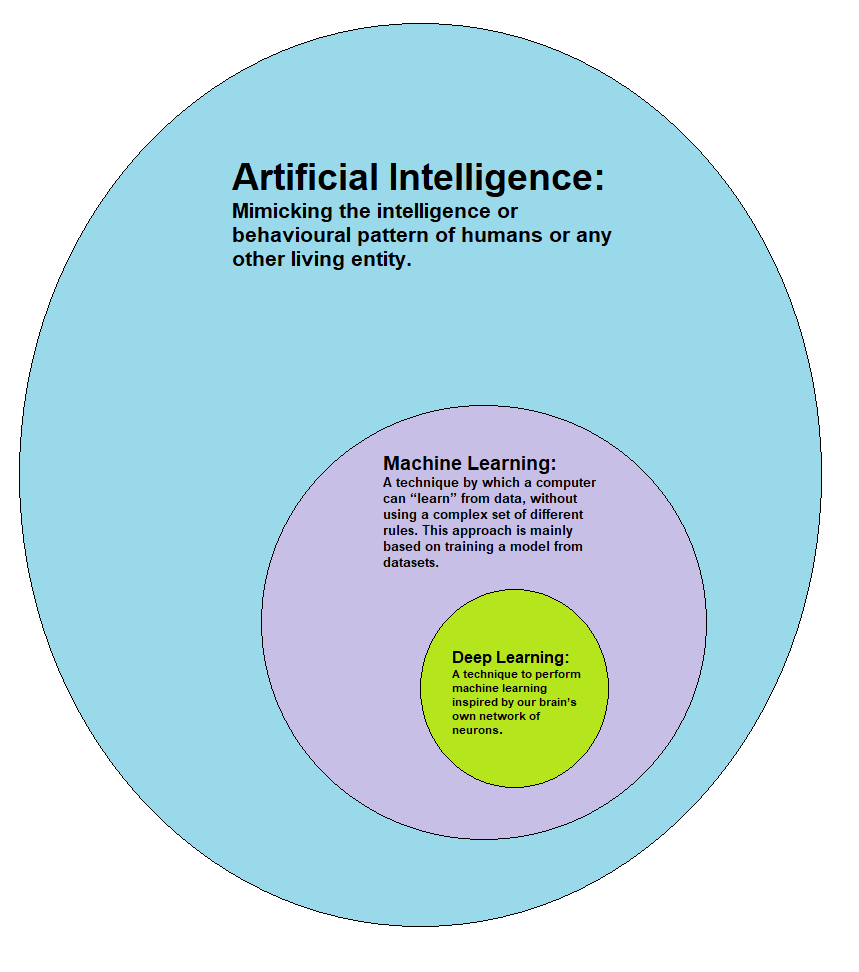
Machine Learning (ML) uses algorithms to analyze data, learn from it, and then make a determination or prediction about something new. Deep Learning is a more advanced form of ML that uses structures called neural networks, which are inspired by the human brain, to learn from even larger and more complex datasets.
These foundational principles of learning from patterns are what enable AI to do everything from recognizing your voice to identifying signs of disease in medical scans.
What is the core focus of the field of artificial intelligence?
The term "artificial intelligence" was first coined by John McCarthy at which pivotal event?
This historical context and these core ideas provide the foundation for understanding the powerful AI tools that are becoming more common in our daily lives.