Introduction to Artificial Intelligence
Introduction to AI
What Is Artificial Intelligence?
At its core, artificial intelligence (AI) is the science of making machines that can think or act like humans. The goal is to create systems that can learn, reason, solve problems, and understand language. Think of it less as building a robot that looks human and more as programming a computer to mimic human cognitive abilities.
This introduction to this special issue discusses artificial intelligence (AI), commonly defined as “a system’s ability to interpret external data correctly, to learn from such data, and to use those learnings to achieve specific goals and tasks through flexible adaptation.”
This ability to adapt is key. Instead of being programmed for every single possibility, an AI system learns from experience. It identifies patterns in data and adjusts its behavior to improve its performance over time. This process is similar to how we learn, whether it's recognizing a friend's face or mastering a new skill.
Narrow vs. General AI
AI isn't a single, all-knowing entity. It exists on a spectrum of capability. Today, virtually all AI systems are what we call Artificial Narrow Intelligence (ANI), or "Weak AI." These systems are designed to perform a single task very well, sometimes even better than humans.
A voice assistant on your phone is a great example. It's excellent at understanding your speech and answering questions, but it can't drive a car or compose a symphony. Its intelligence is narrow and specific.
The other type is Artificial General Intelligence (AGI), or "Strong AI." This is the kind of AI often seen in science fiction—a machine with the ability to understand, learn, and apply knowledge across a wide range of tasks, just like a human. AGI doesn't exist yet; it remains a long-term goal for researchers.
| Feature | Artificial Narrow Intelligence (ANI) | Artificial General Intelligence (AGI) |
|---|---|---|
| Scope | Performs a single, specific task. | Can perform any intellectual task a human can. |
| Examples | Spam filters, image recognition, virtual assistants. | None currently exist. |
| Learning | Learns from data related to its specific task. | Learns and adapts across different domains. |
Beyond AGI, some theorists also talk about Artificial Superintelligence (ASI), an intellect that would be much smarter than the best human brains in virtually every field. For now, this remains purely theoretical.
Key Moments in AI History
The dream of intelligent machines is ancient, but the scientific pursuit of AI began in the 1950s. A pivotal moment was the Dartmouth Workshop in 1956, where the term "artificial intelligence" was officially coined, and the field was established.
Early research was filled with optimism. The first programs could solve algebra problems and prove logical theorems. However, progress slowed in the 1970s and 80s during periods known as "AI winters," when funding dried up due to overly ambitious promises and limited computing power.
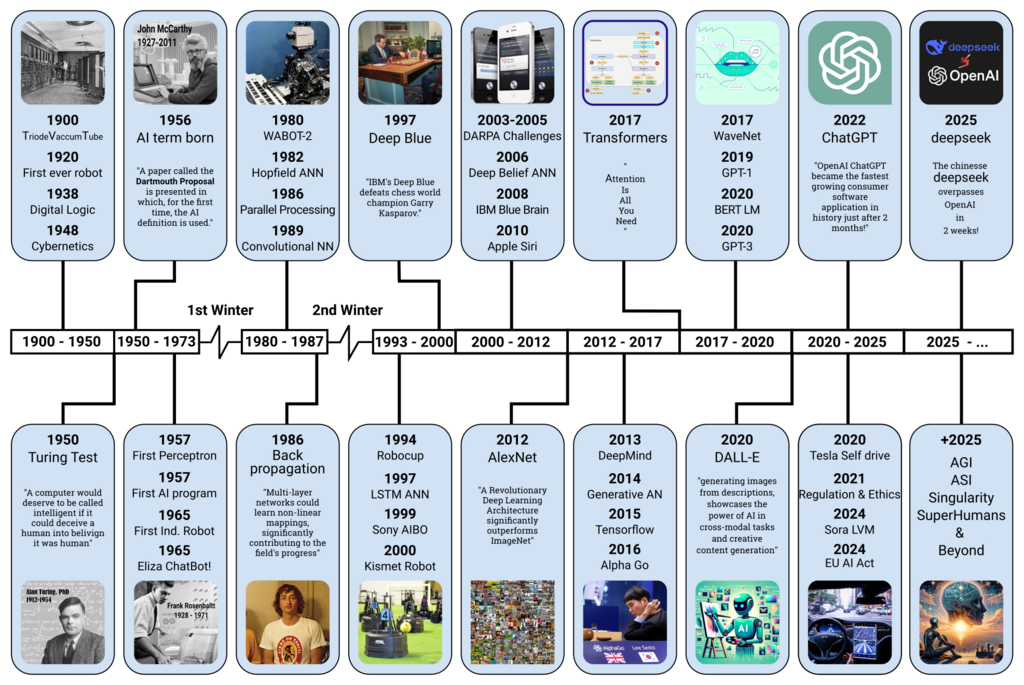
The field re-emerged in the 1990s and 2000s, thanks to faster computers, the availability of massive datasets from the internet, and new algorithmic breakthroughs. A landmark event was in 1997 when IBM's Deep Blue chess computer defeated world champion Garry Kasparov, proving a machine could beat the best human player in a complex strategic game.
The Subfields of AI
AI is a broad discipline with many specialized areas. Here are three of the most important subfields.
Machine Learning
noun
A subfield of AI where systems learn from data to identify patterns and make decisions without being explicitly programmed.
Machine Learning (ML) is the engine that powers much of modern AI. Instead of writing rules for a program to follow, developers feed it vast amounts of data and let it figure out the rules for itself.
Natural Language Processing (NLP) is another major subfield. It focuses on enabling computers to understand, interpret, and generate human language. NLP is what allows you to talk to your smart speaker, translate text from one language to another, or get a summary of a long article.
Finally, there's Robotics. This field combines AI with engineering to build machines that can perform physical tasks in the real world. While not all robots use AI, advanced robots use it for things like navigation, object manipulation, and decision-making in unpredictable environments.
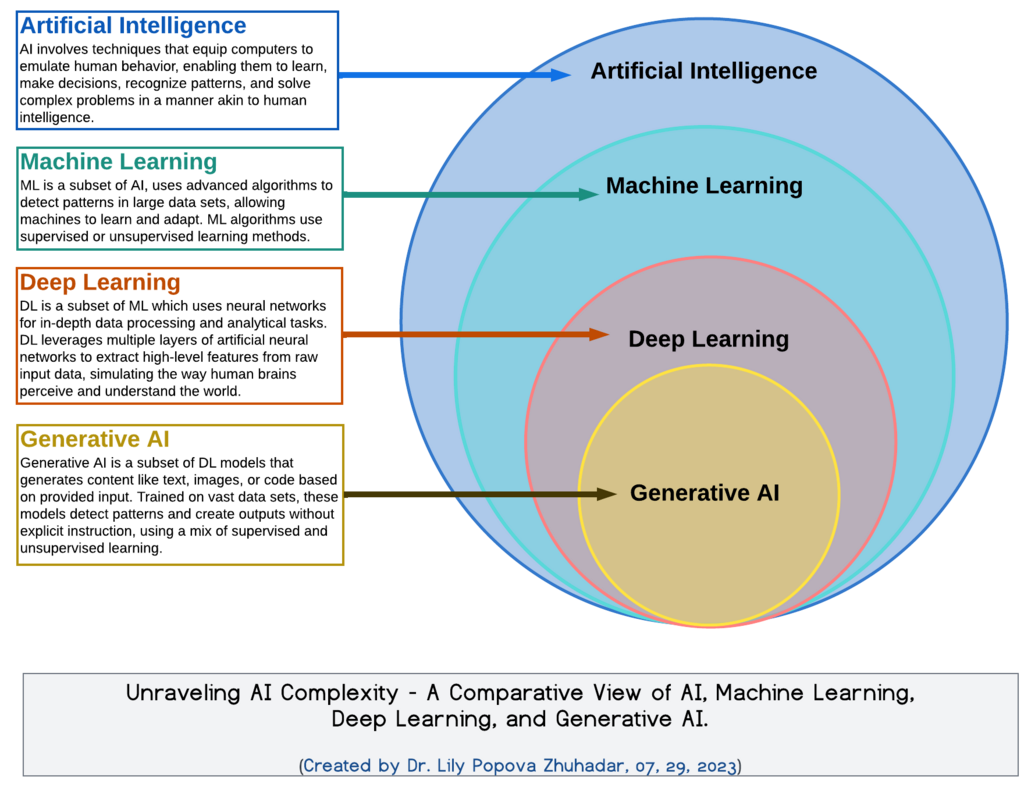
These subfields often overlap. For example, a self-driving car uses machine learning to process data from its sensors, computer vision (another AI subfield) to see the road, and robotics to physically control the vehicle.
What is the primary goal of artificial intelligence (AI)?
The AI that exists today, such as in a voice assistant or a chess-playing computer, is classified as which type?