Introduction to Artificial Intelligence
Introduction to AI
What Is Artificial Intelligence?
Artificial intelligence, or AI, is the science of making machines that can think like humans. The goal is to create systems that can perform tasks that normally require human intelligence, such as learning, reasoning, problem-solving, and understanding language.
Think of it as a broad field of computer science, not a single technology. It's an umbrella term that covers many different approaches and techniques. Some AI systems are designed for very specific tasks, like playing chess or identifying faces in photos. Others are being developed with the aim of more general intelligence, closer to our own.
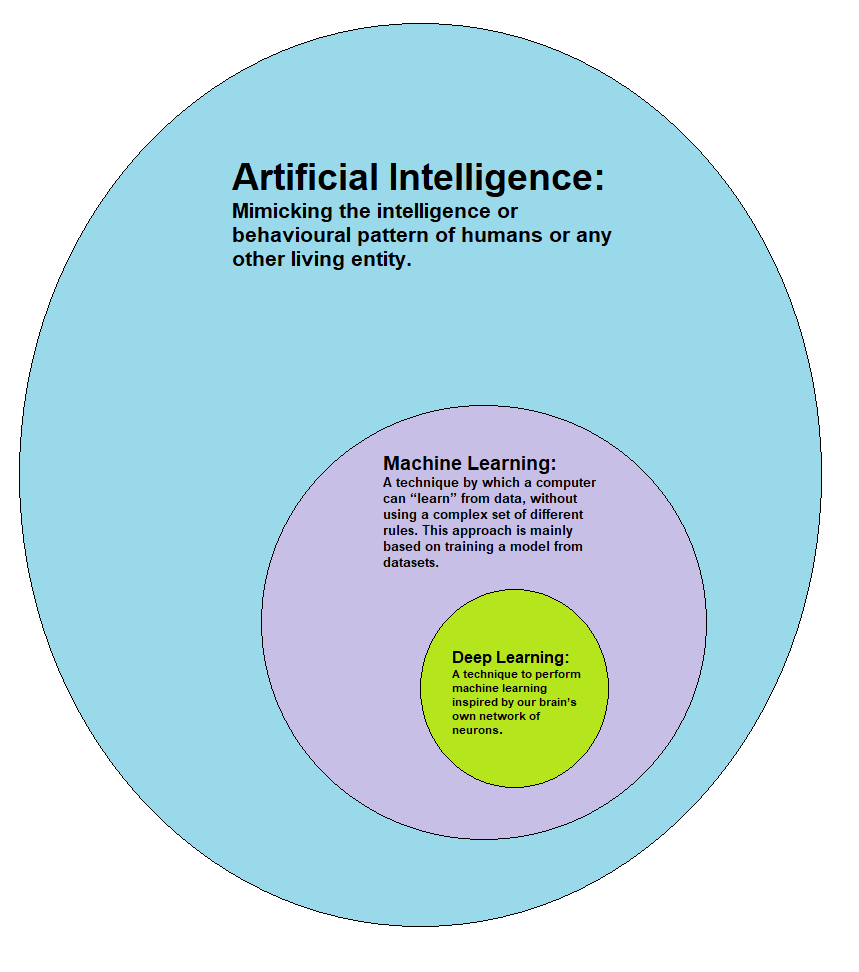
AI isn't a new idea. The concept of creating artificial beings with intelligence has been a part of human storytelling for centuries. But the scientific journey to build them began in the 20th century.
A Brief History of AI
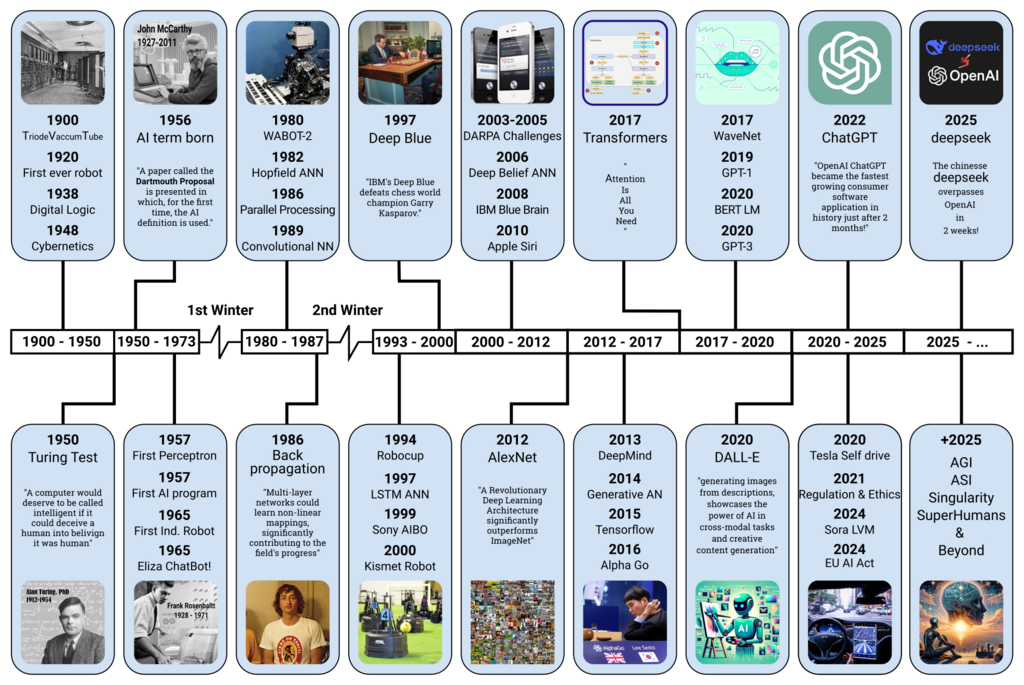
The seeds of modern AI were planted in the 1940s and 50s. Pioneers like Alan Turing began to explore the mathematical possibility of artificial intelligence. Turing proposed a famous test to determine if a machine could exhibit intelligent behaviour indistinguishable from that of a human.
Turing Test
noun
A test of a machine's ability to exhibit intelligent behaviour equivalent to, or indistinguishable from, that of a human. A human evaluator judges natural language conversations between a human and a machine designed to generate human-like responses.
The field was officially born at a 1956 workshop at Dartmouth College in the US, where the term "artificial intelligence" was coined. Early researchers were incredibly optimistic, predicting that machines with human-like intelligence were just a few decades away.
However, progress was slower than expected. The complexity of creating intelligence was far greater than anticipated. This led to periods known as "AI winters," when funding dried up and public interest waned. Despite these setbacks, research continued in smaller circles.
A resurgence began in the late 1990s and 2000s, thanks to two key factors: a massive increase in computing power and the availability of vast amounts of data from the internet. These ingredients allowed new techniques, particularly machine learning, to flourish.
Key milestones marked AI's comeback. In 1997, IBM's Deep Blue computer defeated world chess champion Garry Kasparov. In the 2010s, systems like Google's AlphaGo mastered the complex game of Go, and AI-powered virtual assistants became commonplace.
AI Today
Today, AI is no longer a futuristic concept; it's a part of our daily lives. It powers the recommendation engines that suggest what you should watch or buy next, helps you navigate with real-time traffic updates, and enables your phone to understand voice commands.
The field is evolving faster than ever. The rise of deep learning and large language models has led to powerful generative AI tools that can create text, images, and code. This rapid progress is opening up new possibilities and also raising important questions about the future of technology and society.
Time to check what you've learned.
What is the primary goal of Artificial Intelligence (AI)?
Where was the term "artificial intelligence" officially coined?
This foundation gives you a starting point for understanding the complex and fascinating world of AI.