Introduction to Artificial Intelligence
Introduction to AI
What is Artificial Intelligence?
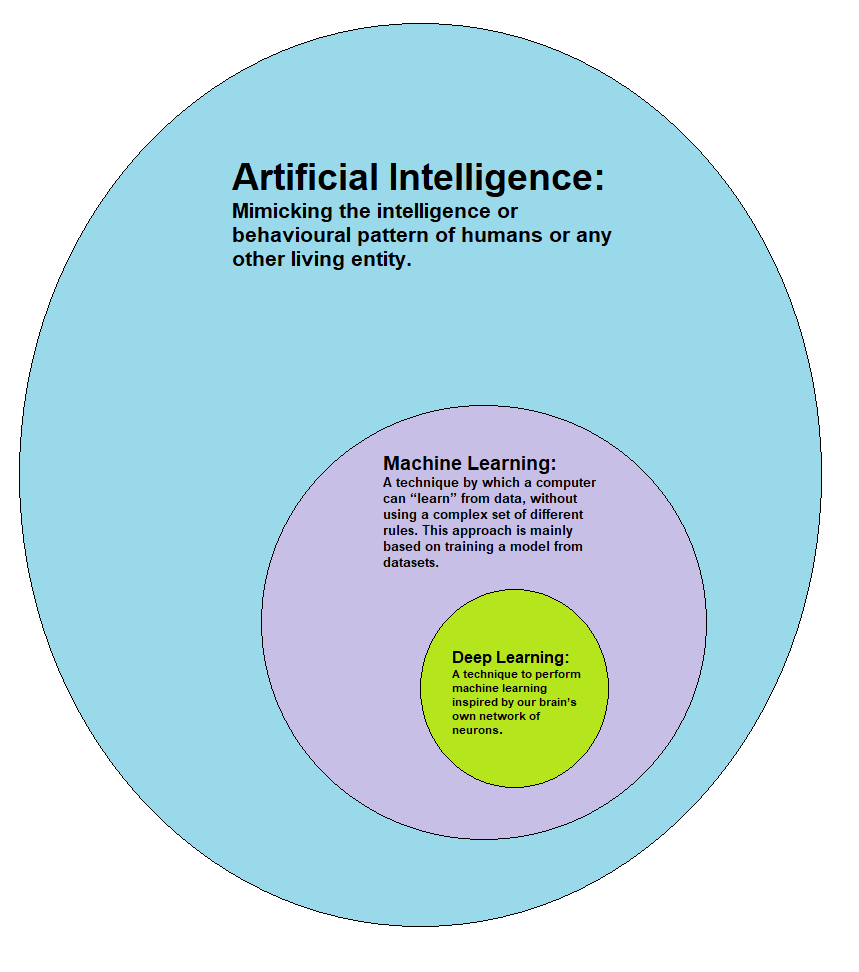
Artificial Intelligence is the theory and development of computer systems that can perform tasks normally requiring human intelligence. This isn't just about robots that look like people. It's about software and systems that can perceive their environment, reason through problems, learn from data, and make decisions to achieve specific goals.
At its core, AI is about creating non-biological intelligence. Think of it as a broad field of computer science aimed at building smart machines. This intelligence can manifest in many ways, from understanding spoken language to identifying objects in a photo or driving a car.
The goal of AI is to create systems that can function intelligently and independently, learning from experience to improve their performance over time.
AI systems are often categorized by their capability. Artificial Narrow Intelligence (ANI) is what we have today. It's designed to perform a narrow task, like playing chess, filtering spam, or translating languages. Artificial General Intelligence (AGI) is the next level, representing a machine with the ability to understand, learn, and apply knowledge across a wide range of tasks, much like a human. Artificial Superintelligence (ASI) is a hypothetical future stage where AI surpasses human intelligence in virtually every field.
A Brief History
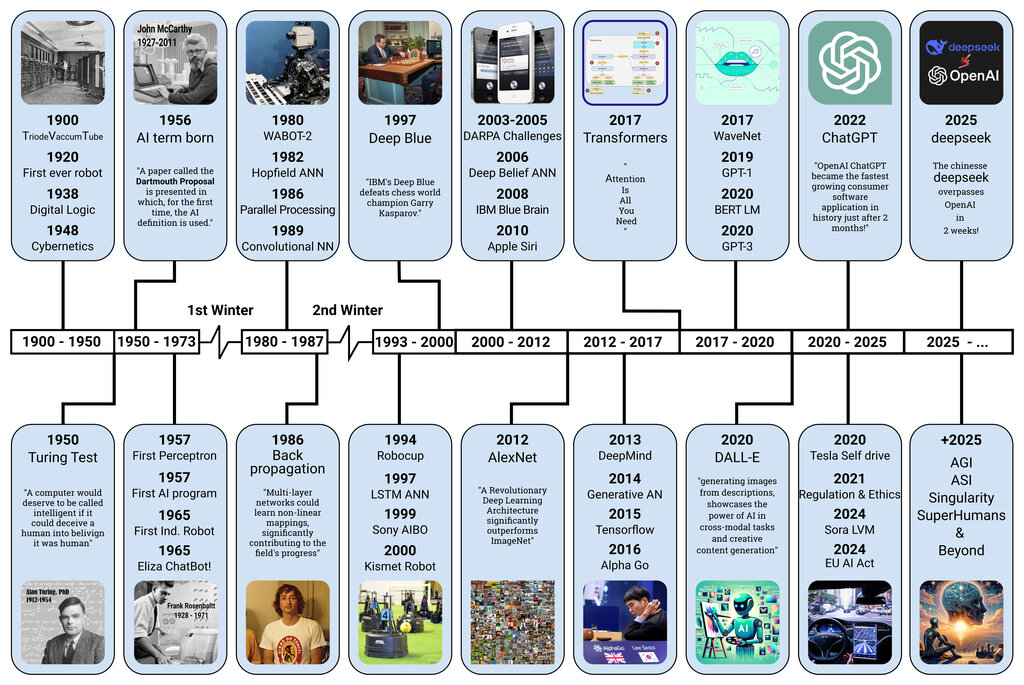
The dream of creating artificial minds is ancient, but the scientific pursuit of AI began in the 1950s. The term "Artificial Intelligence" was coined by computer scientist John McCarthy at the Dartmouth Conference in 1956, which is widely considered the birthplace of the field.
The early years were filled with optimism. Researchers developed programs that could solve algebra problems, prove logical theorems, and speak rudimentary English. Progress was exciting but limited by computing power and data availability. This led to a period known as the first "AI winter" in the mid-1970s, when funding dried up as the initial hype didn't match reality.
Things picked up again in the 1980s with the rise of "expert systems," AI programs that mimicked the decision-making ability of a human expert in a specific domain. A second AI winter followed. The modern era of AI truly began in the late 1990s and 2000s, driven by three key factors: the explosion of big data, the development of more powerful algorithms, and significant advances in computing hardware, especially Graphics Processing Units (GPUs).
The Major Subfields of AI
Artificial Intelligence is not a single technology but a collection of related disciplines. Understanding these subfields helps clarify what AI can do.
Here's a look at some of the most prominent areas:
| Subfield | Description | Example |
|---|---|---|
| Machine Learning (ML) | The science of getting computers to learn and act without being explicitly programmed. It uses algorithms to parse data, learn from it, and make determinations or predictions. | A spam filter that learns to identify junk mail based on the emails you mark as spam. |
| Natural Language Processing (NLP) | The branch of AI that gives computers the ability to understand, interpret, and generate human language, both text and speech. | Virtual assistants like Siri or Alexa understanding and responding to your voice commands. |
| Computer Vision | The field that trains computers to interpret and understand the visual world. It enables machines to identify objects, people, places, and actions in images and videos. | Unlocking your phone with your face or a self-driving car identifying pedestrians and traffic signs. |
| Robotics | An interdisciplinary field that involves the design, construction, operation, and use of robots. It integrates AI for perception, planning, and action in the physical world. | Autonomous vacuum cleaners navigating a room or robotic arms assembling products in a factory. |
These subfields often overlap. For example, a sophisticated robot uses computer vision to see its environment, machine learning to adapt its behavior, and NLP to interact with humans. This integration is where AI's power to transform industries truly comes to life, from healthcare and finance to transportation and entertainment.
Which of the following best describes the primary goal of Artificial Intelligence?
The type of AI we interact with today, designed to perform a specific task like translating languages or filtering spam, is known as...