Introduction to Artificial Intelligence
Introduction to Artificial Intelligence
What Is Artificial Intelligence?
Artificial Intelligence, or AI, is about making machines smart. The goal is to create computer systems that can perform tasks that typically require human intelligence. This includes things like learning from experience, solving complex problems, understanding language, and even recognizing objects in a photo.
The broad term “artificial intelligence” refers to the simulation of human-level intelligence and thinking through the use of machines.
Think of it less like a single technology and more like a broad field of science. Instead of programming a computer with a rigid set of instructions for every possible situation, AI aims to give computers the ability to reason and adapt on their own. It’s the difference between a simple calculator that only follows rules and a system that can learn to play chess by analyzing thousands of games.
The Branches of AI
AI isn't one monolithic thing; it’s an umbrella term that covers several specialized areas. The most important ones to know are machine learning, natural language processing, and computer vision. They often overlap and work together, but each has a distinct focus.
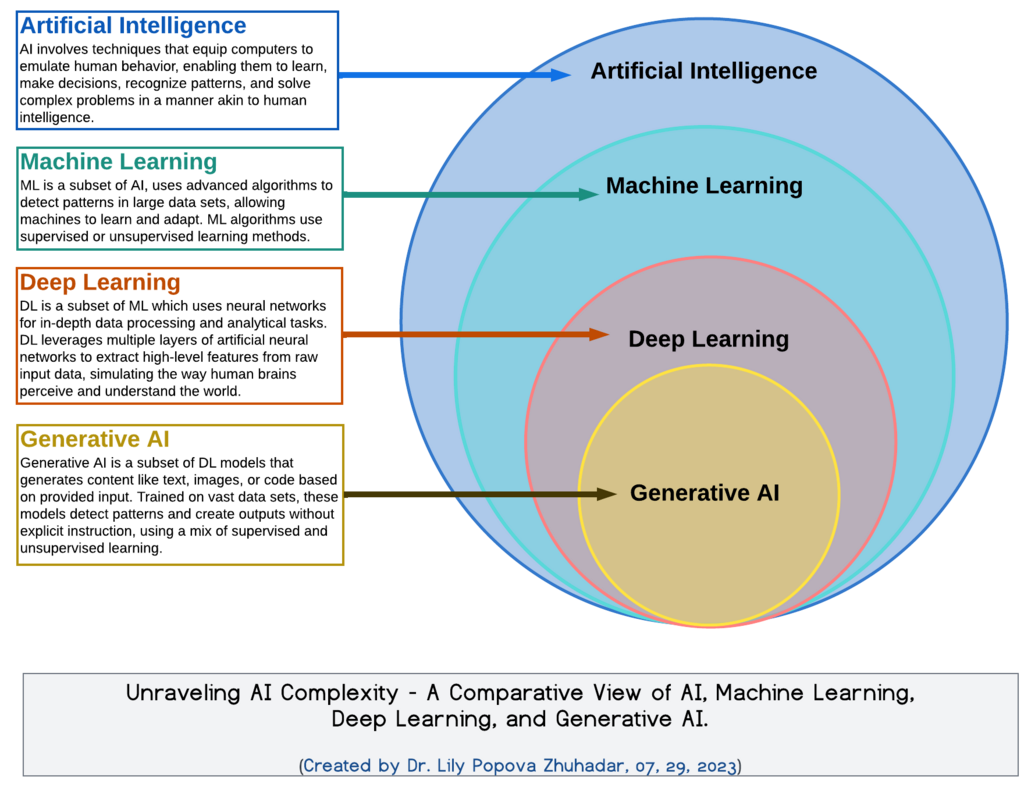
Machine Learning
noun
A subfield of AI where computers learn to find patterns in data without being explicitly programmed for that task.
Machine Learning (ML) is the engine behind much of modern AI. Instead of writing code to tell a computer how to identify a cat, you show it thousands of cat pictures. The ML model learns the patterns—pointy ears, whiskers, feline eyes—and can then recognize cats in new photos it has never seen before. It’s all about learning from data.
Key Idea: Machine learning enables systems to improve their performance on a task over time by processing more and more data.
Natural Language Processing (NLP) focuses on the interaction between computers and human language. It's what allows your phone's voice assistant to understand your commands or a translation app to convert Spanish text into English. NLP tackles the messy, unstructured nature of language, helping machines read, interpret, and generate human speech.
Finally, Computer Vision gives machines the ability to “see.” It involves processing and understanding visual information from the world, like images and videos. This is the technology that enables facial recognition to unlock your phone, helps self-driving cars identify pedestrians and traffic lights, and allows doctors to spot anomalies in medical scans.
Why AI Matters Today
AI is significant because it's no longer just a concept from science fiction. It's a practical tool that is reshaping industries and changing how we interact with technology every day. From the personalized movie recommendations you get on a streaming service to the fraud detection that protects your bank account, AI is working quietly in the background.
| Everyday Technology | AI Subfield at Work |
|---|---|
| Email Spam Filter | Machine Learning |
| Voice Assistants (Siri, Alexa) | Natural Language Processing |
| Social Media Photo Tagging | Computer Vision |
| Product Recommendations | Machine Learning |
| Language Translation Apps | Natural Language Processing |
The power of AI lies in its ability to handle tasks that are too complex, large-scale, or tedious for humans. It can analyze massive datasets to find subtle patterns, automate repetitive processes, and provide insights that help us make better decisions. Understanding its basic principles is the first step to seeing its impact all around us.
Ready to check your understanding? Let's see what you've learned.
What is the primary goal of Artificial Intelligence?
A self-driving car identifying a stop sign is using which specialized area of AI?
With these fundamentals, you now have a framework for understanding how AI works and the different forms it can take.