Introduction to Artificial Intelligence
Introduction to Artificial Intelligence
What Is Artificial Intelligence?
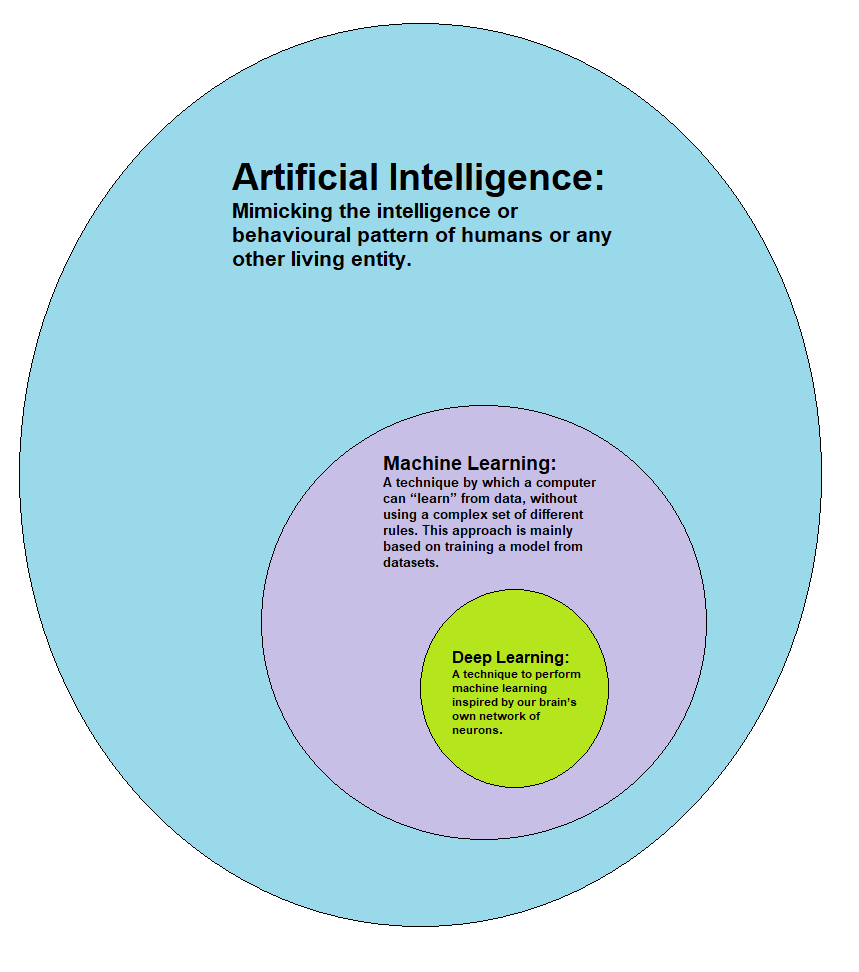
Artificial Intelligence, or AI, is about building machines that can think and learn like humans. The goal is to create systems that can reason, solve problems, perceive their environment, and understand language. At its core, AI is the science of making things smart.
Think about how a child learns to recognize a cat. You don't give them a long list of rules like "if it has pointy ears and whiskers, it's a cat." Instead, you show them pictures and point out real cats. Over time, the child's brain builds a model of what a cat looks like. AI works in a similar way, but instead of a brain, it uses computer algorithms, and instead of life experiences, it uses vast amounts of data.
AI is a system’s ability to correctly interpret data, learn from that data, and use those learnings to achieve specific goals through flexible adaptation.
A Brief History of AI
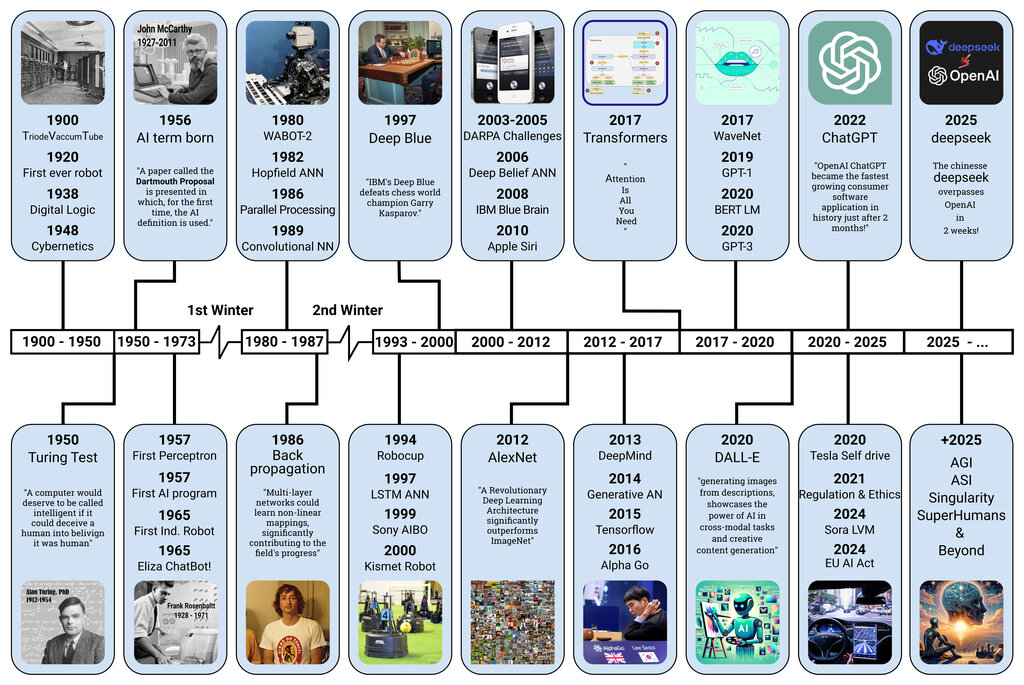
The idea of intelligent machines has been around for centuries, but the actual field of AI began in the 1950s. A small group of researchers at Dartmouth College organized a workshop in 1956, officially coining the term "Artificial Intelligence." They were incredibly optimistic, believing that a machine as intelligent as a human being would exist in just a few decades.
Progress was slower than expected. Early AI systems were based on complex sets of rules programmed by humans. While they could perform specific tasks, like playing chess, they couldn't learn or adapt on their own. Limited computing power and funding led to a period known as the "AI winter" in the 1970s and 80s, where interest and research slowed.
Things picked up again with the rise of machine learning. Instead of being explicitly programmed, systems could now learn patterns directly from data. This was a major shift. In 1997, IBM's Deep Blue, a chess-playing computer, defeated the world champion Garry Kasparov. This milestone showed the world that AI was becoming powerful.
The last two decades have seen an explosion in AI development, fueled by two key ingredients: massive amounts of data from the internet and incredibly powerful computers. This combination unlocked deep learning, a technique that uses complex neural networks to find subtle patterns in data, leading to the advanced AI we see today in everything from voice assistants to self-driving cars.
The Basic Principles
Modern AI is built on a few core principles. The first and most important is learning. AI systems are trained on datasets to recognize patterns. For an AI that identifies animals, this means feeding it millions of labeled images of dogs, cats, birds, and so on. The system adjusts its internal parameters until it can accurately distinguish between them.
Next is reasoning. After learning, an AI can use its knowledge to make decisions or predictions. This involves applying logical rules to solve problems. For example, a navigation app uses reasoning to find the fastest route by considering traffic data, road closures, and speed limits it has learned about.
Finally, there's perception. This is how AI interprets the world through sensory data. For a machine, this could be processing images from a camera, understanding spoken words from a microphone, or analyzing text. Perception allows an AI to take in raw information before it can learn from it or reason about it.
These principles often work together. A self-driving car uses perception to "see" a stop sign, learning to recognize what it is, and reasoning to decide it must stop the car. This combination of abilities is what makes AI such a powerful technology.