Introduction to Artificial Intelligence
Introduction to Artificial Intelligence
What Is Artificial Intelligence?
Artificial intelligence, or AI, is a field of computer science dedicated to building machines that can perform tasks that typically require human intelligence. Think about things you do without much thought: recognizing a friend's face, understanding what someone is saying, or learning from experience. The goal of AI is to enable computers to do these things too.
Artificial intelligence (AI) is a branch of computer science and engineering that focuses on building machines that are capable of learning, solving problems, making decisions, and all other functions that are performed traditionally by the human intellect.
Instead of being programmed with a specific set of instructions for every single task, AI systems are designed to reason, learn, and adapt. This allows them to handle complex problems in areas like language, vision, and decision-making.
A Quick Trip Through Time
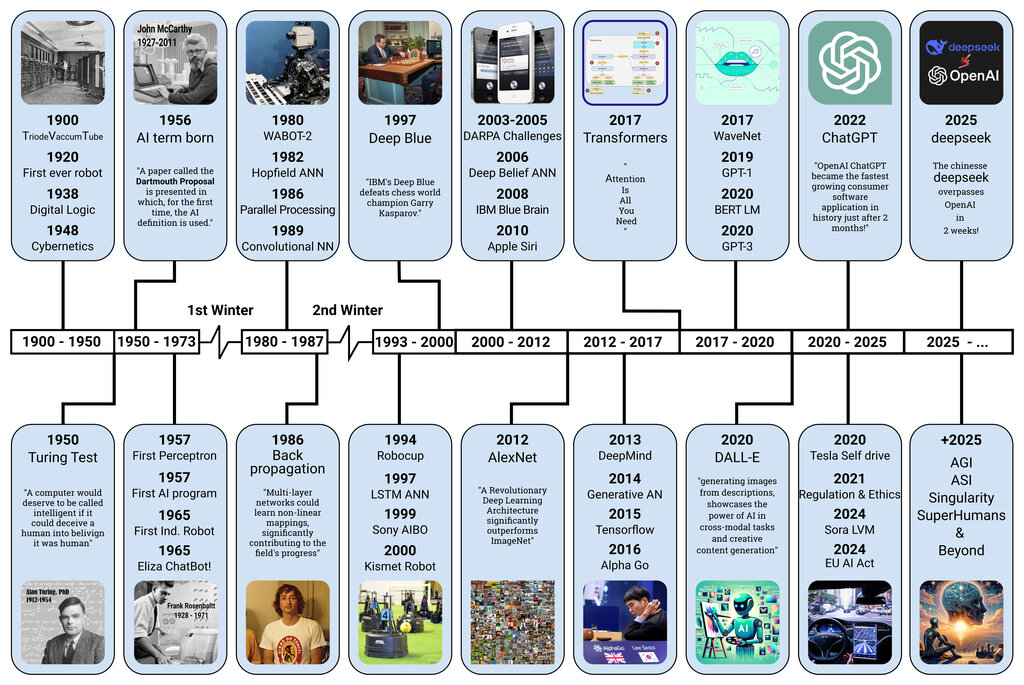
The idea of intelligent machines has been around for centuries, but the actual field of AI took off in the 1950s. Early AI systems were often based on a set of handcrafted rules. A classic example from the 1960s is ELIZA, a program that could mimic a psychotherapist by recognizing keywords in a user's text and responding with simple, pre-programmed phrases.
If a user typed, "I am feeling sad," ELIZA might respond with, "How long have you been feeling sad?" It was clever, but it didn't truly understand the conversation.
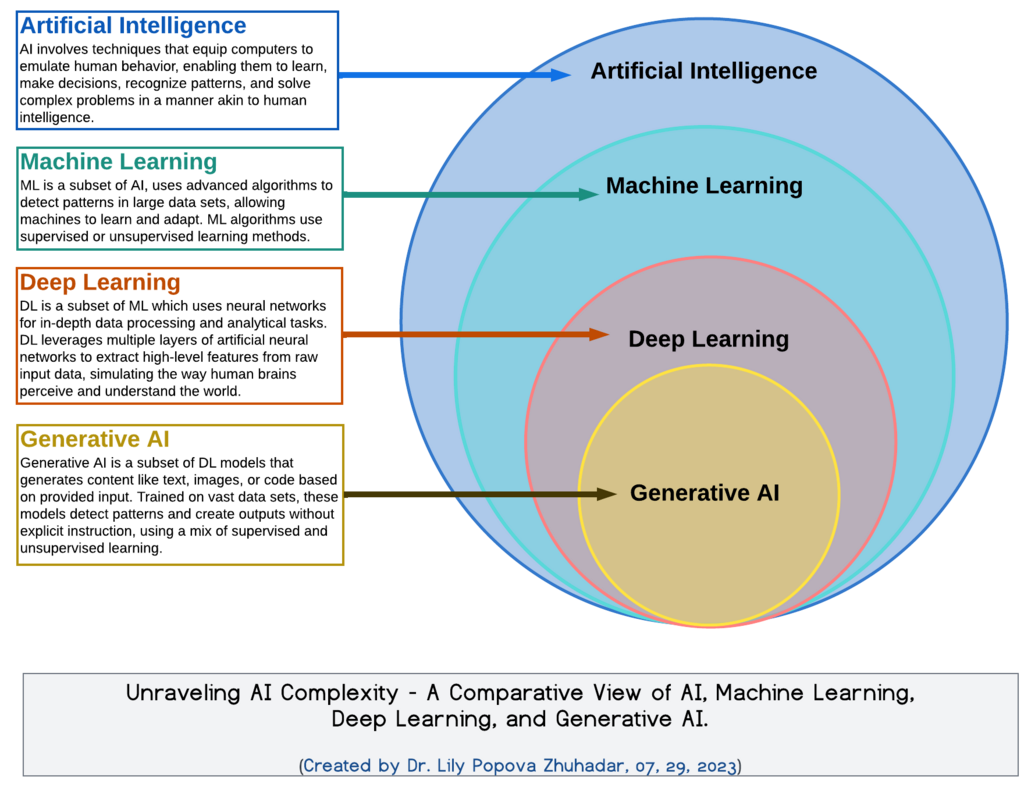
Over time, the focus shifted from writing rules to creating systems that could learn from data. This led to the development of machine learning and, later, deep learning, which power most of the AI applications we use today. This modern approach allows AI to find patterns and make predictions without being explicitly told what to look for.
Two Flavors of AI
When people talk about AI, they are usually referring to one of two types: Narrow AI or General AI.
| Type | Description | Example |
|---|---|---|
| Narrow AI | Designed to perform a single, specific task. | A spam filter, a voice assistant, or a chess-playing computer. |
| General AI | A theoretical form of AI that can perform any intellectual task a human can. | The sentient robots often seen in science fiction. |
All the AI that exists today is Narrow AI, also known as Weak AI. These systems can be incredibly powerful at their specific jobs, sometimes even surpassing human performance. For instance, an AI can diagnose certain diseases from medical scans with remarkable accuracy, but that same AI can't order a pizza or write a poem.
Artificial General Intelligence (AGI), or Strong AI, remains a long-term goal for researchers. Creating a machine with the same broad, flexible intelligence as a human is a challenge we have yet to solve.
The Building Blocks of Modern AI
Modern AI is built on a few key concepts. Understanding them provides a foundation for how today's AI systems work.
Machine Learning
noun
A subfield of AI where systems learn directly from data without being explicitly programmed. Instead of writing rules, developers feed the system vast amounts of examples, allowing it to identify patterns and make decisions on its own.
One of the most powerful techniques within machine learning involves neural networks.
Neural Networks: These are computing systems loosely inspired by the structure of the human brain. They consist of interconnected layers of nodes, or "neurons," that process information. As the network is trained on data, the connections between these neurons are adjusted, allowing the system to learn complex patterns, such as how to recognize a cat in a photo.
Finally, much of our interaction with AI involves language.
Natural Language Processing (NLP): This is the branch of AI that focuses on enabling computers to understand, interpret, and generate human language. Every time you use a voice assistant, translate text online, or see a chatbot pop up, you are interacting with NLP. It's the bridge that connects human language to computer understanding.
What is the primary goal of Artificial Intelligence (AI) as a field of computer science?
All the AI that exists and is in use today, such as AI that diagnoses diseases from scans or powers voice assistants, falls into which category?
These core ideas—machine learning, neural networks, and NLP—are the foundation upon which the world of AI is built.