Introduction to Artificial Intelligence
Introduction to Artificial Intelligence
What Is Artificial Intelligence?
Artificial intelligence, or AI, is about creating computer systems that can perform tasks that typically require human intelligence. Think about how you learn to recognize a friend's face, understand a story, or decide the best route to take home. AI aims to build machines that can do similar things: see, understand, learn, plan, and solve problems.
Artificial Intelligence
noun
The theory and development of computer systems able to perform tasks that normally require human intelligence, such as visual perception, speech recognition, decision-making, and translation between languages.
But AI isn't just one single thing. It's a broad field of computer science with many specializations. Some AI is designed for a very specific task, like playing chess or identifying spam emails. This is known as Narrow AI. Other, more advanced forms, aim to have a broader, human-like ability to learn and reason across different domains.
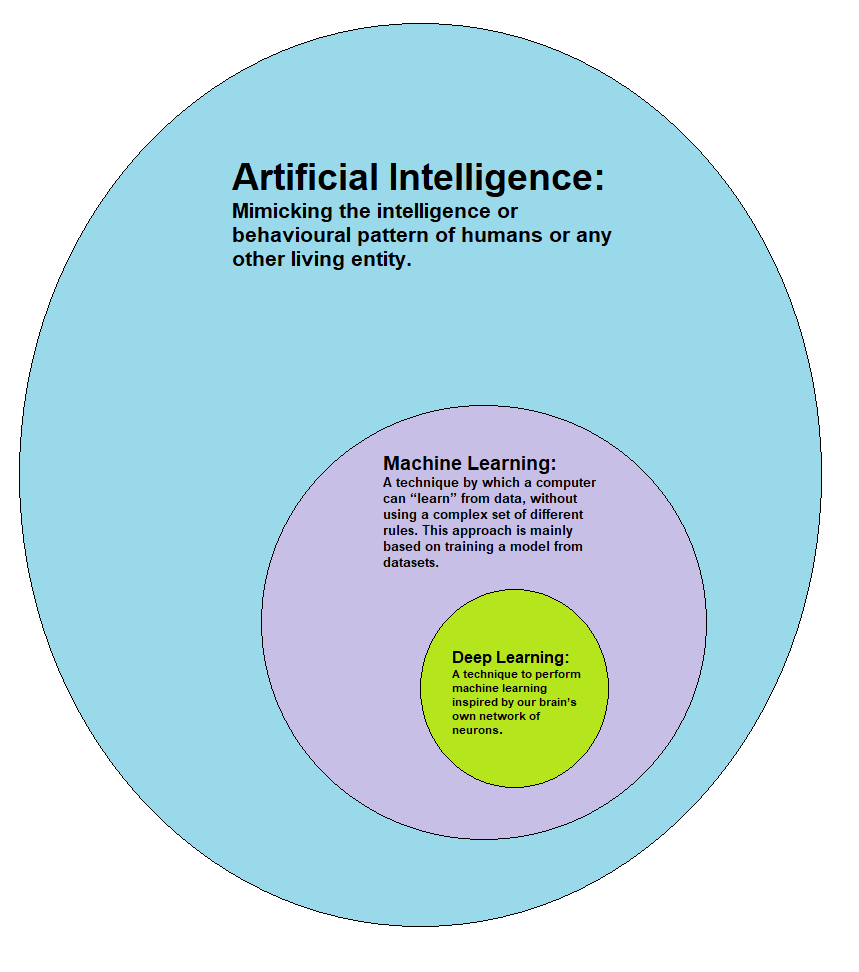
The field includes several important sub-fields. You might have heard of Machine Learning, which is a way for computers to learn from data without being explicitly programmed. Deep Learning, a subset of machine learning, uses complex structures called neural networks to handle more intricate patterns, like those in images and speech.
For now, just remember that the main goal of AI is to create tools that can extend human capabilities by automating intelligent tasks.
How AI Works
So how does an AI system actually "think"? While the technical details can be complex, the basic principles are quite straightforward. Most AI systems follow a general process of perceiving the world, processing information, and then taking action.
Think of it like learning to cook a new recipe. First, you perceive the ingredients and read the instructions (input). Then, you process that information, understanding the steps and amounts (reasoning). Finally, you take action by mixing the ingredients and cooking the dish (output).
AI systems generally operate in a loop: perceive data, reason or learn from it, and produce an output or action.
This process can be broken down into three key stages:
-
Perception (Input): AI systems need data to learn and operate. This data can be almost anything: images from a camera, text from a book, voice commands from a microphone, or numbers from a spreadsheet. This is the AI's way of sensing its environment.
-
Reasoning and Learning (Processing): This is the core of AI. The system uses algorithms to process the input data. It might look for patterns, make predictions, or follow a set of logical rules. For example, a spam filter learns to identify junk mail by analyzing patterns in thousands of emails.
-
Action (Output): After processing the data, the AI produces a result. This could be classifying an image ("this is a cat"), translating a sentence, recommending a movie, or even controlling a self-driving car's steering wheel. The action is the specific goal the AI was designed to achieve.
This cycle of input, processing, and output is fundamental to nearly all AI systems, from the simplest to the most complex.
AI in the Real World
Artificial intelligence isn't just a concept from science fiction; it's already a part of our daily lives. Many of the technologies we use every day rely on AI to function.
When you ask a virtual assistant on your phone for the weather, AI is what recognizes your voice and finds the answer. When a streaming service suggests a new show you might like, it's using AI to analyze your viewing habits and predict what you'll enjoy. AI powers navigation apps that find the fastest route by analyzing real-time traffic data.
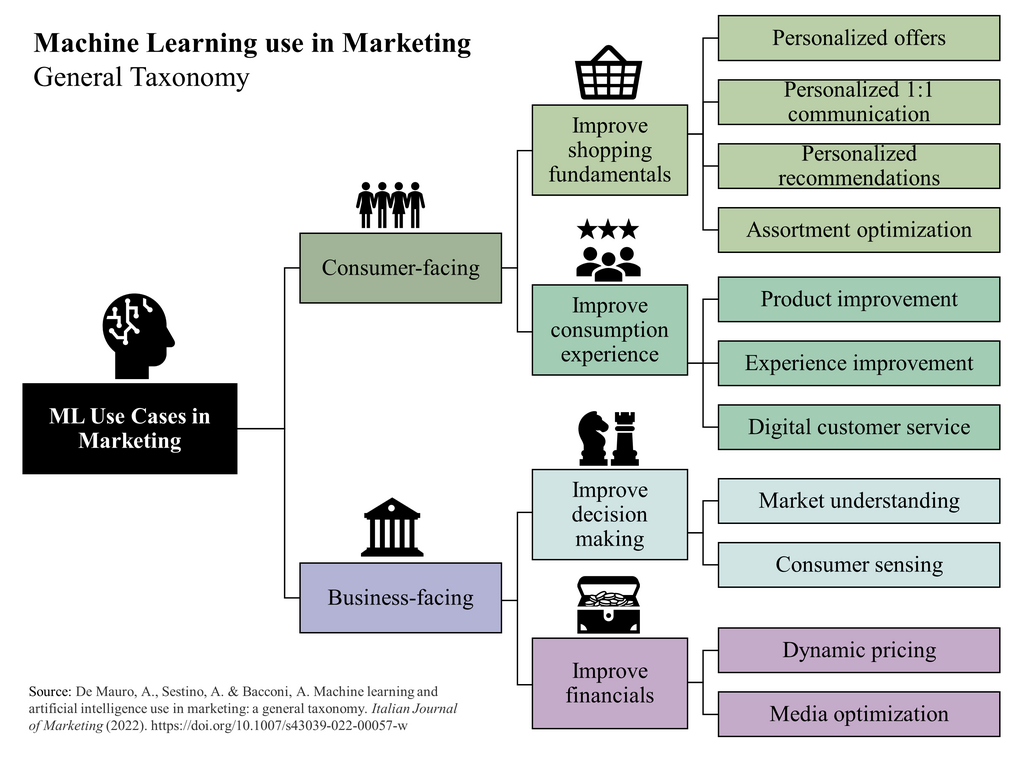
Beyond our personal devices, AI is transforming entire industries.
- Healthcare: AI helps doctors diagnose diseases earlier by analyzing medical images like X-rays and MRIs with incredible accuracy. It also powers tools that can predict patient outcomes based on their health records.
- Finance: Banks use AI to detect fraudulent transactions in real-time, protecting customers from theft. It's also used in algorithmic trading and to assess credit risk.
- Transportation: The development of self-driving cars is one of the most visible applications of AI. But it's also used behind the scenes to optimize logistics, ensuring packages are delivered as efficiently as possible.
- Entertainment: AI is used to create stunning visual effects in movies and to develop more realistic and challenging video game opponents.
From online shopping to scientific research, AI is working in the background to make processes smarter, faster, and more efficient.
Now that you have a basic grasp of what AI is, how it works, and where it's used, you're ready to explore its history and the key technologies that make it possible.