Introduction to Artificial Intelligence
Introduction to Artificial Intelligence
What Is Artificial Intelligence?
Artificial intelligence, or AI, is the science of making computers that can think and learn like humans. The goal is to create systems that can perform tasks that typically require human intelligence, such as understanding language, recognizing patterns, solving problems, and making decisions.
Think of it this way: Instead of programming a computer with a rigid set of instructions for every possible scenario, AI aims to give computers the ability to learn from experience and adapt to new situations on their own.
The core objectives of AI research include reasoning, knowledge representation, planning, learning, natural language processing, perception, and the ability to move and manipulate objects. Ultimately, the long-term goal for some researchers is to create a 'general' intelligence, similar to our own.
A Brief History
The idea of intelligent machines has been around for centuries, but the modern field of AI officially began in the summer of 1956 at a workshop at Dartmouth College. It was there that the term "artificial intelligence" was coined.
The journey since has been a series of booms and busts. Early excitement in the 1960s and 70s led to significant government funding, but progress stalled when the complexity of the problems was underestimated, leading to an "AI winter" of reduced interest.
Things picked up again in the 1990s and have accelerated dramatically in the 21st century. The rise of powerful computers and the availability of massive amounts of data—often called "big data"—fueled breakthroughs, especially in an area of AI called machine learning.

Types of AI
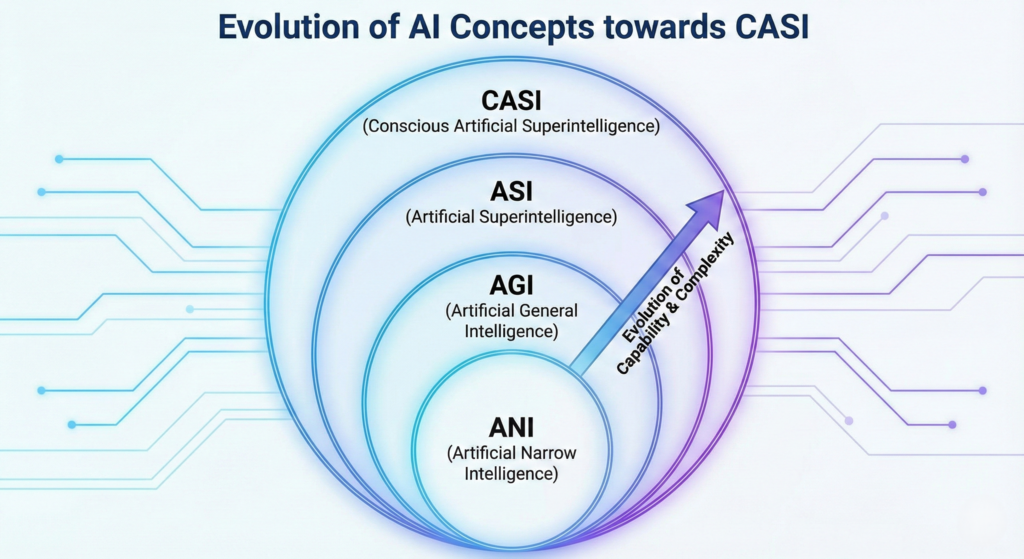
When people talk about AI, they are usually referring to one of two broad categories: Narrow AI or General AI.
Narrow AI
noun
Also known as Weak AI, this type of artificial intelligence is designed and trained to perform a specific task. It operates within a limited context and is a master of its domain, but it cannot perform tasks outside of it.
Virtually all the AI we use today is Narrow AI. It's the technology that powers facial recognition software, drives recommendation engines on streaming services, and enables self-driving cars. It can be incredibly powerful at its one job, often exceeding human capabilities, but it has no general awareness or consciousness.
General AI
noun
Also known as Strong AI or Artificial General Intelligence (AGI), this is the type of AI we often see in movies. It possesses the ability to understand, learn, and apply knowledge across a wide range of tasks at a human level.
A General AI wouldn't just be able to play chess; it could learn the rules, invent new strategies, and then use that same learning ability to write a poem or compose music. Creating AGI is the holy grail of AI research, but it remains a theoretical concept for now. Beyond AGI is the idea of Artificial Superintelligence (ASI), a form of AI that would surpass human intellect in every way.
AI in the Real World
Artificial intelligence isn't just a futuristic idea; it's already integrated into our daily lives and across various industries.
- Healthcare: AI helps doctors diagnose diseases earlier and more accurately by analyzing medical images like X-rays and MRIs.
- Finance: Algorithms are used to detect fraudulent transactions in real-time and to create personalized financial advice.
- Transportation: AI is the brain behind self-driving cars and is used to optimize traffic flow in smart cities.
- Entertainment: Recommendation systems on platforms like Netflix and Spotify use AI to suggest movies and music you might like.
- Customer Service: Many companies use AI-powered chatbots to answer customer questions quickly and efficiently.
This foundational knowledge of what AI is, where it came from, and its different forms provides a framework for understanding its powerful impact on our world.
What is the primary goal of artificial intelligence?
The term 'artificial intelligence' was first coined at a 1956 workshop held at which institution?