Introduction to Artificial Intelligence
Introduction to Artificial Intelligence
What Is Artificial Intelligence?
Artificial intelligence, or AI, is about creating machines that can think, learn, and solve problems like humans. It's a broad field in computer science focused on building smart systems that can perform tasks that typically require human intelligence. This includes everything from understanding language to recognizing patterns and making decisions.
Think of it less as creating a single, all-knowing robot and more as developing specialized tools that can handle specific cognitive tasks. A good way to visualize this is to see AI as a large category, with more specific fields fitting inside it.
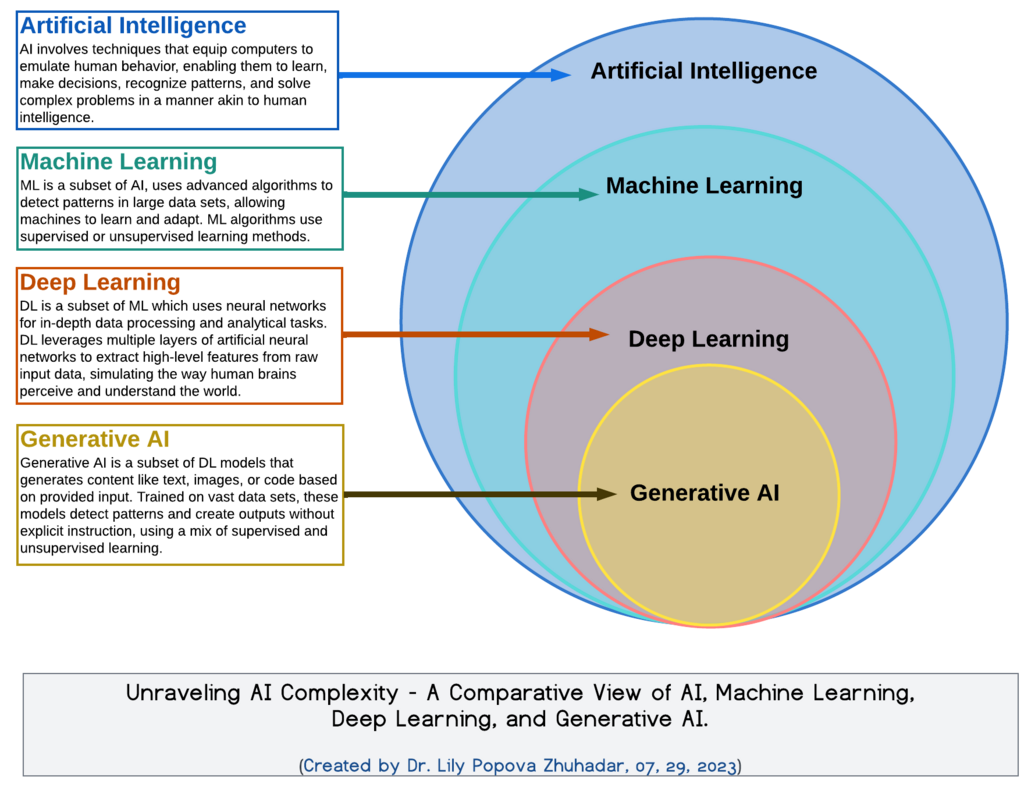
Why AI Matters
AI isn't just a concept from science fiction; it's already a part of our daily lives. When you ask a voice assistant for the weather, get a movie recommendation, or use a navigation app to find the fastest route, you're using AI.
In various industries, its impact is even more profound. In healthcare, AI helps doctors diagnose diseases earlier and more accurately. In finance, it detects fraudulent transactions in real-time. Car manufacturers use it to develop self-driving technology. AI's ability to process vast amounts of data and find patterns helps us solve complex challenges in almost every field.
The Building Blocks of AI
To understand how AI works, it's helpful to know some of its core components. These are the engines that power most of the AI applications we use today.
Machine Learning is the practice of teaching computers to learn from data. Instead of writing step-by-step instructions for a task, developers feed a system large amounts of data and let it figure out the patterns on its own. It's like learning by experience, but for a machine.
For example, to teach an AI to recognize cats, you wouldn't describe what a cat looks like with code. You would show it thousands of pictures of cats until it learns the features—whiskers, pointy ears, fur—by itself.
A key technology within machine learning is the neural network. Inspired by the structure of the human brain, a neural network is made of layers of interconnected nodes, or "neurons." Each neuron receives information, processes it, and passes it on to the next layer.
This layered structure allows the network to learn complex patterns, with each layer identifying progressively more intricate features. The first layer might recognize simple edges and colors, the next might identify shapes like eyes and noses, and a later layer might assemble those features to recognize a face.
Finally, there's Natural Language Processing, or NLP. This is the branch of AI that gives computers the ability to understand, interpret, and generate human language. It's the technology behind chatbots, language translation services, and sentiment analysis tools that can determine the tone of a piece of writing.
NLP bridges the gap between human communication and computer understanding, making technology more accessible and intuitive.
These concepts are the foundation upon which the world of AI is built. Now, let's check your understanding of these core ideas.