Introduction to Artificial Intelligence
Introduction to Artificial Intelligence
What Is AI Anyway?
At its core, artificial intelligence is about making machines smart. It's the science of teaching computers to perform tasks that typically require human intelligence, like learning from experience, solving problems, and understanding language.
Think of it this way: instead of programming a computer with a rigid set of instructions for every possible scenario, AI allows the computer to figure things out for itself.
Artificial Intelligence
noun
A field of computer science dedicated to creating systems that can perform tasks that normally require human intelligence. This includes abilities like learning, reasoning, problem-solving, perception, and language understanding.
A Brief History
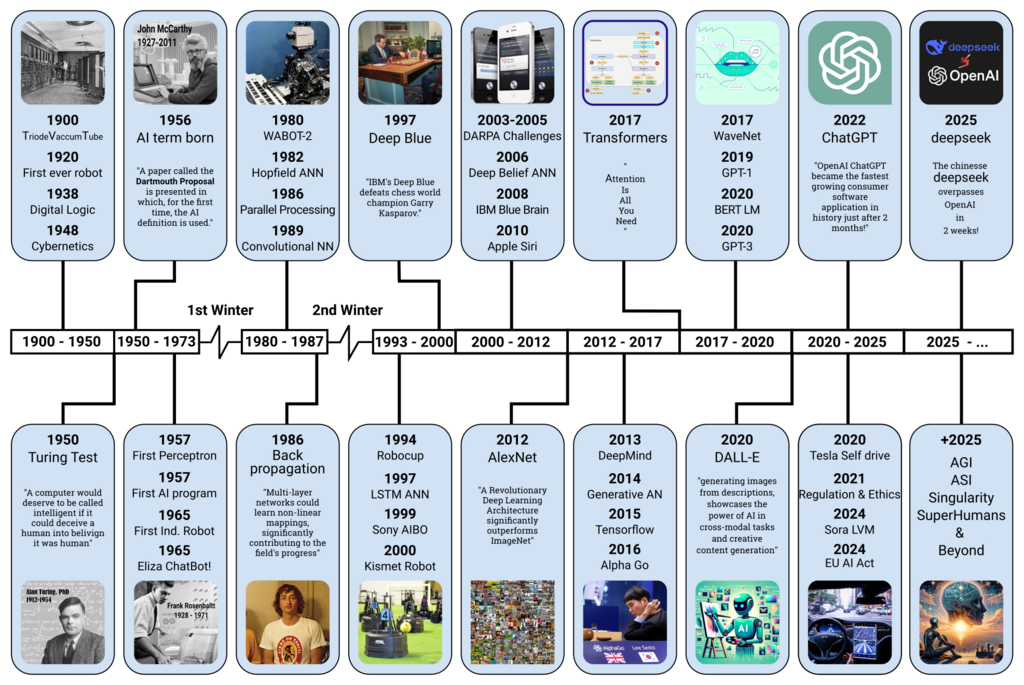
The dream of creating intelligent machines is ancient, but the scientific pursuit of AI began in the 1950s. The field was officially born at a summer workshop at Dartmouth College in 1956, where the term "artificial intelligence" was coined.
Early research was full of optimism. Pioneers created programs that could solve algebra problems and prove theorems. But progress was slower than expected. The complexity of creating true intelligence led to periods of reduced funding and interest, known as "AI winters."
A renaissance began in the late 1990s and has accelerated dramatically in the 21st century, fueled by two key ingredients: massive amounts of data and powerful computers.
Two Flavors of AI
When people talk about AI, they are usually referring to one of two distinct categories. Understanding the difference is key to cutting through the hype.
First, there's Artificial Narrow Intelligence (ANI), which is sometimes called Weak AI. This is the only type of AI that exists today. ANI is designed to perform a single, specific task very well. Your navigation app, a spam filter, or a chess-playing computer are all examples of Narrow AI. They are incredibly powerful in their specific domain but can't operate outside of it. A chess program can't suggest a recipe for dinner.
Then there's Artificial General Intelligence (AGI), or Strong AI. This is the stuff of science fiction—for now. AGI refers to a machine with the ability to understand, learn, and apply its intelligence to solve any problem, much like a human being. It would possess consciousness, self-awareness, and the ability to think abstractly.
Building AGI is the ultimate goal for many AI researchers, but it remains a distant and incredibly complex challenge.
What is the fundamental goal of artificial intelligence?
The type of AI that can beat a grandmaster at chess but cannot suggest a recipe for dinner is known as:
This introduction covers the basic ideas behind AI. As you continue, you'll explore the specific techniques and applications that are transforming our world.