Introduction to Artificial Intelligence
Introduction to Artificial Intelligence
What is Artificial Intelligence?
Artificial intelligence, or AI, is the science of making machines that can think and learn like humans. It's about creating systems that can perform tasks that normally require human intelligence, such as understanding language, recognizing patterns, making decisions, and solving problems.
Think of it like teaching a computer. Instead of giving it a rigid set of instructions for every single task, you give it the ability to learn from examples and experiences. Just as a child learns to identify a cat by seeing many different cats, an AI can learn to recognize them by analyzing thousands of images.
Artificial intelligence is a system’s ability to interpret external data correctly, to learn from such data, and to use those learnings to achieve specific goals and tasks through flexible adaptation.
This ability to learn and adapt is what makes AI so powerful. It's not just about following pre-programmed rules. It's about creating systems that can handle new and unexpected situations, find insights in massive amounts of data, and even create new things.
A Quick Trip Through Time
The idea of intelligent machines has been around for centuries, but the modern field of AI really began in the 1950s. Early researchers were optimistic, believing that a machine with human-like intelligence was just a few decades away. Progress was slower than expected, leading to periods of reduced funding and interest known as "AI winters."
However, breakthroughs in computing power and the availability of massive datasets reignited the field. Key milestones, like a computer defeating the world chess champion in the 1990s, showed the world what was possible.
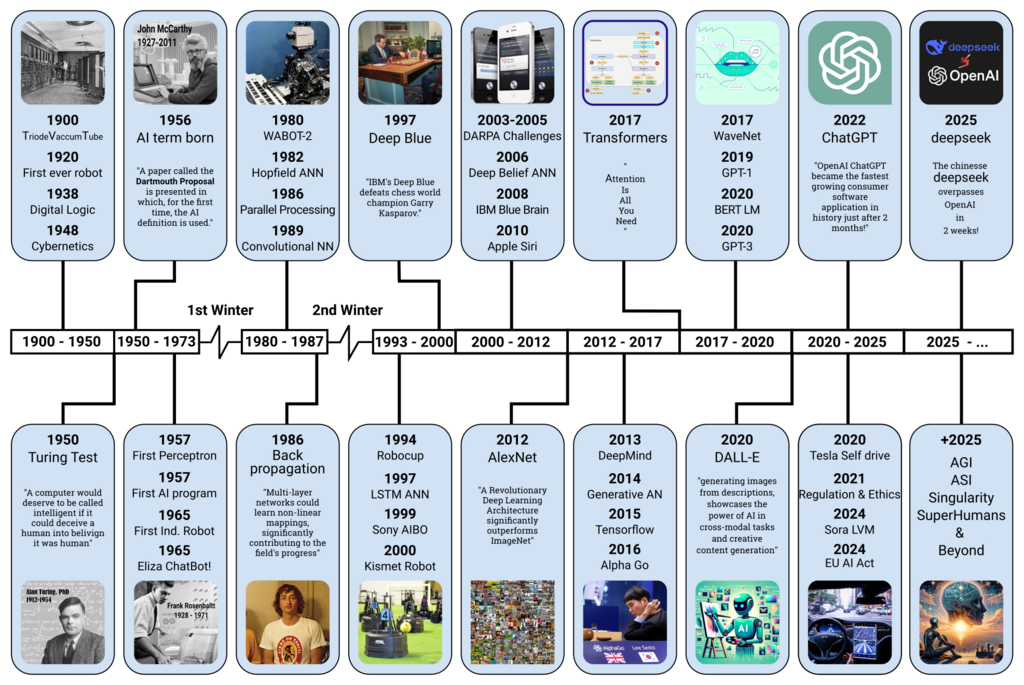
Today, we are in an AI boom. The rapid advancements are driven by better algorithms, more powerful computers, and an explosion of data from the internet, smartphones, and other connected devices. What was once science fiction is now a part of our daily lives.
Why AI Matters
AI is more than just a technological curiosity; it's a tool that is transforming entire industries. Its importance lies in its ability to automate complex tasks, analyze data at a scale humans cannot, and provide new capabilities that were previously unimaginable.
From navigating city streets to recommending your next movie, AI is already working behind the scenes in countless ways.
In healthcare, AI helps doctors diagnose diseases earlier and more accurately by analyzing medical images like X-rays and MRIs. It can also personalize treatment plans based on a patient's genetic makeup.
In finance, AI algorithms detect fraudulent transactions in real-time, saving consumers and banks billions of dollars. They also power automated trading systems that can analyze market trends much faster than any human trader.
In transportation, AI is the brain behind self-driving cars, which have the potential to make our roads safer and more efficient. It also optimizes delivery routes for shipping companies, reducing fuel consumption and costs.
In entertainment, AI powers the recommendation engines on services like Netflix and Spotify, helping you discover new content you'll love. It's also used in video games to create more realistic and challenging non-player characters.
This is just a small sample. AI is being applied in almost every field, from agriculture to customer service, fundamentally changing how we work and live. Understanding the basics of AI is the first step toward navigating this new world.
What is the fundamental concept behind artificial intelligence?
In the history of artificial intelligence, what does the term "AI winter" refer to?