Introduction to Artificial Intelligence
Introduction to Artificial Intelligence
What Is Artificial Intelligence?
Artificial intelligence, or AI, is the science of making machines that can think and act like humans. The core idea is to build systems that can perform tasks that normally require human intelligence. This includes things like recognizing speech, making decisions, and translating languages.
Think of it like teaching a computer to learn, reason, and solve problems on its own. Instead of giving it a rigid set of instructions for every single scenario, we create models that can adapt and respond to new information. A spam filter in your email is a simple example. It wasn't programmed with a list of every possible spam email; instead, it learned to recognize the patterns and characteristics of junk mail based on millions of examples.
AI's Family Tree
The term AI is often used as a broad umbrella, but it has important subfields. The two most common ones you'll hear about are machine learning and deep learning.
Machine Learning (ML) is a subset of AI where systems learn directly from data. Instead of being explicitly programmed, an ML model identifies patterns in data and uses them to make predictions. The more data it sees, the better it gets.
Deep Learning (DL) is a specialized type of machine learning. It uses complex structures called neural networks, which are loosely inspired by the human brain. These networks have many layers, allowing them to learn intricate patterns from massive amounts of data, like images or audio. This is the technology behind facial recognition and advanced voice assistants.
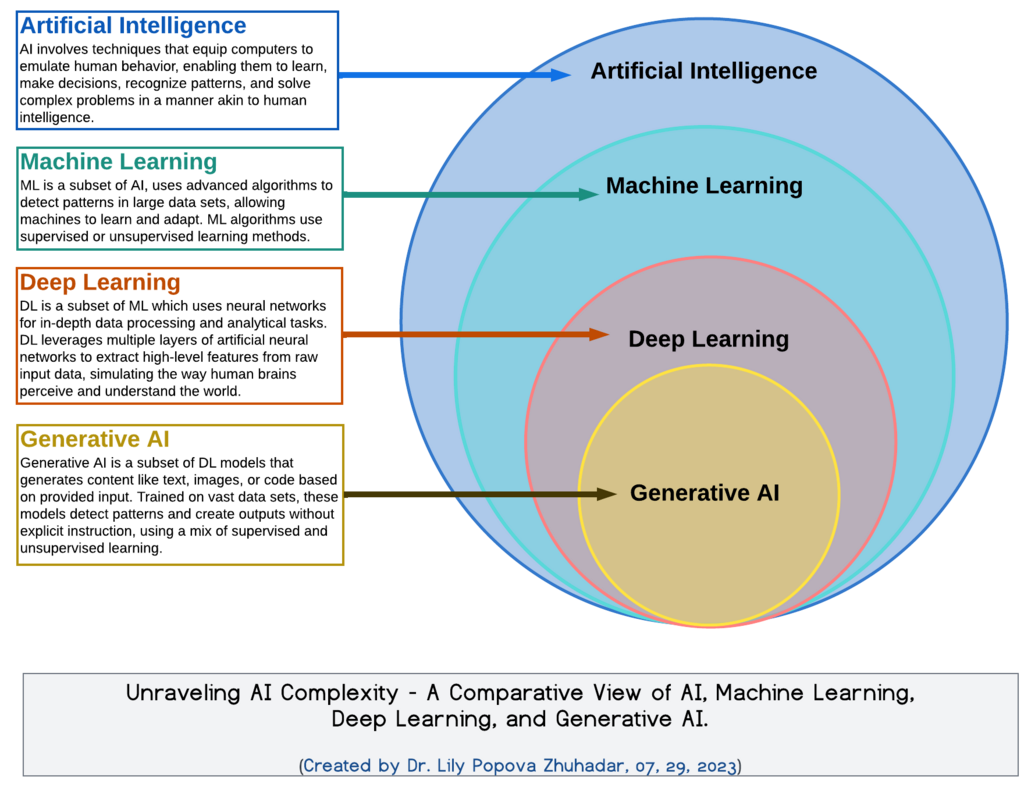
So, all deep learning is a form of machine learning, and all machine learning is a form of AI. But not all AI uses machine learning or deep learning. Some older AI systems, for instance, relied on complex, hand-crafted rules.
A Quick Trip Through Time
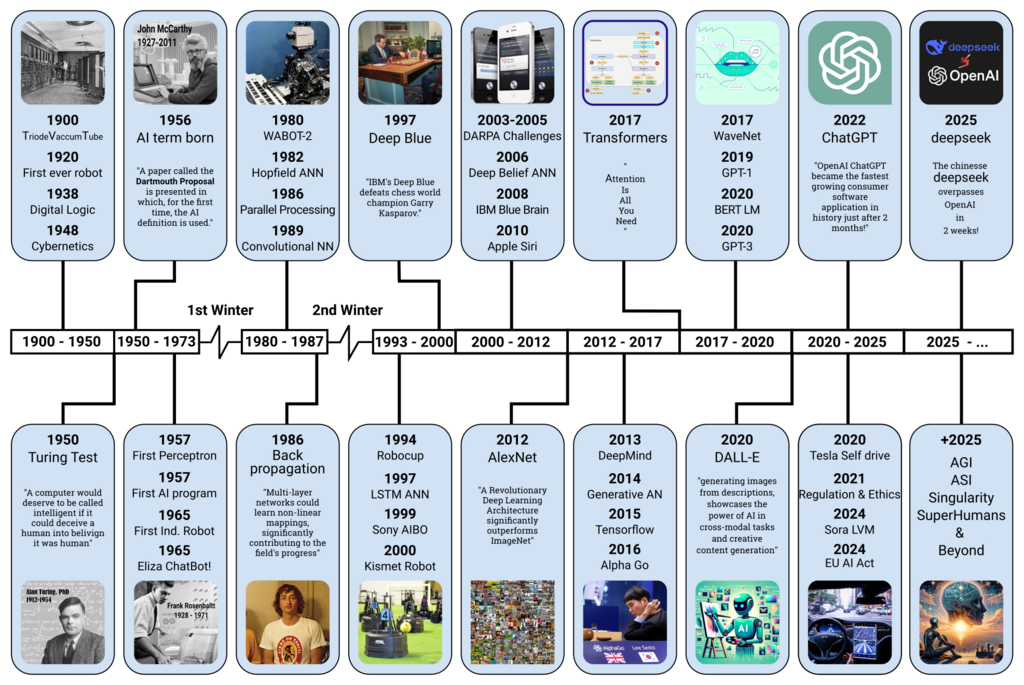
The dream of intelligent machines is ancient, but the formal field of AI began in the summer of 1956 at a conference at Dartmouth College. Early research was filled with optimism, with pioneers predicting that machines with human-like intelligence were just a few decades away.
Progress was slower than expected, leading to periods known as "AI winters," when funding and interest dried up. But breakthroughs continued. In 1997, IBM's Deep Blue computer defeated world chess champion Garry Kasparov, a major milestone. The real explosion in AI, however, was sparked by two things: the availability of huge amounts of data (thanks to the internet) and the development of much more powerful computers.
This combination fueled the rise of deep learning in the 2010s, leading to the powerful AI tools we see today, from language models that can write essays to systems that can generate realistic images from a text prompt.
AI in the Real World
AI isn't just a subject of science fiction; it's already integrated into many parts of our daily lives and transforming major industries.
In healthcare, AI is used to analyze medical images like X-rays and CT scans, often spotting signs of disease that a human eye might miss. It also helps accelerate the discovery of new drugs by analyzing vast biological datasets to find promising candidates.
In finance, banks use AI to detect fraudulent transactions in real time by identifying unusual spending patterns. It's also the engine behind algorithmic trading, where machines make investment decisions at speeds no human could match.
In transportation, AI is the brain behind self-driving cars, processing data from sensors to navigate roads safely. Logistics companies also use it to optimize delivery routes, saving fuel and time.
Now's a great time to review the key terms we've just covered.
Ready to test your knowledge?
What is the core idea behind Artificial Intelligence (AI)?
Which statement accurately describes the relationship between AI, Machine Learning (ML), and Deep Learning (DL)?
From its conceptual beginnings to its modern applications, AI has evolved into a powerful force for change. Understanding its core ideas is the first step to navigating the future it's helping to create.