Introduction to Artificial Intelligence
Introduction to AI
What Is Artificial Intelligence?
Artificial intelligence, or AI, is the science of making machines that can think, learn, and solve problems like humans do. It's not about sentient robots from movies; it's about building smart tools that can perform tasks that normally require human intelligence. This could be anything from recognizing a photo of a cat to navigating a car through city streets.
Think of it as teaching a computer to see patterns, understand language, and make decisions, much like we learn from experience.
AI systems are built by training them on vast amounts of data. Just as a child learns to identify a dog after seeing many different dogs, an AI model learns by analyzing thousands of examples. This process allows it to make predictions or decisions without being explicitly programmed for every single scenario.
Artificial Intelligence
noun
The theory and development of computer systems able to perform tasks that normally require human intelligence, such as visual perception, speech recognition, decision-making, and translation between languages.
The Basic Principles
So, how does an AI system actually work? While the details can get complex, the basic principles are straightforward. It all starts with data, which acts as the 'experience' for the machine. The AI processes this data to learn patterns, correlations, and features.
- Data Input: AI systems need information to learn from. This can be images, text, numbers, or any other type of digital information.
- Learning & Processing: The AI uses algorithms to analyze the data, identify patterns, and build a model. This is the 'thinking' part, where the system makes sense of the information it’s given.
- Decision & Output: Based on its learning, the AI produces an output. This could be a prediction (like the weather forecast), a classification (labeling an email as spam), or an action (like a car applying its brakes).
AI in the Wild
AI isn't just a concept in a lab; it's already a significant part of our daily lives and a powerful tool across many industries. From the moment you unlock your phone with your face to the recommendations you get on a streaming service, AI is working behind the scenes. Its ability to process huge datasets and find insights quickly makes it incredibly valuable.
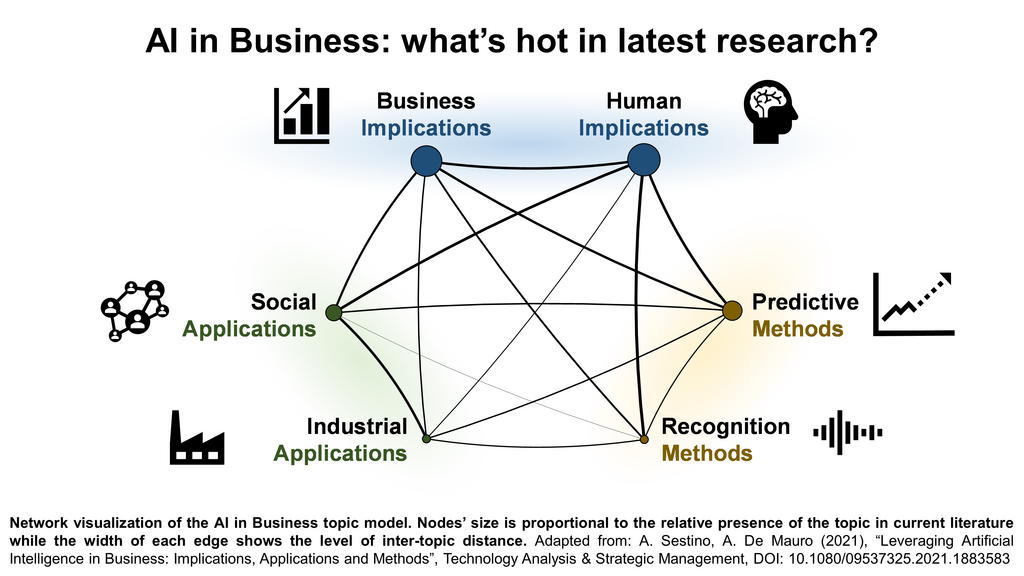
Different sectors leverage AI to solve unique problems and improve efficiency. The technology's versatility is one of its greatest strengths.
| Sector | AI Application Example |
|---|---|
| Healthcare | Analyzing medical images like X-rays and MRIs to help doctors detect diseases earlier. |
| Finance | Identifying fraudulent credit card transactions in real-time by spotting unusual spending patterns. |
| Transportation | Powering navigation apps to find the fastest route by analyzing live traffic data. |
| Entertainment | Recommending movies, shows, and music based on your viewing and listening history. |
| Retail | Using chatbots to provide 24/7 customer service and answer common questions. |
These examples show just a fraction of what AI can do. As the technology continues to develop, it will become an even more integral part of how we work and live.
What is the primary goal of Artificial Intelligence (AI)?
According to the text, how do most AI systems learn to perform their tasks?