Introduction to Artificial Intelligence
Introduction to Artificial Intelligence
What Is Artificial Intelligence?
At its heart, artificial intelligence (AI) is the science of making computers smart. It’s about creating systems that can perform tasks that normally require human intelligence. This includes things like learning from experience, understanding language, recognizing objects, solving problems, and making decisions.
Think of AI as teaching a machine to think and learn, much like a human does, but often on a much larger scale.
The primary goal isn't just to mimic human thought, but to build systems that can operate autonomously to solve real-world problems. From recommending a movie to navigating a new city, AI is designed to make complex tasks simpler and more efficient.
A Quick Trip Through Time
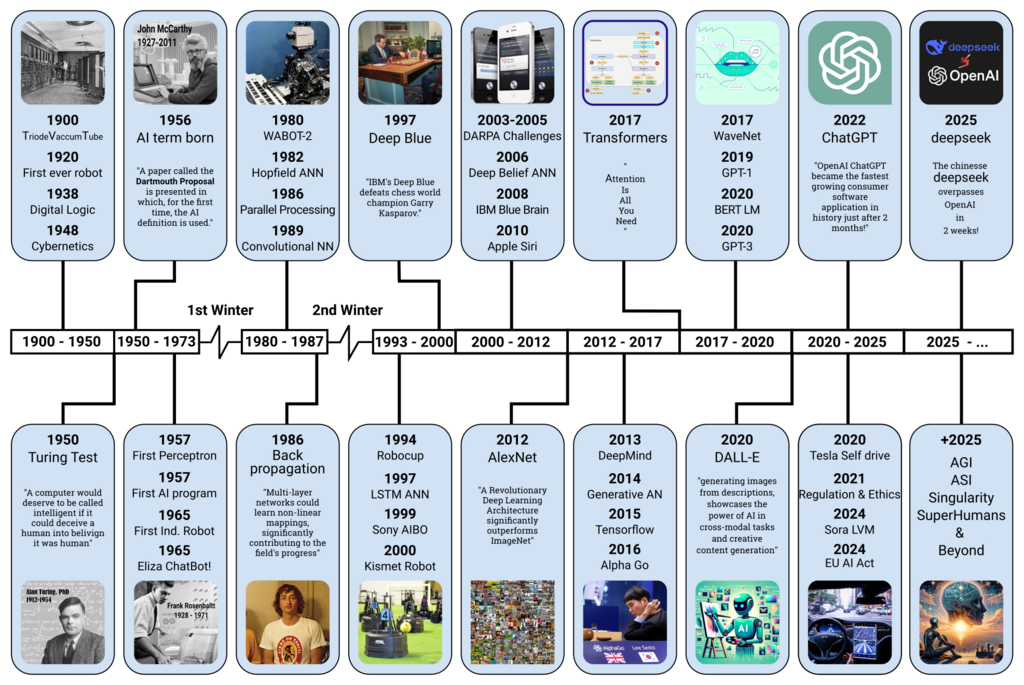
The idea of intelligent machines has been around for centuries, but the modern field of AI really began to take shape in the mid-20th century. One of the first major thinkers was Alan Turing, a British mathematician who in 1950 proposed a test for machine intelligence. He asked a simple question: can a machine converse so convincingly that a person can't tell if they're talking to a human or a computer?
The term "artificial intelligence" itself was coined a few years later. In the summer of 1956, a group of scientists gathered at Dartmouth College for a workshop. They came together to explore the idea that every aspect of learning or any other feature of intelligence could, in principle, be so precisely described that a machine could be made to simulate it. That event is now seen as the official birth of AI as a field of study.
The Building Blocks of AI
Modern AI is powered by a few key concepts. You don't need to be an expert to understand the basics. The most important ideas are machine learning, deep learning, and neural networks.
Machine Learning (ML) is a subset of AI. Instead of giving a computer a detailed set of instructions for every task, we give it a large amount of data and let it learn the patterns for itself. It's like how you learn to recognize a cat: after seeing many different cats, you learn the features that define them without someone listing every single rule.
Deep Learning (DL) is a more advanced type of machine learning. It uses structures called neural networks to find patterns in data. The "deep" part refers to the many layers within these networks, which allow them to learn much more complex patterns than standard machine learning models.
Neural Networks are computing systems inspired by the structure of the human brain. They consist of interconnected nodes, or "neurons," that process information. Each layer of neurons learns to recognize different features, and by passing data through these layers, the network can perform sophisticated tasks like identifying images or understanding speech.
These concepts work together to create the powerful AI systems we see today. Machine learning provides the ability to learn from data, and deep learning, with its neural networks, takes that learning to a new level of complexity and capability.
Ready to check your understanding? Let's see what you've learned.
What is the primary goal of artificial intelligence as described in the text?
The term "artificial intelligence" was coined at a workshop held at which institution in 1956?
This introduction covers the basic ideas behind AI. As you continue, you'll explore these concepts in more detail and see how they are applied to create intelligent systems that are changing our world.