Introduction to Artificial Intelligence
Introduction to AI
What Is Artificial Intelligence?
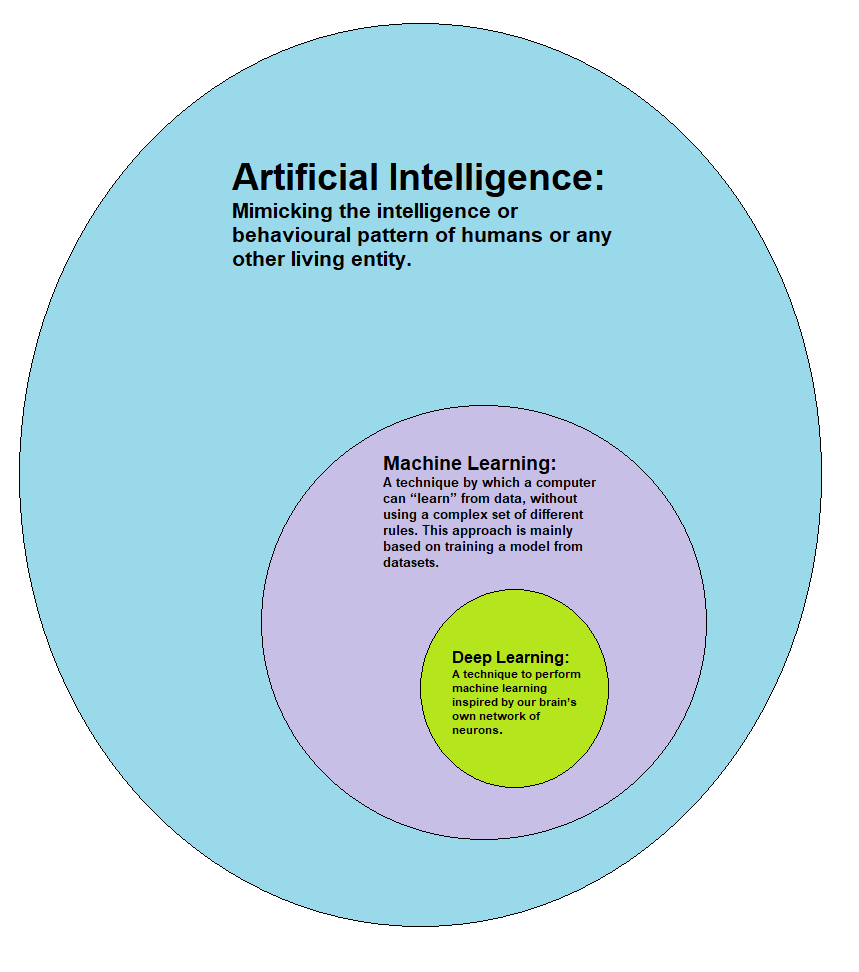
Artificial intelligence, or AI, is the science of making machines that can think and learn like humans. It's about creating systems that can perform tasks that typically require human intelligence, such as understanding language, recognizing patterns, and making decisions.
Think of it this way: when you teach a dog to fetch, you're not giving it a detailed list of instructions for every possible throw. It learns the general idea and adapts. AI works on a similar principle, but for computers.
AI is becoming a fundamental part of our world. It powers the recommendation engines that suggest what to watch next, helps doctors diagnose diseases more accurately, and enables your phone's digital assistant to answer questions. Its main impact is its ability to analyze vast amounts of data far more quickly and effectively than a human ever could, finding patterns and insights that drive smarter decisions everywhere from online shopping to scientific research.
The Flavors of AI
AI is a broad field with several specialized areas. Understanding these subfields helps clarify what AI can do.
Machine Learning
noun
The practice of using algorithms to parse data, learn from it, and then make a determination or prediction about something in the world.
Instead of being explicitly programmed with rules, a machine learning model is trained on a large dataset. For example, to identify spam emails, you don't write a rule for every possible spam keyword. Instead, you feed the system thousands of examples of spam and non-spam emails, and it learns the characteristics of each on its own.
Over time, as it sees more data, the machine learning model gets better and better at its task, just like a person gaining experience.
A key subset of machine learning is Deep Learning. Deep learning uses structures inspired by the human brain, called neural networks, with many layers. This layered approach allows it to learn very complex patterns from enormous amounts of data. It's the powerhouse behind many recent AI breakthroughs, from advanced image recognition to sophisticated language translation.
Another important subfield is Natural Language Processing (NLP). This area focuses on giving computers the ability to understand, interpret, and generate human language. When you talk to a virtual assistant like Siri or Alexa, or use an online translation tool, you're interacting with NLP.
Computer Vision is the subfield that allows machines to see and interpret the visual world. Using cameras, data, and algorithms, a computer can be trained to detect and identify objects. This is the technology that enables your phone to recognize your face to unlock and helps self-driving cars navigate roads by identifying pedestrians, traffic lights, and other vehicles.
Finally, Robotics integrates AI to build machines that can perform physical tasks. While not all robots use AI, advanced robots use machine learning and computer vision to interact with and navigate the physical world. This includes everything from robotic arms assembling products in a factory to rovers exploring the surface of Mars.
Ready to check your understanding?
What is the fundamental goal of Artificial Intelligence (AI)?
A self-driving car uses cameras to identify pedestrians, traffic lights, and other vehicles. Which subfield of AI is most critical for this task?
These subfields often work together. A robot might use computer vision to see, machine learning to adapt to new tasks, and NLP to understand voice commands. Together, they form the building blocks of modern AI.