Introduction to Artificial Intelligence
Introduction to AI
What Is Artificial Intelligence?
Artificial intelligence, or AI, is about making computers smart. Think of it like teaching a machine to learn, reason, and solve problems the way a human would. Instead of just following a strict set of pre-programmed instructions, an AI system can analyze new information and adapt its behavior.
It's not a single technology, but a broad field of computer science with many branches. The goal is to create systems that can perform tasks that typically require human intelligence, like understanding language, recognizing images, and making decisions.
Artificial Intelligence
noun
The theory and development of computer systems able to perform tasks that normally require human intelligence.
AI isn't one monolithic thing. It’s a collection of different technologies and approaches. Two of the most important subsets you’ll hear about are Machine Learning and Deep Learning. They are nested within each other, with AI being the largest category.
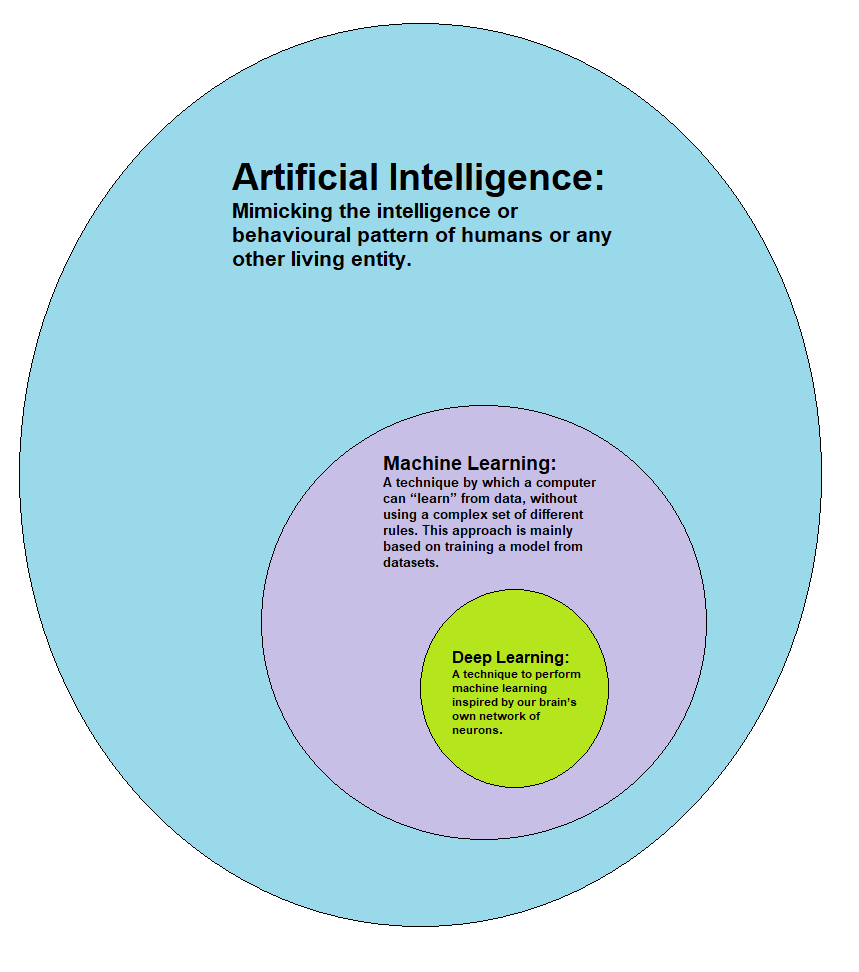
Machine Learning (ML) is a type of AI where systems learn directly from data. Instead of being explicitly programmed for a task, a machine learning model identifies patterns in large datasets to make predictions. For example, your email service learns to spot spam by analyzing thousands of messages labeled as junk.
Deep Learning is a more advanced subset of machine learning. It uses structures inspired by the human brain, called neural networks, to learn from vast amounts of data. This is the technology behind more complex tasks, like recognizing faces in photos or powering self-driving cars.
Why AI Matters
AI is no longer science fiction. It's already a part of your daily life, often working quietly in the background. When Spotify creates a personalized playlist for you, that's AI. When Google Maps finds the fastest route by analyzing traffic, that's AI. Digital assistants like Siri and Alexa rely on AI to understand and respond to your voice commands.
AI's biggest impact comes from its ability to process massive amounts of information far beyond human capability, finding patterns and insights we might miss.
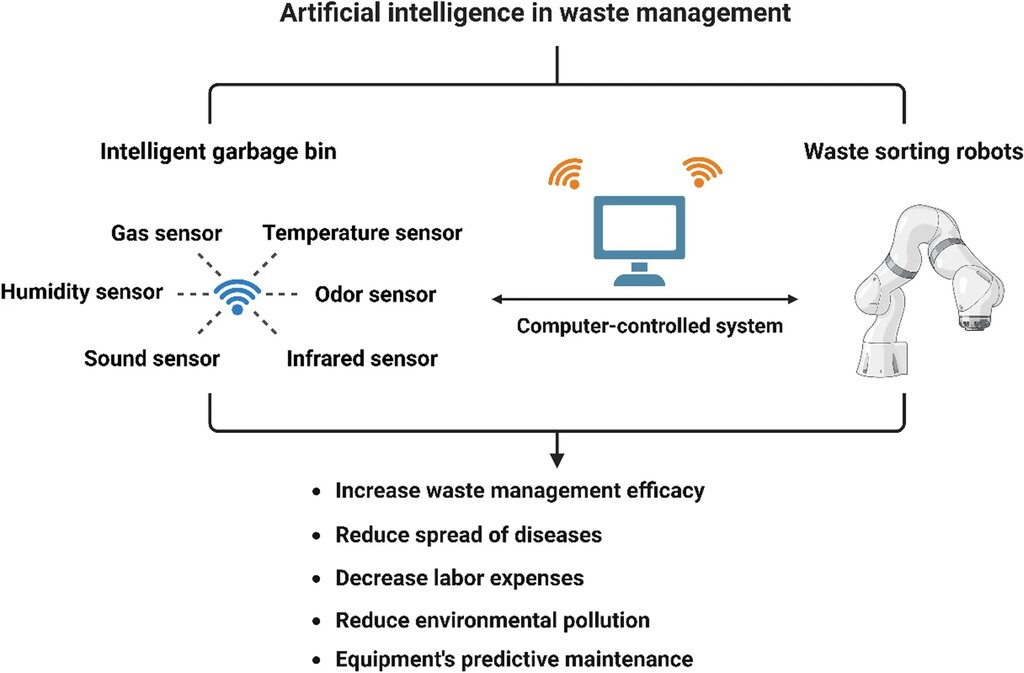
Beyond personal convenience, AI is transforming major industries. In healthcare, it helps doctors diagnose diseases like cancer earlier and more accurately by analyzing medical images. In finance, it detects fraudulent transactions in real time by spotting unusual spending patterns. It's also making everything from farming to manufacturing more efficient, saving time, resources, and money.
Core Concepts
To talk about AI, it helps to know a few key terms. These concepts are the building blocks of nearly every AI system.
| Term | Definition |
|---|---|
| Algorithm | A set of rules or steps that a computer follows to solve a problem or perform a task. |
| Data | The information, like text, images, or numbers, that an AI system uses to learn from. |
| Model | The output of a machine learning process. It's what's been 'trained' on data to make predictions. |
| NLP | Natural Language Processing. The ability for AI to understand, interpret, and generate human language. |
Natural Language Processing (NLP) is particularly important because it bridges the gap between humans and computers. It's the technology that allows you to talk to your phone, use translation apps to understand a foreign language, or get a helpful summary from a chatbot. NLP is what makes AI feel more intuitive and conversational.
Understanding these basic ideas is the first step. They provide a foundation for exploring the more complex and fascinating aspects of what AI can do.
Ready to check your understanding? Let's review what we've covered.
What is the primary goal of Artificial Intelligence (AI)?
How are AI, Machine Learning (ML), and Deep Learning related?
With these fundamentals in mind, you're now equipped to explore the different ways AI is shaping our world.