Introduction to Artificial Intelligence
Introduction to Artificial Intelligence
What Is Artificial Intelligence?
Artificial Intelligence, or AI, is about creating machines that can think, learn, and solve problems. The core idea is to simulate human intelligence in a computer. This doesn't just mean building a machine that can calculate numbers quickly. It means building systems that can reason, understand language, recognize patterns, and learn from experience.
Artificial Intelligence
noun
A branch of computer science focused on building smart machines capable of performing tasks that typically require human intelligence.
The ultimate goal is broad. An AI might be designed to understand spoken words, like Siri or Alexa. Another might be built to see and interpret the world, powering self-driving cars. Others focus on complex games, planning, or even discovering new scientific principles. At its heart, AI aims to replicate and even exceed our own cognitive abilities in specific tasks.
A Quick Trip Through Time
While AI feels very modern, its foundations were laid decades ago. The field officially began in the 1950s, when a group of pioneering scientists gathered to explore the possibility of creating machines that could think. This kicked off a journey of big dreams, frustrating setbacks, and incredible breakthroughs.
Understanding the history of artificial intelligence is crucial for grasping its current capabilities and future potential.
Early research was promising, but progress was slow. The limited computing power of the time couldn't handle the complex calculations needed. This led to periods known as "AI winters," when funding dried up and interest waned.
But the dream never died. With the explosion of computing power and the availability of massive amounts of data in the 21st century, AI experienced a powerful resurgence. This led to milestones that once seemed like science fiction.
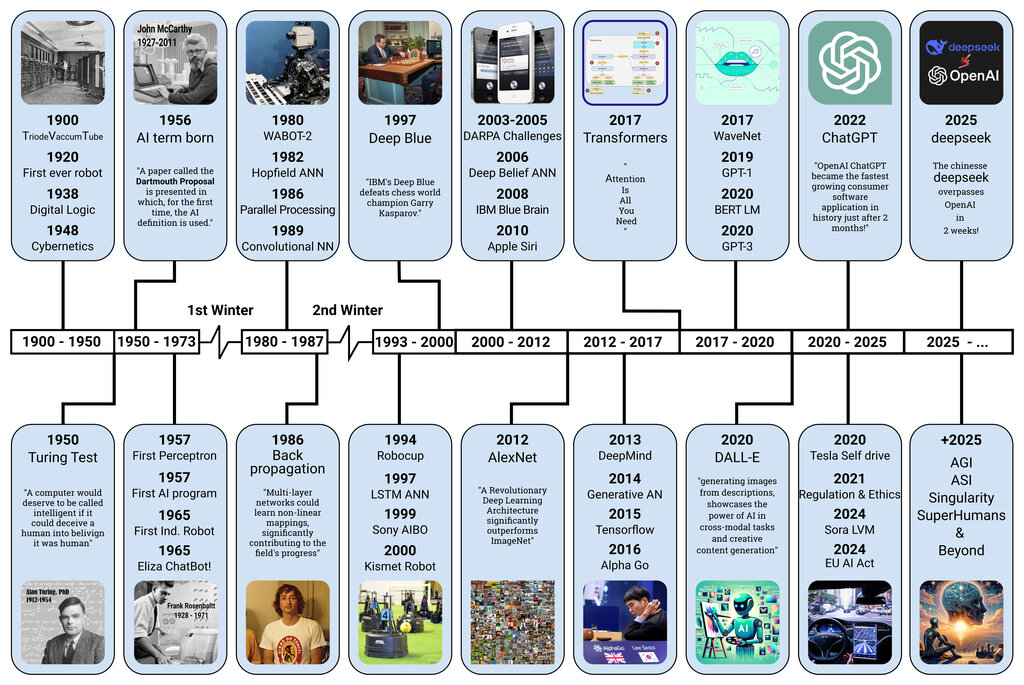
In 1997, IBM's Deep Blue defeated world chess champion Garry Kasparov. In 2016, Google DeepMind's AlphaGo beat one of the world's best Go players, a feat considered much harder than chess. More recently, generative AI models like ChatGPT have shown a stunning ability to understand and create human-like text, bringing AI directly into our daily lives.
The Two Main Flavors of AI
Not all AI is created equal. When we talk about AI, it's helpful to break it down into two main categories based on its capabilities: narrow AI and general AI.
Every AI you use today, from your phone's digital assistant to the algorithm that recommends movies, is a form of narrow AI.
Artificial Narrow Intelligence (ANI), sometimes called Weak AI, is designed and trained for a particular task. An AI that plays chess cannot order a pizza. A spam filter can't drive a car. These systems can be incredibly powerful and outperform humans in their specific domain, but their intelligence doesn't generalize. They are specialists.
Artificial General Intelligence (AGI), or Strong AI, is the kind of AI you often see in movies. This is a machine with the ability to understand, learn, and apply its intelligence to solve any problem, just like a human being. AGI could write a poem, invent a new gadget, or have a meaningful conversation. It's the ultimate goal for many AI researchers, but it remains purely theoretical for now. We haven't created it yet.
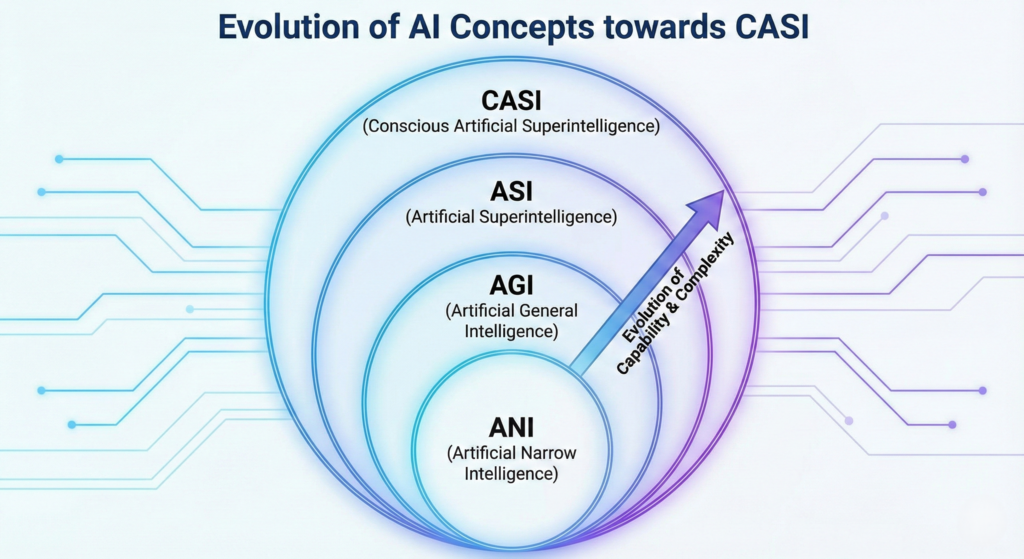
Understanding this distinction is key. All the current excitement and debate is centered on narrow AI getting more and more capable. The quest for AGI, a machine with true, flexible intelligence, continues to be one of the most significant challenges in science and technology.