Introduction to Artificial Intelligence
Introduction to AI
What Is Artificial Intelligence?
Artificial intelligence, or AI, is the science of making machines that can think and learn like humans. It's a broad field that aims to build smart systems capable of tasks that typically require human intelligence, such as recognizing speech, making decisions, and identifying patterns.
The core idea is to simulate human thought processes in a computer, allowing it to solve problems, understand language, and even create.
While the concept has been around for decades, recent advances in computing power and data have brought AI from science fiction into our daily lives. From the recommendation engine that suggests your next movie to the navigation app that finds the fastest route, AI is already working behind the scenes.
A Journey Through Time
The dream of intelligent machines isn't new. The intellectual roots of AI stretch back to the mid-20th century. In 1950, British mathematician Alan Turing proposed what's now called the "Turing Test" to determine if a machine could exhibit intelligent behavior indistinguishable from that of a human.
However, the field of AI officially began at a 1956 summer workshop at Dartmouth College. It was there that computer scientist John McCarthy coined the term "artificial intelligence." This event brought together the founding fathers of AI and laid the groundwork for the decades of research that would follow.
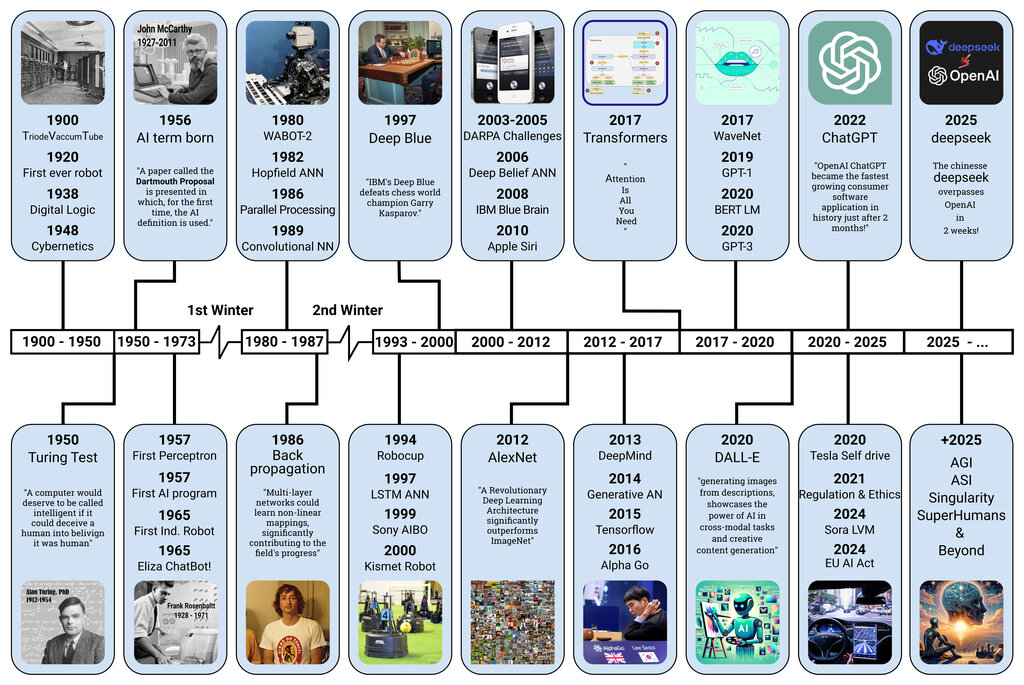
The path of AI development hasn't always been smooth. The initial excitement led to bold predictions, but the complexity of creating true intelligence was underestimated. Periods of slow progress and reduced funding, known as "AI winters," followed the initial hype. Researchers discovered that creating common sense and broad knowledge in machines was incredibly difficult.
The history of Artificial Intelligence (AI) is a narrative of waves -- rising optimism followed by crashing disappointments.
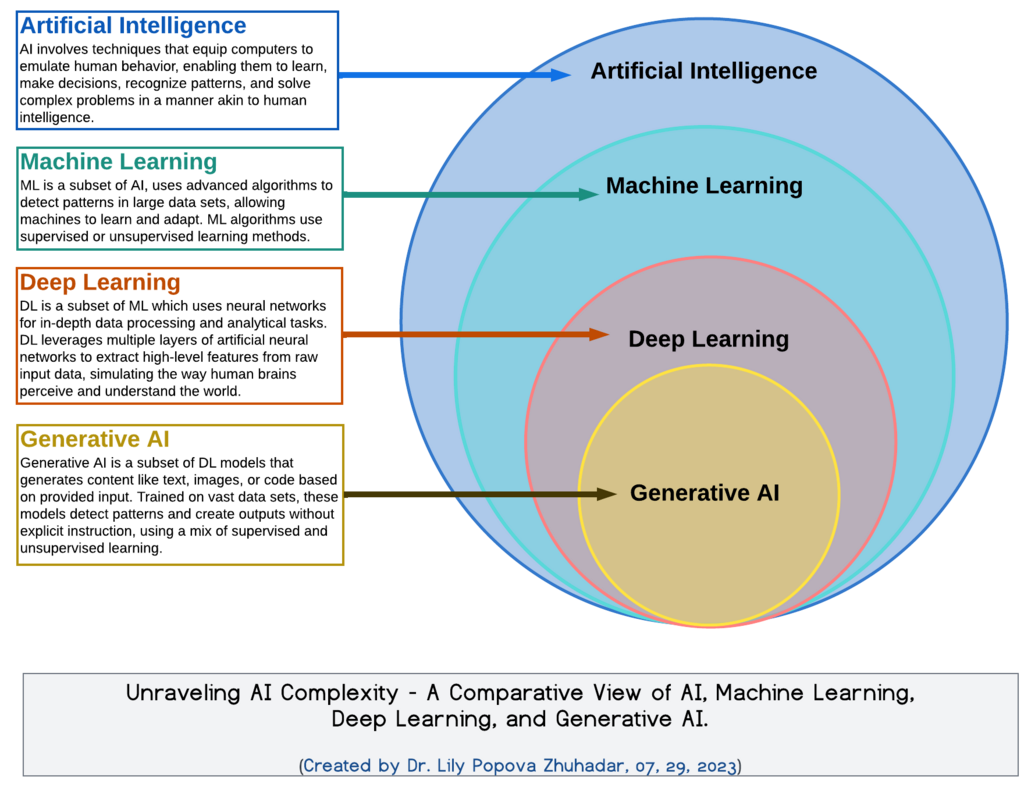
Things began to change in the late 1990s and 2000s. The rise of the internet generated massive amounts of data, and faster computers provided the power needed to process it. This led to a resurgence in machine learning, a subfield of AI where systems learn from data. This new approach, particularly a technique called deep learning, has fueled the AI boom we see today.
Pioneers of the Field
Many brilliant minds have shaped the field of AI. Their contributions built the foundation that modern researchers stand on today.
| Figure | Contribution |
|---|---|
| Alan Turing | Proposed the Turing Test, a measure of machine intelligence. |
| John McCarthy | Coined the term "Artificial Intelligence" and organized the Dartmouth Conference. |
| Geoffrey Hinton | A key figure in the development of deep learning and neural networks. |
| Arthur Samuel | Developed a checkers-playing program that could learn from its mistakes, a pioneering example of machine learning. |
Now, let's test your understanding of these foundational concepts.
What is the primary goal of the field of artificial intelligence?
The term "artificial intelligence" was officially coined at a 1956 summer workshop held at which institution?
Understanding where AI came from provides the perfect context for where it's going. These historical roots and core ideas are the building blocks for all the amazing applications we see today.