Introduction to Artificial Intelligence
Introduction to AI
What Is Artificial Intelligence?
At its heart, artificial intelligence is the science of making machines that can think or act like humans. It’s a broad field of computer science focused on creating systems that can perform tasks that normally require human intelligence. This includes things like learning, reasoning, problem-solving, perception, and understanding language.
Artificial Intelligence
noun
The theory and development of computer systems able to perform tasks that normally require human intelligence.
Think of it this way: we want to build machines that don't just follow instructions blindly, but can also make sense of the world around them. The ultimate goal is to create technology that can assist and augment human capabilities, tackling complex problems that are too difficult or time-consuming for people to solve on their own.
The core quest of AI is to replicate or simulate human intelligence in machines.
A Brief History of AI
The idea of intelligent machines isn't new. Ancient myths are filled with stories of automatons and artificial beings. But the modern field of AI really began in the mid-20th century, alongside the development of the first digital computers.
A key figure was Alan Turing, a British mathematician who, in 1950, proposed a test for machine intelligence. The "Turing Test" challenged a machine to imitate human conversation so well that a person couldn't tell they were talking to a computer. This idea laid the groundwork for thinking about how we could measure machine intelligence.
The field was officially born in the summer of 1956 at a workshop at Dartmouth College. It was there that computer scientist John McCarthy coined the term "artificial intelligence." He and other pioneers like Marvin Minsky and Allen Newell were optimistic, believing that a machine as intelligent as a human being was just a few decades away.
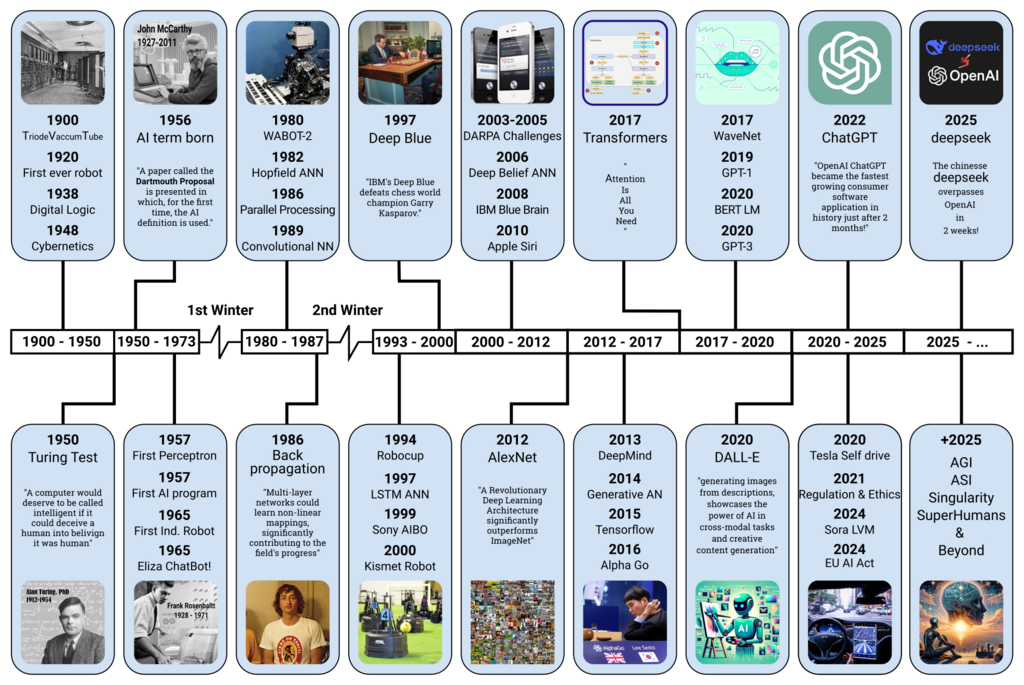
Progress was slower than expected. Early successes in solving logic puzzles and playing checkers gave way to harder problems that couldn't be cracked with the limited computing power of the time. This led to periods known as "AI winters," when funding dried up and public interest waned.
However, breakthroughs in the 1980s and the explosion of data and computing power in the 21st century sparked a renaissance. Researchers developed new techniques, and AI began to achieve feats once thought impossible, like defeating the world chess champion.
Why AI Matters Today
Today, AI is no longer a futuristic concept. It's a foundational technology that is reshaping industries and everyday life. The significance of AI lies in its ability to process vast amounts of data and find patterns that are invisible to the human eye. This allows it to learn, adapt, and make predictions with increasing accuracy.
As a field, AI is an umbrella term that covers many different approaches. Its major subfields include machine learning and deep learning, which are responsible for many of the advances we see today.
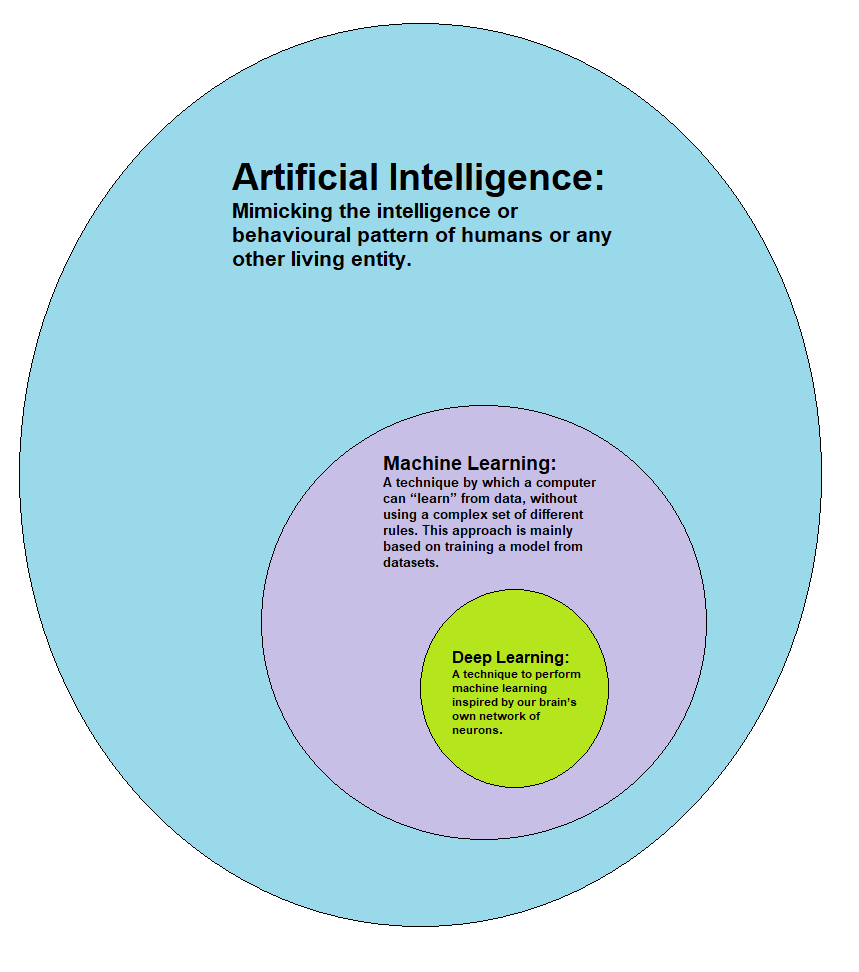
Understanding the basics of AI is becoming essential for everyone, not just scientists and engineers. It influences how we get information, how businesses operate, and how we approach major global challenges in areas like healthcare and climate change. As AI continues to evolve, its impact on society will only grow, making it one of the most important technological developments of our time.
Let's review what you've learned about the foundations of AI.
What is the fundamental goal of artificial intelligence?
Who is credited with coining the term 'artificial intelligence' at a 1956 workshop?
Having a grasp of AI's definition and history provides the context needed to understand its current capabilities and future potential.