Introduction to Artificial Intelligence
Introduction to AI
What Is AI?
Artificial Intelligence is about creating machines or systems that can perform tasks that normally require human intelligence. Think about how you learn to recognize a friend's face, understand a joke, or decide the best route to take home. AI aims to build technology that can do similar things: perceive, reason, learn, and solve problems.
Artificial Intelligence
noun
A field of computer science dedicated to creating systems capable of performing tasks that typically require human intelligence, such as visual perception, speech recognition, decision-making, and translation between languages.
At its core, AI isn't a single technology but a broad field that covers many different methods and goals. The ultimate ambition is to create systems that can operate autonomously, adapting to new situations without being explicitly programmed for every possible scenario. This is a big departure from traditional software, which follows a rigid set of instructions.
A Quick History
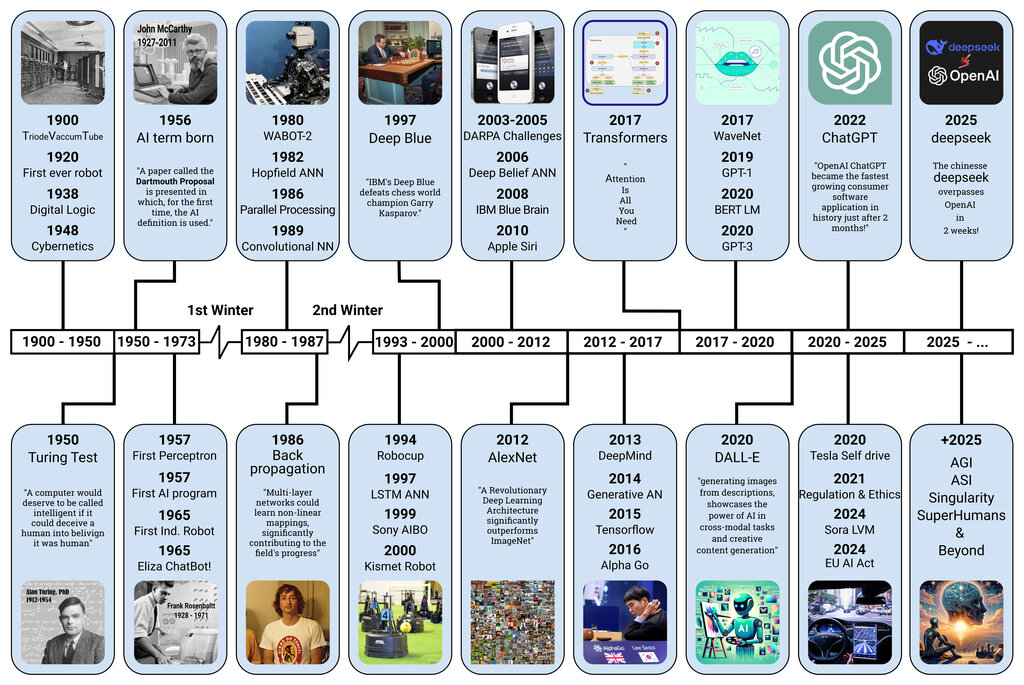
The idea of intelligent machines has been around for centuries, but the formal study of AI began in the mid-20th century. A pivotal moment was a workshop at Dartmouth College in 1956, where leading researchers gathered to explore the possibility of creating thinking machines. It was here that the term "Artificial Intelligence" was officially coined.
The 1956 Dartmouth Summer Research Project on Artificial Intelligence is widely considered the birth of AI as a field.
Early AI research was filled with excitement and bold predictions. Scientists developed programs that could solve algebra problems and prove theorems. But progress was slower than expected. The complexity of creating true intelligence led to periods known as "AI winters," when funding dried up and public interest waned.
Everything changed with two key developments: the explosion of digital data and the availability of powerful, affordable computers. These factors fueled a resurgence in the 2000s, allowing researchers to build and train more complex models than ever before, leading to the AI boom we see today.
The Flavors of AI
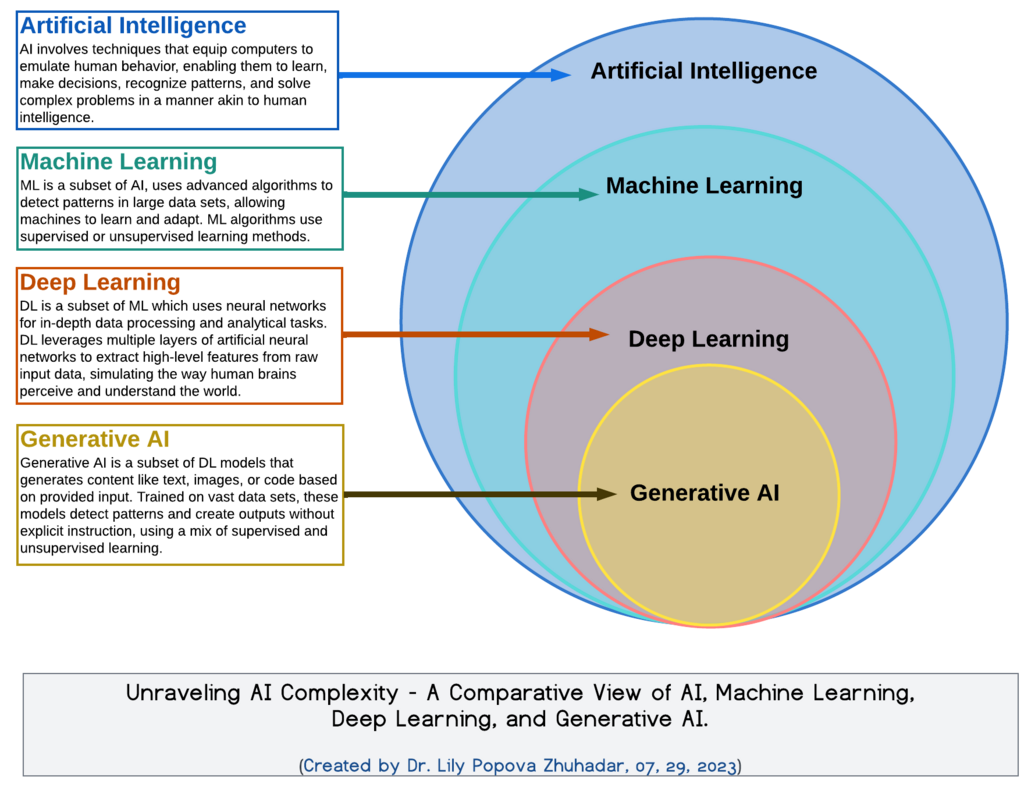
AI is an umbrella term for several specialized subfields. While they often overlap, each focuses on a different aspect of intelligence. Understanding these branches helps clarify what AI can actually do.
| Subfield | What It Is | Real-World Example |
|---|---|---|
| Machine Learning (ML) | Teaching computers to learn from data without being explicitly programmed. | Your email's spam filter learns to identify junk mail based on past examples. |
| Natural Language Processing (NLP) | Enabling computers to understand, interpret, and generate human language. | Voice assistants like Siri or Alexa understanding and responding to your commands. |
| Computer Vision | Allowing computers to "see" and interpret information from images and videos. | Unlocking your phone with facial recognition. |
These fields are the building blocks of modern AI systems. A self-driving car, for instance, uses computer vision to see pedestrians, machine learning to predict their movements, and NLP to understand voice commands from the driver. Together, they create a powerful, intelligent system.
Let's check your understanding of these core concepts.
What is the primary goal of Artificial Intelligence?
The term "Artificial Intelligence" was officially coined at a workshop held at which institution in 1956?
With this foundation, you're ready to explore how these different parts of AI work in more detail.