Introduction to Artificial Intelligence
Introduction to Artificial Intelligence
What Is Artificial Intelligence?
Artificial intelligence, or AI, is the science of making machines that can think and learn like humans. Think of it less as creating a conscious robot and more as building systems that can perform tasks that usually require human intelligence. This includes things like recognizing your face in a photo, understanding what you say to a voice assistant, or even playing a game of chess.
Artificial intelligence (AI) is a branch of computer science and engineering that focuses on building machines that are capable of learning, solving problems, making decisions, and all other functions that are performed traditionally by the human intellect.
At its heart, AI is about creating algorithms—sets of rules or instructions—that allow computers to solve problems and adapt to new information. The goal is to build systems that don't just follow pre-programmed commands but can also reason, learn from experience, and make predictions. Key characteristics of these systems include the ability to process large amounts of data, identify patterns, and adjust their behavior to improve performance over time.
AI, Machine Learning, and Data Science
You'll often hear the terms AI, machine learning, and data science used together, and it can be tricky to tell them apart. They are closely related, but they aren't the same thing. AI is the broad, overarching field. Machine learning is a specific technique within AI. Data science is a wider field that often uses AI and machine learning as tools.
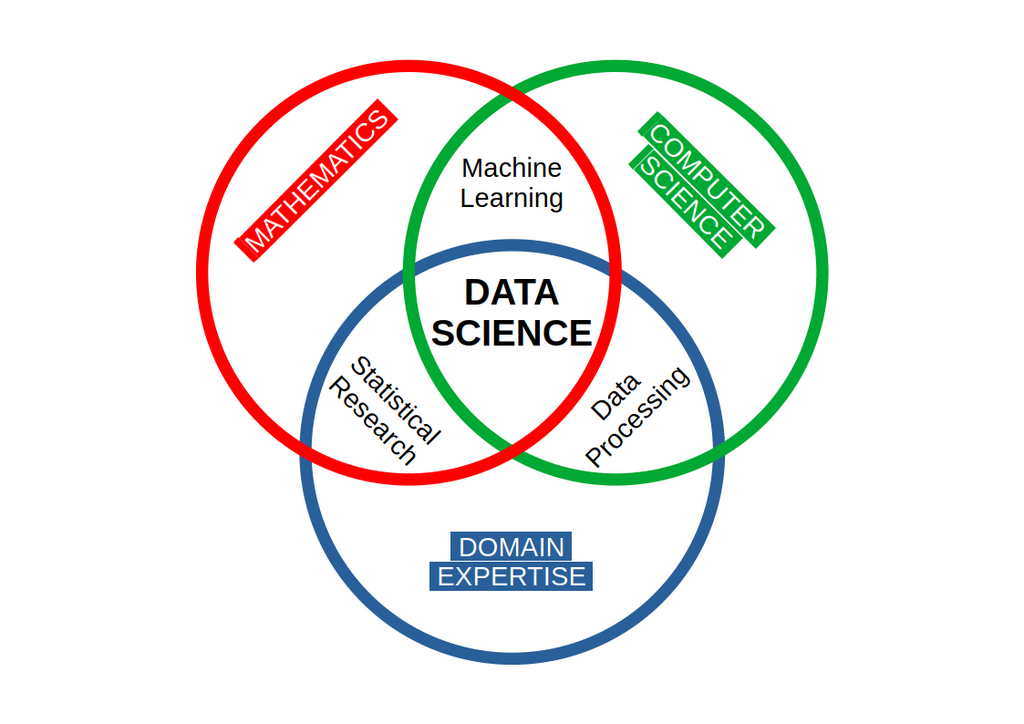
Let's break it down:
- Artificial Intelligence (AI) is the entire universe of creating intelligent systems. It's the big idea.
- Machine Learning (ML) is a star within that universe. It’s a subset of AI where systems learn from data. Instead of being programmed with rules, a machine learning model is trained on a dataset to find patterns on its own.
- Data Science is more like an entire galaxy. It's an interdisciplinary field that uses scientific methods and processes to extract insights from data. A data scientist might use machine learning to build a predictive model, but their job also involves collecting, cleaning, and analyzing data to answer business questions.
Think of it this way: An AI can be a character in a video game that intelligently responds to your actions. It might use machine learning to learn your playing style. A data scientist might analyze game data to figure out which levels are too hard.
A Quick History of AI
The dream of creating artificial beings is ancient, but the scientific field of AI is relatively new. The journey began in the mid-20th century, when computer scientists started to seriously explore the possibility of creating a “thinking machine.”
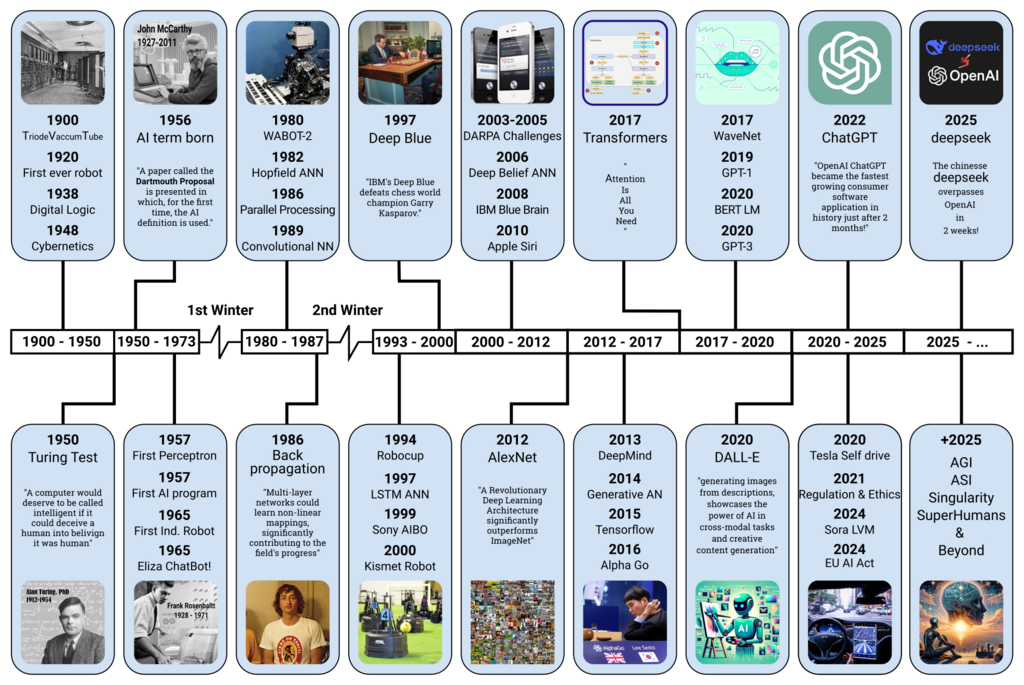
A pivotal moment came in 1956 at the Dartmouth Summer Research Project on Artificial Intelligence. It was here that computer scientist John McCarthy coined the term "artificial intelligence." This workshop brought together pioneers who laid the groundwork for the decades of research that would follow.
The early years were filled with excitement. Researchers developed programs that could solve algebra problems, prove theorems, and speak simple English. But the initial hype outpaced the available computer power and funding, leading to periods known as “AI winters” in the 1970s and late 1980s, when progress slowed.
Things picked up again in the 1990s and 2000s, thanks to faster computers and the availability of vast amounts of data from the internet. In 1997, IBM's Deep Blue computer defeated world chess champion Garry Kasparov, a major milestone. This new era saw the rise of machine learning and, more recently, deep learning, which powers many of the AI tools we use today.
Now you have a grasp of what AI is, how it relates to other fields, and where it came from. This foundation is key to understanding its capabilities and potential.