Introduction to Artificial Intelligence
Introduction to Artificial Intelligence
What Is Artificial Intelligence?
Artificial intelligence, or AI, is about creating machines that can think, learn, and solve problems like humans do. It’s not about building robots that look and act exactly like us, but about simulating human intelligence in a computer.
Think of it this way: when you learn to ride a bike, you don't just follow a list of instructions. You get a feel for balancing, pedaling, and steering. You learn from your mistakes, like wobbling or falling, and adjust. AI works in a similar way. Instead of being explicitly programmed for every single task, many AI systems are designed to learn from data and experience.
Artificial Intelligence
noun
A field of computer science dedicated to creating systems capable of performing tasks that typically require human intelligence, such as visual perception, speech recognition, decision-making, and translation.
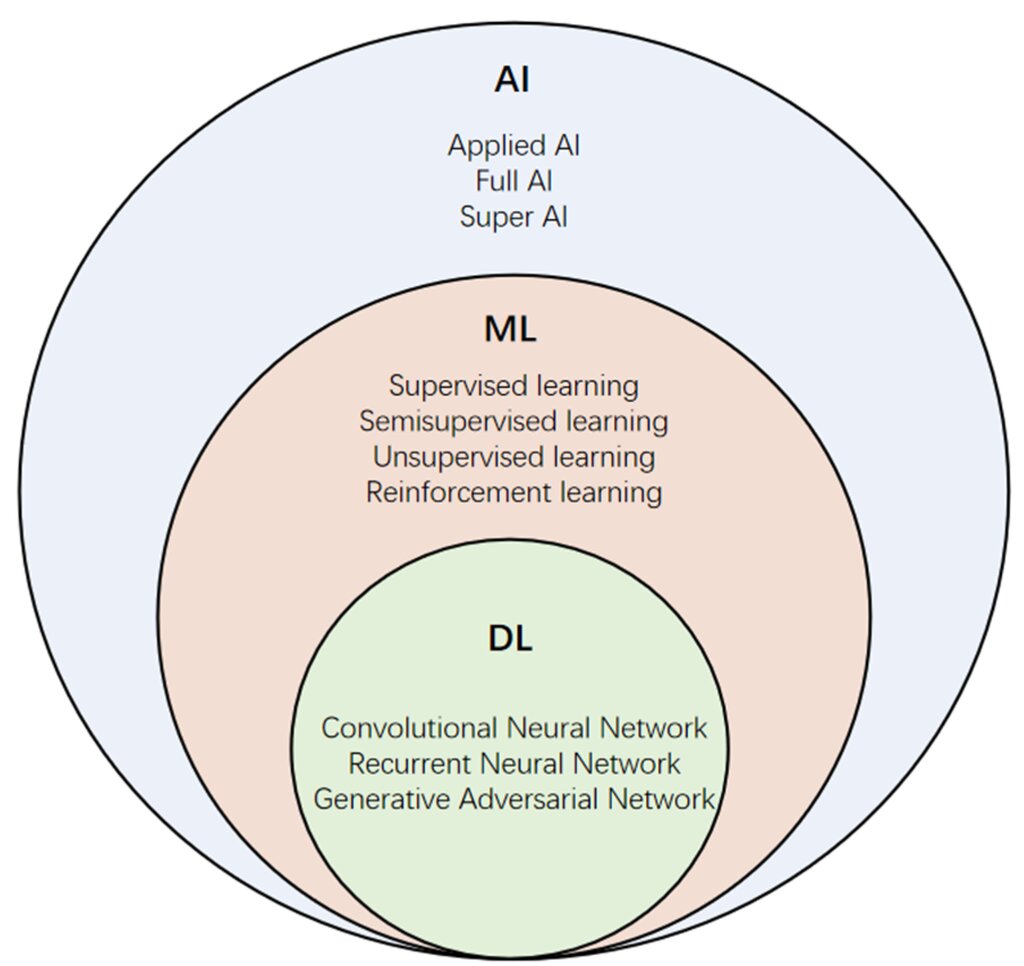
AI is a broad field with many sub-disciplines. You might hear terms like machine learning and deep learning used interchangeably with AI, but they are actually specific subsets of it. Machine learning is a technique that allows systems to learn from data, while deep learning is a more advanced type of machine learning.
A Brief History of AI
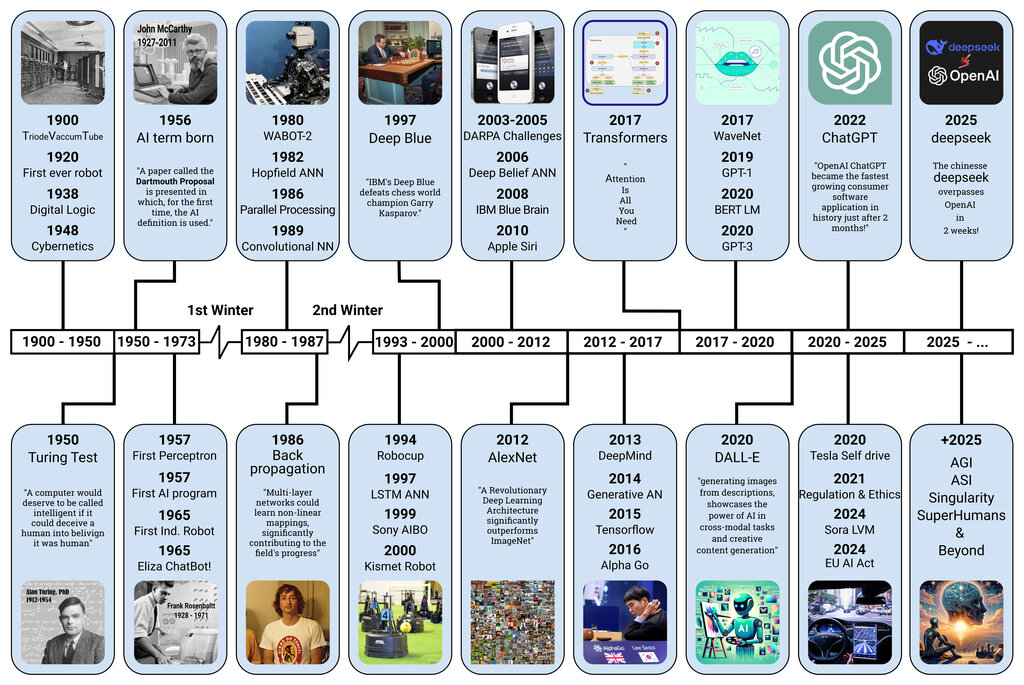
The idea of intelligent machines has been around for centuries, but the modern field of AI truly began in the mid-20th century. In 1950, computer scientist Alan Turing proposed a test, now called the Turing Test, to see if a machine could exhibit intelligent behavior indistinguishable from that of a human.
The term "artificial intelligence" was officially coined in 1956 at the Dartmouth Workshop. This event brought together the founding fathers of AI and marked the birth of AI as a formal field of study. The early years were filled with excitement and bold predictions. Researchers developed programs that could solve algebra problems, prove theorems, and speak simple English.
Progress wasn't a straight line. The field experienced several "AI winters"—periods in the 1970s and 80s when funding dried up and interest waned because the promises of AI had been overhyped.
Things began to change in the 1990s and 2000s. The rise of the internet generated massive amounts of data, and computers became exponentially more powerful. These two ingredients—big data and powerful hardware—were exactly what AI needed to flourish. They fueled the machine learning revolution and led to the breakthroughs we see today.
Core Principles
So, how does an AI system actually "think"? At its heart, AI relies on algorithms. An algorithm is just a set of rules or instructions that a computer follows to solve a problem. In traditional programming, humans write very specific, step-by-step instructions. If you want a program to calculate sales tax, you tell it exactly what percentage to use and how to add it to the total.
Algorithm
noun
A process or set of rules to be followed in calculations or other problem-solving operations, especially by a computer.
AI, particularly machine learning, is different. Instead of giving the computer explicit rules, you give it lots of examples. If you want an AI to recognize pictures of cats, you don't write rules about what makes a cat (e.g., "has pointy ears," "has whiskers"). Instead, you show it thousands of pictures labeled "cat." The machine learning algorithm then analyzes these examples and learns the patterns on its own. It builds its own internal model for what a cat looks like.
This process of learning from data is the fundamental principle behind most modern AI. It’s what allows AI to perform complex tasks that would be nearly impossible to program by hand. Now let's review what we've covered.
What is the primary goal of artificial intelligence (AI)?
How does an AI system using machine learning typically learn to identify cats in images?
From early theories to today's powerful systems, AI has evolved significantly. By understanding its history and core principles, you have a solid foundation for exploring this transformative technology.