Introduction to Artificial Intelligence
Introduction to Artificial Intelligence
What Is Artificial Intelligence?
Artificial intelligence is about creating machines that can think, learn, and solve problems. The goal is to simulate human intelligence. This doesn't just mean calculating numbers faster. It involves tasks like understanding language, recognizing faces in a crowd, and making complex decisions.
At its core, AI is the science of making machines smart. It's a field of computer science dedicated to building systems that can perform tasks that would normally require a person's intelligence.
Think of a self-driving car navigating a busy street or a smart assistant on your phone answering your questions. These are both powered by AI. They take in information from the world, process it, and make decisions to achieve a specific goal, like getting you to your destination safely or finding the name of a song.
A Quick Trip Through Time
The idea of intelligent machines has been around for centuries, but the actual field of AI officially began in the summer of 1956 at a workshop at Dartmouth College. Early AI research focused on symbolic AI, where programmers tried to write explicit rules for a machine to follow. This worked for well-defined problems, like playing chess, but it struggled with the messiness of the real world.
Over the decades, the field has seen periods of great excitement followed by "AI winters," when progress slowed and funding dried up. But the journey has been one of steady advancement, leading to the powerful AI we see today.
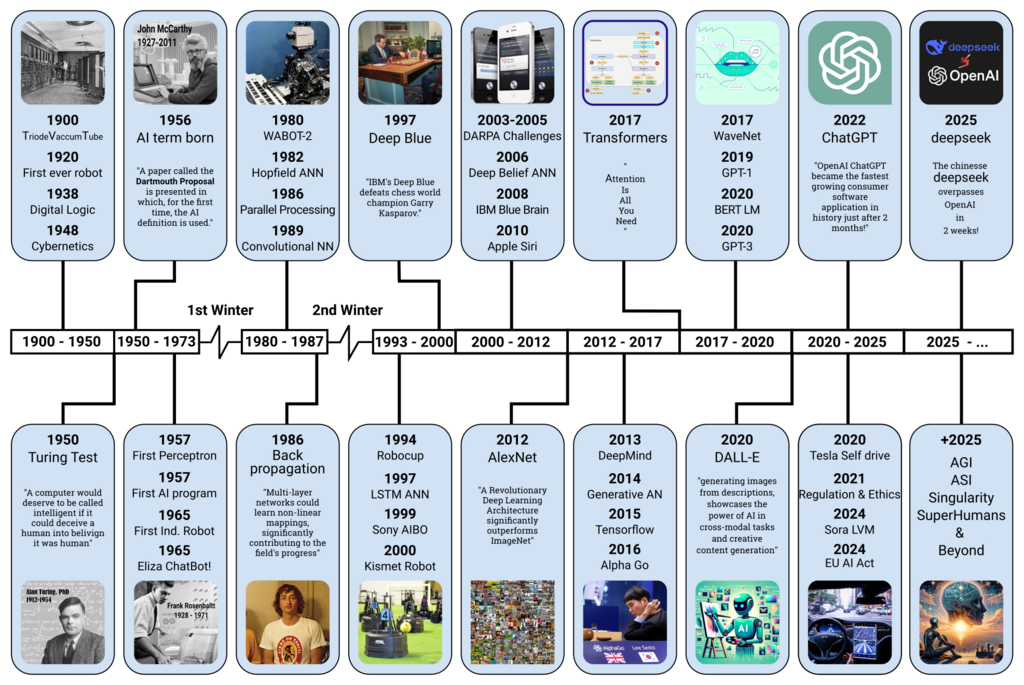
The major shift came with the rise of machine learning, which moved away from hard-coded rules and toward systems that could learn from data.
Not All AI Is the Same
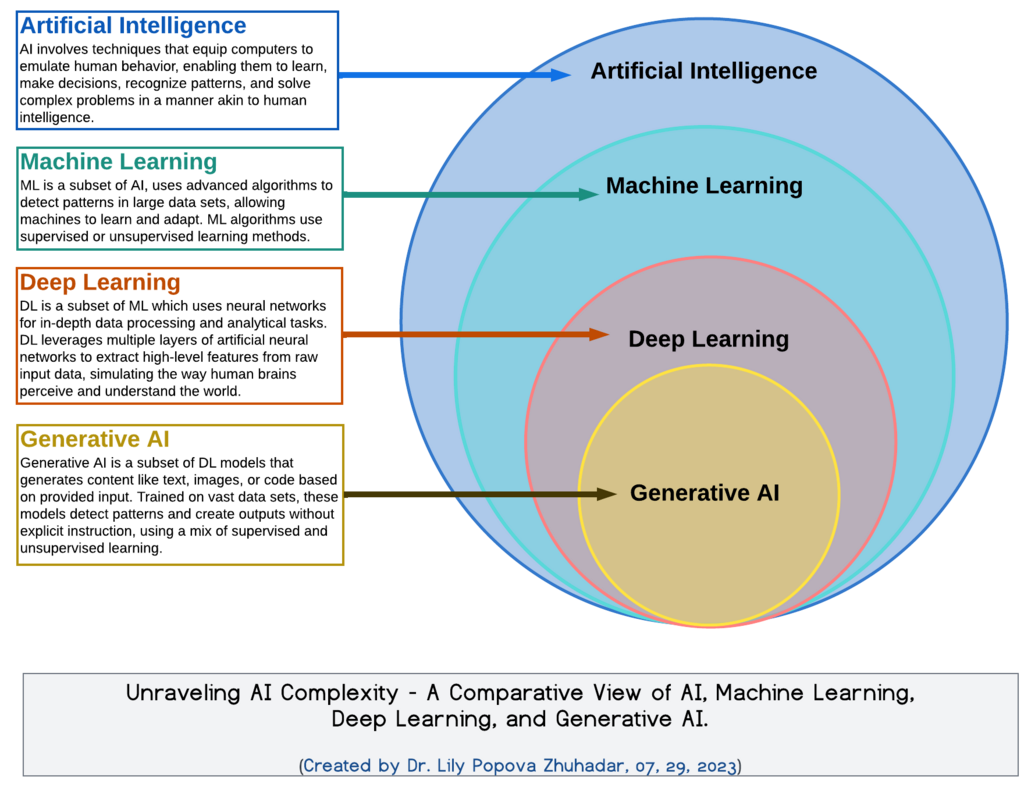
AI isn't a single technology; it's a broad category with many subfields. Two of the most important types you'll hear about today are Machine Learning and Generative AI. They are related, but they do different things.
Machine Learning
noun
A subset of AI that gives computers the ability to learn without being explicitly programmed. Instead of following rules, these systems are trained on large amounts of data to recognize patterns and make predictions.
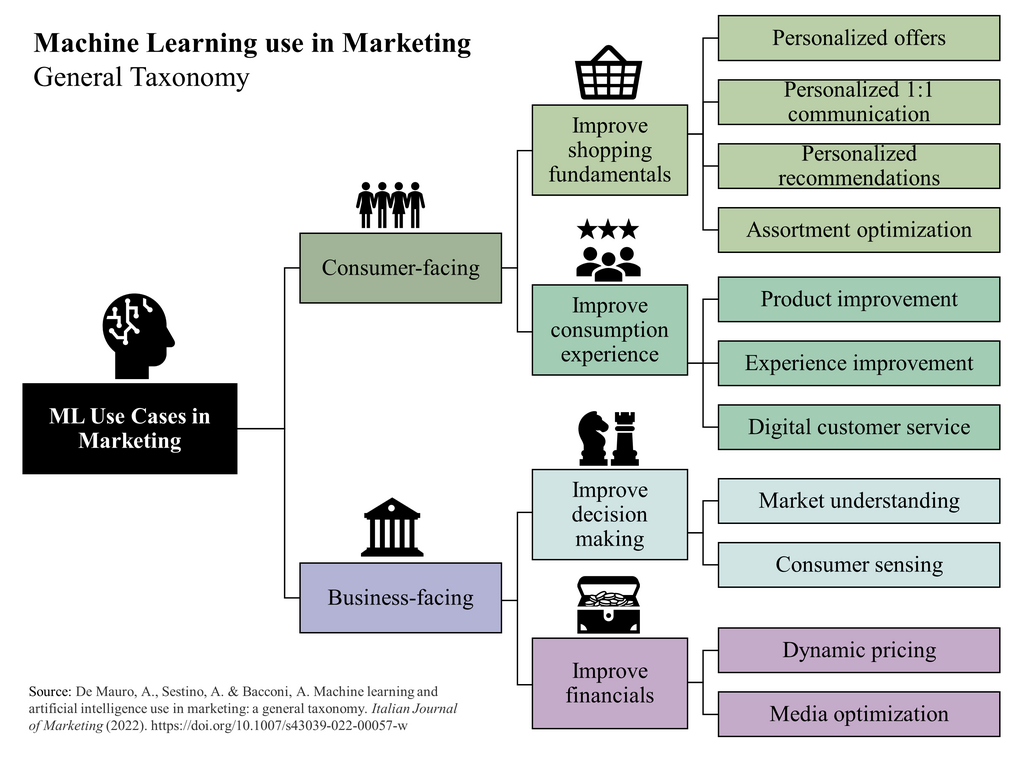
Machine learning is the engine behind many AI applications. It's used for tasks like recommending movies, detecting fraudulent credit card transactions, and translating languages. The system learns a specific task by analyzing examples.
Generative AI is a more recent development. It also learns from data, but its goal is to create something entirely new.
Generative AI
noun
A type of AI that can produce new content, such as text, images, music, or code. It learns the underlying patterns and structures of its training data and then uses that knowledge to generate original outputs.
Tools like ChatGPT, which can write essays, or Midjourney, which can create images from a text description, are examples of generative AI. While machine learning is often about prediction and classification, generative AI is about creation.
People and Machines Working Together
Rather than replacing humans, AI is often used to augment our abilities. This human-machine collaboration is one of the most exciting areas of AI development. AI can handle massive datasets and repetitive tasks, freeing up people to focus on creativity, critical thinking, and strategy.
In medicine, AI can analyze medical scans to help doctors spot diseases earlier and more accurately. In business, AI tools can sift through market data to help analysts identify trends. In education, AI tutors can provide personalized learning experiences for students. In each case, the AI acts as a powerful assistant, enhancing human expertise.
The key enabling technologies that have fueled this progress are massive amounts of data and powerful computers. The internet and digital devices have created a vast ocean of data for AI models to learn from. At the same time, specialized computer chips, like GPUs (Graphics Processing Units), have provided the raw processing power needed to train these complex models.
Ready to check your understanding?
What is the primary goal of artificial intelligence?
The field of AI officially began at a workshop held at which institution?
This is just the beginning of the story. AI is a rapidly evolving field that is already changing the way we live and work.