Introduction to Artificial Intelligence
Introduction to Artificial Intelligence
What Is Artificial Intelligence?
Artificial intelligence, or AI, is about creating machines or systems that can perform tasks that typically require human intelligence. This includes things like learning from experience, solving problems, understanding language, and recognizing patterns.
This introduction to this special issue discusses artificial intelligence (AI), commonly defined as “a system’s ability to interpret external data correctly, to learn from such data, and to use those learnings to achieve specific goals and tasks through flexible adaptation.”
At its core, AI is not a single technology but a broad field of computer science. It's a quest to build systems that can think, reason, and adapt.
A Quick Trip Through Time
The dream of intelligent machines isn't new. It has roots in ancient myths and centuries of philosophical thought. But as a formal field of study, AI really began in the mid-20th century. Early pioneers believed that a machine could be made to think if human intelligence could be broken down into a series of logical steps.
Early AI systems were often based on a set of hand-crafted rules. For example, to build a chess-playing program, developers would program in the rules of chess along with strategies for good moves. This is known as a rule-based system or symbolic AI. These systems were powerful for well-defined problems but struggled with the messiness of the real world, which isn't always governed by clear rules.
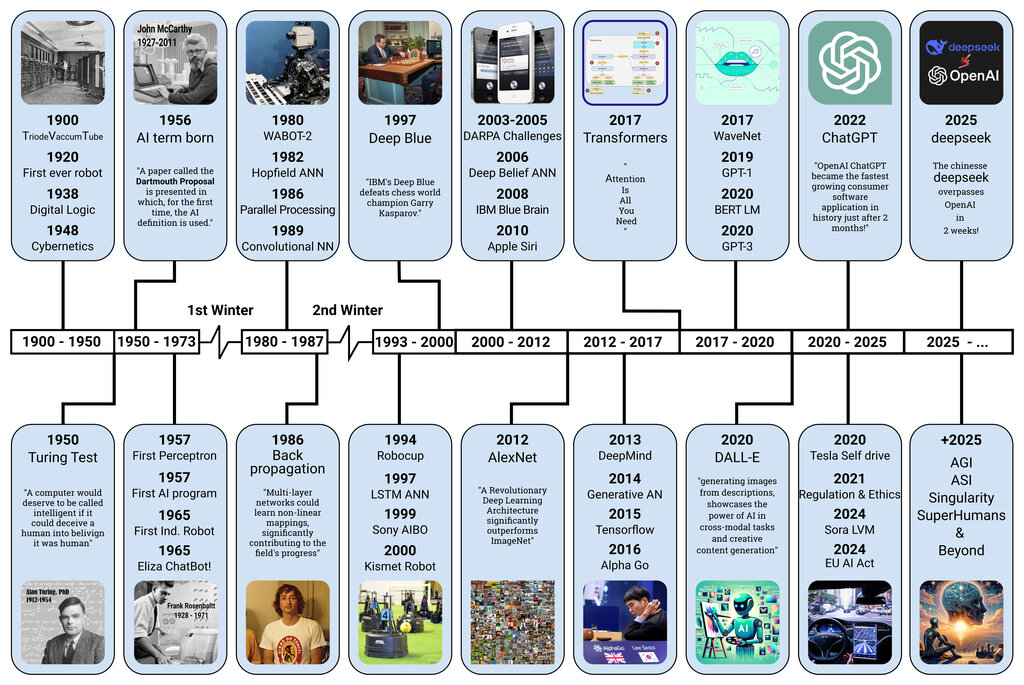
This approach uses knowledge representation to store information about the world in a way a computer can use. Think of it like a digital encyclopedia that the AI can consult to make decisions. While modern AI has evolved significantly, these foundational ideas are still important.
AI, Machine Learning, and Deep Learning
You'll often hear the terms AI, machine learning, and deep learning used together, sometimes interchangeably. But they have distinct meanings and represent a hierarchy of concepts.
Artificial Intelligence (AI) is the broadest category. It's the overall field of creating intelligent machines.
Machine Learning (ML) is a subset of AI. Instead of being explicitly programmed with rules, ML systems learn patterns directly from data. This shift from rules to data allowed AI to tackle much more complex problems.
Deep Learning (DL) is a further subset of machine learning. It uses complex, multi-layered structures called neural networks, which are loosely inspired by the human brain. Deep learning has been the driving force behind many of the recent breakthroughs in AI, like advanced image recognition and natural language processing.
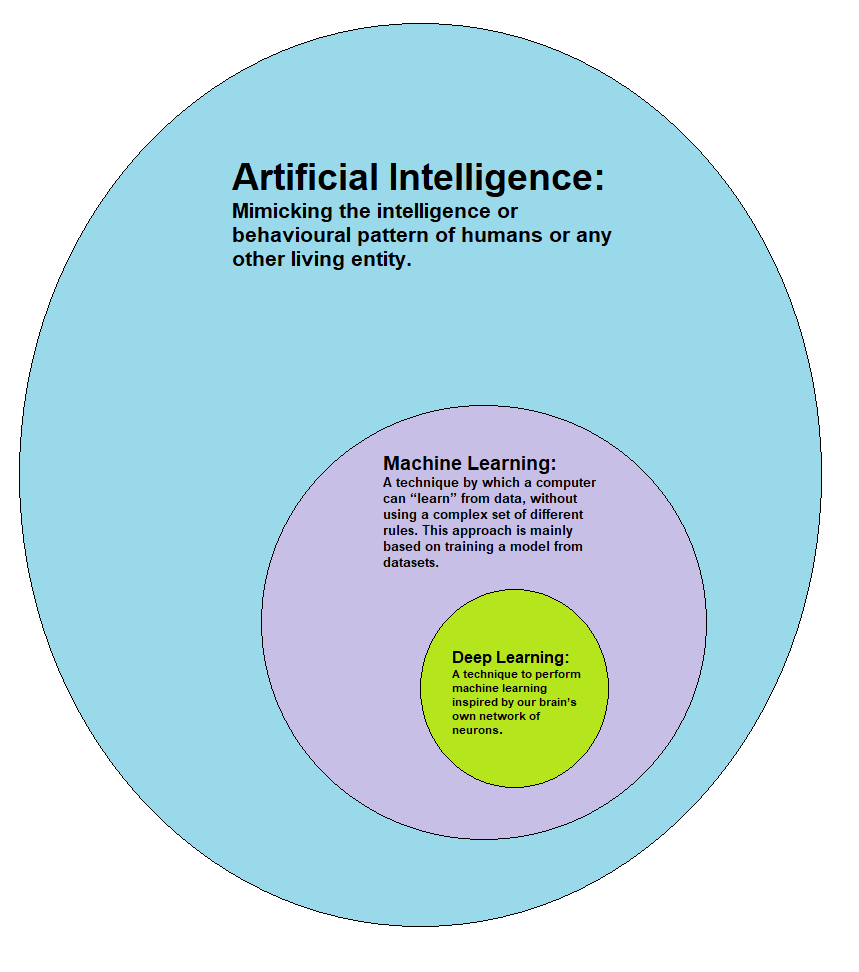
Think of it like a set of Russian nesting dolls. AI is the largest doll. Inside it, you find the machine learning doll. And inside that, you find the deep learning doll.
Narrow vs. General AI
Not all AI is created equal. We can categorize AI based on its capabilities. The two main types are Artificial Narrow Intelligence (ANI) and Artificial General Intelligence (AGI).
| Type | Description | Examples |
|---|---|---|
| Narrow AI (ANI) | Designed and trained for a specific task. It operates within a limited context and can't perform tasks beyond its specialty. All AI we use today is Narrow AI. | Voice assistants, image recognition software, spam filters, recommendation engines on streaming services. |
| General AI (AGI) | A theoretical form of AI that would possess the ability to understand, learn, and apply its intelligence to solve any problem a human can. It does not currently exist. | Fictional characters like Data from Star Trek or HAL 9000 from 2001: A Space Odyssey. |
While AGI remains the stuff of science fiction for now, the progress in ANI has been staggering, transforming industries and our daily lives.
AI in the Real World
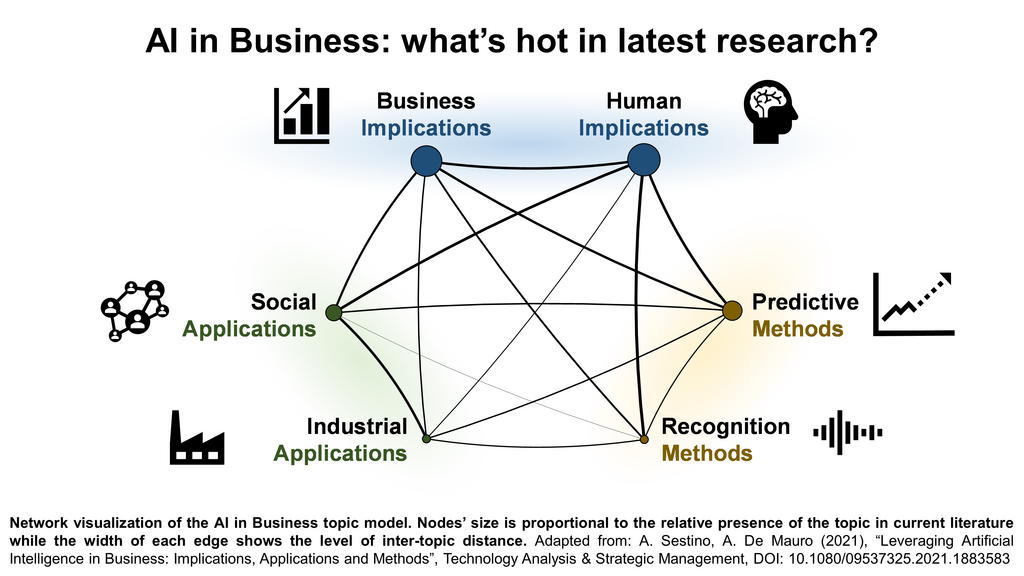
AI isn't just a futuristic concept; it's a practical tool used across countless industries today. Its ability to process vast amounts of data and identify patterns makes it incredibly valuable.
In healthcare, AI helps diagnose diseases from medical images with greater accuracy. Financial institutions use it to detect fraudulent transactions in real time. Retailers rely on AI to manage inventory and personalize shopping experiences. In transportation, AI is the key technology behind self-driving cars. Even creative fields are being transformed, with AI generating art, music, and text.
From a simple photo search on your phone to complex scientific research, AI is working behind the scenes, making processes more efficient, insightful, and powerful.
As we move forward, it helps to have a solid grasp of these core ideas. Ready to test what you've learned?