Introduction to Artificial Intelligence
Introduction to Artificial Intelligence
What Is Artificial Intelligence?
Artificial intelligence is the science of teaching computers to think and learn. The goal is to create systems that can perform tasks that typically require human intelligence. This could be anything from recognizing your face to unlock your phone, understanding your commands to a smart speaker, or even helping doctors diagnose diseases.
Artificial Intelligence
noun
A field of computer science dedicated to creating systems capable of performing tasks that normally require human intelligence, such as visual perception, speech recognition, decision-making, and translation between languages.
AI isn't just about mimicking human abilities. It's also about extending them. Computers can analyze massive datasets in seconds, finding patterns and making predictions that are far beyond the scope of the human mind. This capability is transforming entire industries, from finance and logistics to entertainment and scientific research.
Think of AI as a broad umbrella term, similar to a field like 'biology' or 'physics'. Underneath this umbrella are several specialized disciplines, each focusing on a different aspect of intelligence.
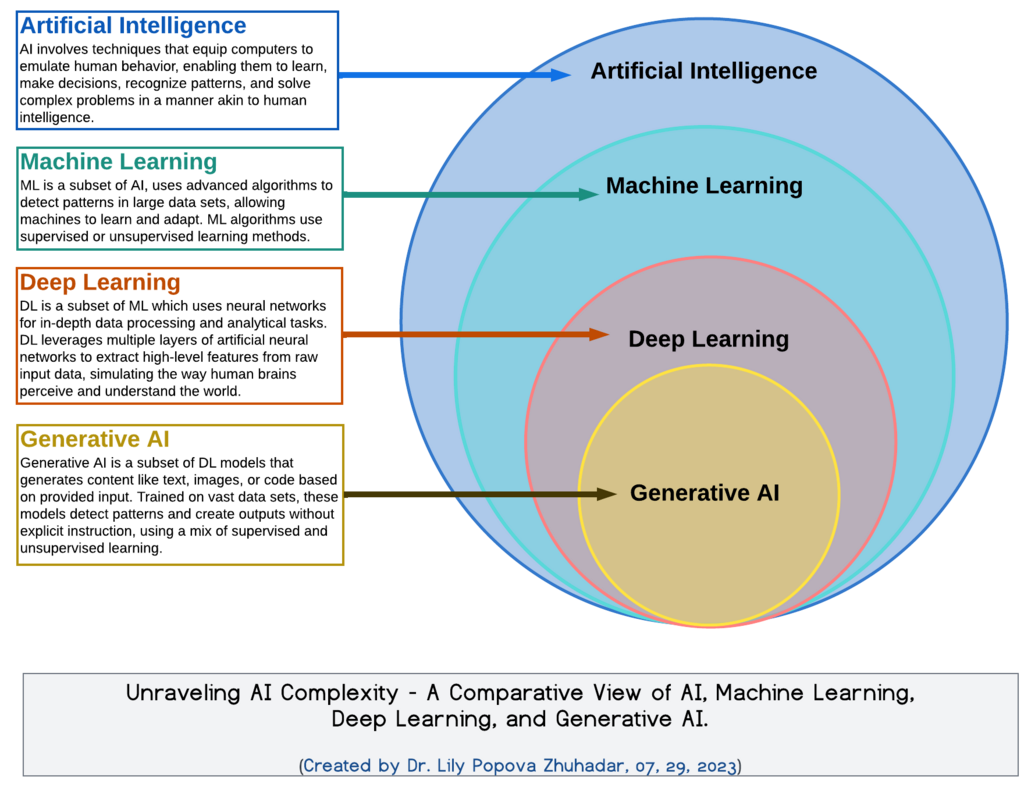
This structure helps organize the different approaches to building intelligent systems. While AI is the overall goal, specific subfields provide the tools and techniques to get there.
The Core Disciplines
Three major subfields form the foundation of most modern AI applications: Machine Learning, Natural Language Processing, and Computer Vision.
Machine Learning (ML) is the most common form of AI. Instead of being programmed with explicit instructions, a machine learning model learns patterns directly from data. It's like teaching a child to identify a dog by showing them many pictures of dogs, rather than writing a long list of rules about what makes a dog a dog. The system learns the defining features on its own.
Natural Language Processing (NLP) focuses on the interaction between computers and human language. This is the technology behind translation apps, chatbots, and voice assistants like Siri and Alexa. NLP allows machines to read, understand, interpret, and generate human language in a way that is both meaningful and useful.

Computer Vision gives machines the ability to 'see' and interpret the visual world. Using images and videos as input, these systems can identify objects, people, and places. This is the technology that enables self-driving cars to navigate roads, facial recognition systems to work, and apps to identify a plant from a photo you've taken.
Why AI Matters
AI is more than just a futuristic concept; it's already a significant part of modern life. It powers the recommendation engines that suggest what you should watch or buy next. It helps banks detect fraudulent transactions in real time. In medicine, AI analyzes medical images to spot signs of disease earlier and more accurately than ever before.
By automating complex tasks and providing powerful insights from data, AI helps solve challenging problems and creates new opportunities. It's a tool that enhances human capabilities, allowing us to be more efficient, creative, and effective in nearly every field.
| Field | Application of AI |
|---|---|
| Healthcare | Analyzing medical scans to detect tumors or other anomalies. |
| Finance | Identifying fraudulent credit card transactions automatically. |
| Transportation | Powering navigation systems and developing self-driving cars. |
| Entertainment | Recommending movies, music, and articles based on user habits. |
| Customer Service | Using chatbots to answer common questions 24/7. |
As these technologies continue to develop, they will become even more integrated into our daily routines. Understanding the basic principles of AI and its core subfields is the first step toward navigating this evolving landscape.